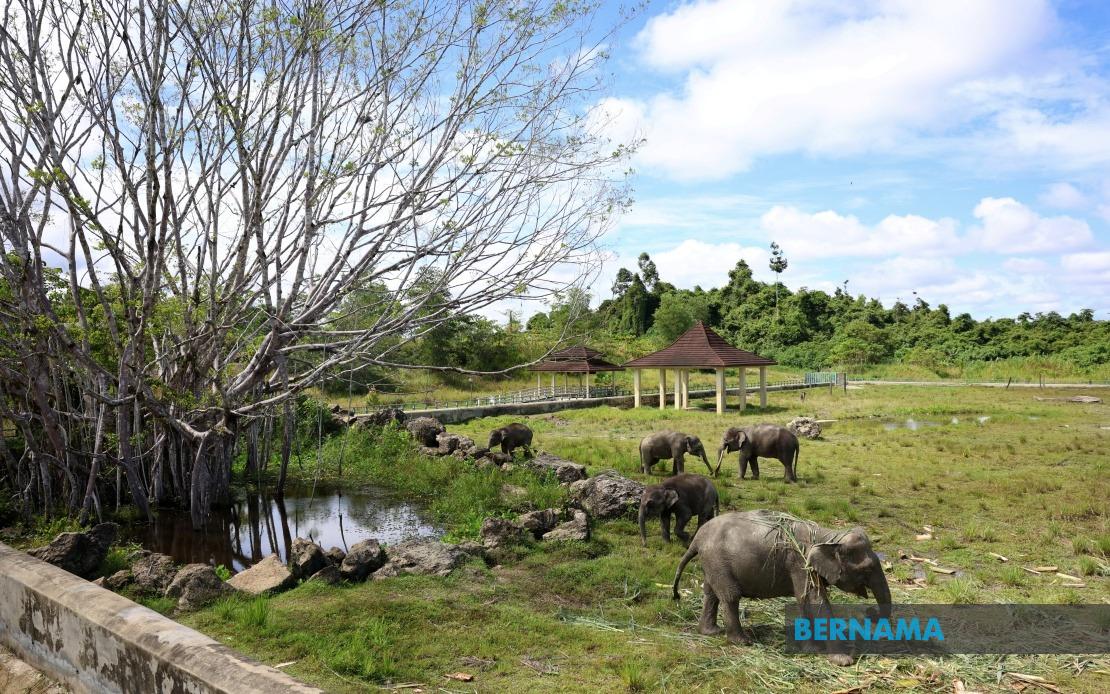
The Sabah state government is evaluating a dedicated elephant sanctuary framework in Tawau that could reshape how the state manages escalating conflicts between wildlife and rural communities, officials revealed this week. Speaking in the State Legislative Assembly, Datuk Dr Andi Md Shamsureezal, the Assistant Minister of Tourism, Culture and Environment, described the initiative as a measured pilot that addresses chronic crop damage and livestock losses affecting farming families across the state. Should the sanctuary demonstration prove effective in containing Bornean elephants and reducing their incursions into agricultural land, the government intends to apply the same operational blueprint to other districts facing comparable pressures from elephant herds and competing land uses.
The proposal reflects growing recognition that traditional wildlife management approaches have reached their practical limits in Sabah. Datuk Seri Mohd Shafie Apdal, who raised the sanctuary concept in legislative debate, framed the initiative not merely as a conservation tool but as a dual-purpose asset capable of functioning simultaneously as a protected habitat and a draw for ecotourism. This dual mandate reveals an emerging state philosophy: that wildlife preservation and economic benefit need not be mutually exclusive, particularly in regions where rural incomes depend heavily on agriculture and where tourism diversification remains underdeveloped.
The underlying challenge driving this strategic pivot is the mounting toll of human-wildlife conflict across Sabah's farming communities. Elephants, wild boars, primates and other species routinely destroy crops, raid plantations and occasionally threaten human safety, creating cycles of economic loss and retaliatory measures that further destabilize wildlife populations. Arunarnsin Taib's parliamentary inquiry underscored farmer frustration, prompting government clarification on how state agencies are tackling what has become a persistent flashpoint between conservation imperatives and livelihood protection. The severity of the problem has forced policymakers to acknowledge that reactive culling, relocation and lethal control—traditional responses—generate only temporary relief while shifting damage to other areas rather than addressing underlying ecological causes.
The government's refined approach, as outlined by Andi, pivots toward understanding and managing the ecological drivers of conflict. Rather than pursuing blanket removal of troublesome animals, the state is implementing layered interventions calibrated to each species' behavior and habitat requirements. Elephant ranger teams embedded within affected communities represent one innovative layer, creating local employment while generating human presence and deterrence in high-conflict zones. The deployment of satellite collars on selected elephants extends this concept technologically, furnishing real-time movement data that allows communities to anticipate elephant presence and implement protective measures before damage occurs. This shift from reactive punishment to predictive management reflects broader maturation in conservation thinking, particularly relevant for Southeast Asia where landscape fragmentation and rural poverty intersect with megafauna conservation challenges.
Monkey population management, another intervention cited by Andi, addresses a distinct but equally pressing dimension of the wildlife conflict spectrum. Controlled culling in designated areas targets zoonotic disease mitigation and public safety enhancement, recognizing that primate overpopulation in periurban and agricultural zones creates public health risks alongside crop damage. Similarly, wild boar control operates within legal and risk-assessment frameworks, ensuring that management decisions respond to documented community grievances rather than blanket eradication campaigns. Each intervention thus reflects situation-specific calibration, a recognition that one-size-fits-all wildlife policy typically fails in heterogeneous landscapes where ecological, economic and social variables shift across geography.
The sanctuary model's potential scalability carries significant implications for Malaysian wildlife management more broadly. Peninsular Malaysia, despite its higher population density and more fragmented wildlife corridors, faces parallel elephant-human tensions in Pahang, Johor and other states. Sabah's experimental framework, if validated, could provide a replicable governance template and operational playbook for other jurisdictions grappling with similar pressures. The sanctuary concept also aligns with Malaysia's international conservation commitments and domestic biodiversity protection mandates, transforming compliance from a compliance burden into an economic asset through ecotourism integration.
The timeline for evaluating the Tawau sanctuary remains unspecified, though the government's characterization of the initiative as an observational phase suggests a multi-year monitoring window. Key metrics for success likely include documented reductions in elephant incidents in adjacent agricultural zones, quantified crop loss comparisons against baseline periods, community satisfaction measures and the sanctuary's financial sustainability through visitor revenue and eco-tourism operations. The political economy of scaling also matters: if Tawau's sanctuary becomes profitable or generates constituency support, district representatives elsewhere will likely lobby for similar facilities, creating momentum for expansion regardless of pure conservation metrics.
Critical questions remain about land availability, funding allocation and community participation in sanctuary implementation. Tawau District, while elephant range-state territory, remains under competing land pressures from timber extraction, plantations and urban expansion. Securing adequate sanctuary acreage without displacing existing economic activities or indigenous land claims demands careful stakeholder negotiation. Similarly, operational costs for ranger teams, monitoring technology, facility maintenance and veterinary care for elephants could become substantial budget obligations, particularly if expansion proceeds without proportional revenue growth from ecotourism.
The sanctuary approach also signals implicit acceptance that portions of Sabah will be permanently inhabited by elephants rather than subject to complete removal or containment. This philosophical stance, while scientifically sound and ecologically necessary, requires cultural and political adjustment in communities experiencing repeated crop losses. Effective implementation thus depends not only on sanctuary infrastructure and management protocols but on sustained communication demonstrating tangible livelihood improvements through employment, compensation mechanisms or yield protection investments. Failure to deliver visible community benefits could undermine political support for expansion, regardless of conservation outcomes.
Sabah's initiative emerges at a moment when regional governments increasingly recognize that fortress conservation—exclusionary protected areas disconnected from human economics—has limited success in Southeast Asia's human-dominated landscapes. The integration of indigenous and local communities, economic incentives for wildlife coexistence, and adaptive management strategies reflects evolving best practice in conservation governance. As Malaysia positions itself as a regional environmental leader ahead of global biodiversity frameworks, the Tawau sanctuary outcome will carry symbolic weight alongside practical significance, potentially influencing how other Southeast Asian nations approach the perennial tension between development, agriculture and wildlife persistence.

