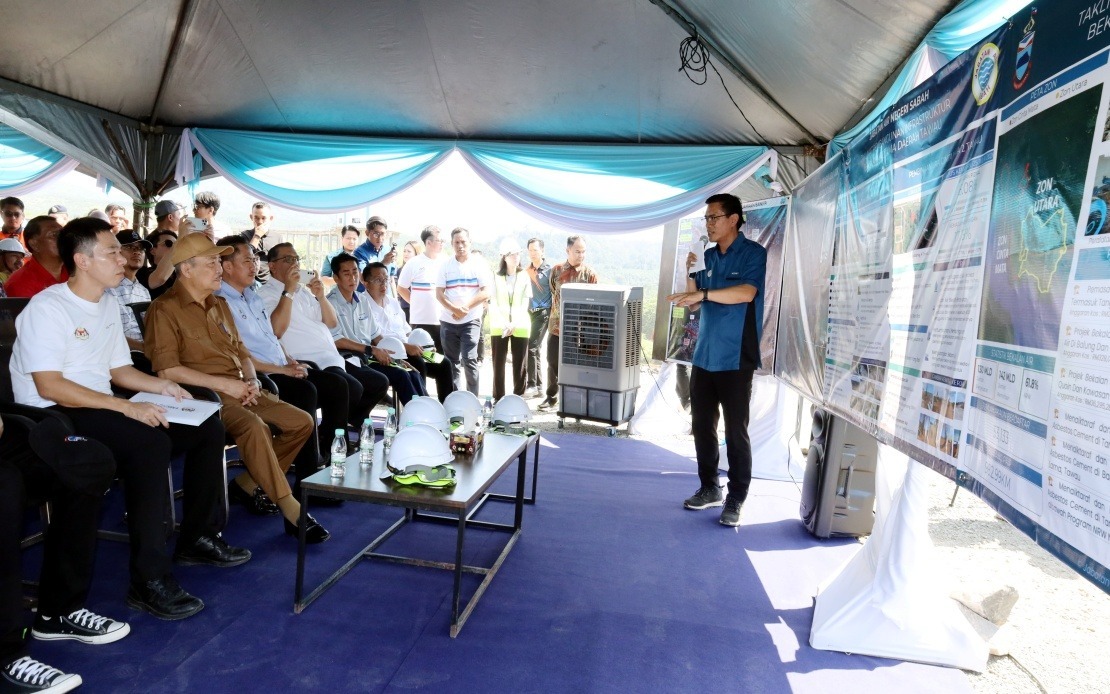
The Sabah state government has provided a firm timeline for ending Tawau's long-running water supply crisis, with Chief Minister Datuk Seri Hajiji Noor confirming that the comprehensive RM450.5 million Tawau Water Supply Scheme Phase III will be fully operational before the close of 2027. The project represents a major infrastructure commitment designed to transform water availability across the district, which has grappled with insufficient supply capacity relative to resident and business demand for many years. Despite contractor requests for additional time, state officials insist the overall completion remains on track, signalling confidence that relief for the water-stressed region is achievable within the stated timeframe.
At the heart of this infrastructure initiative lies the construction of a new dam that will substantially increase Tawau's raw water reserves. The dam, currently at 74.04 percent completion as of late July, will hold 30 million cubic metres of raw water—a transformative increase in the district's water storage capacity. This water will feed into three treatment facilities: the existing Cinta Mata 1 plant, the new Cinta Mata 2 plant, and the Utara facility. Combined, these plants will deliver 161 million litres of treated water daily once all are operational, substantially exceeding the current deficit between supply and demand. The raw water will travel through 11.6 kilometres of 700-millimetre pipelines connecting the dam to the treatment plants, ensuring efficient distribution of this newly secured resource.
The most significant component of Phase III is the Cinta Mata 2 Water Treatment Plant, a dedicated RM299.9 million facility designed to address a critical portion of Tawau's water shortage. With a treatment capacity of 30 million litres per day, this plant targets completion by July 22, 2028, and is projected to serve approximately 42,000 consumers across Tawau and surrounding areas. As of late July, the facility had achieved 16.08 percent physical progress, indicating substantial work remains but construction is advancing. The plant's completion will represent a decisive step toward closing the gap between supply and actual demand that currently plagues the district.
Tawau's water crisis reflects the long-standing infrastructure deficit affecting parts of Sabah. The district contains 53,133 registered water accounts, yet current production reaches only 130 million litres daily against a demand of 142 million litres per day—a shortfall of 12 million litres that affects households, businesses, and public services. This deficit has persisted despite growing population and economic activity, highlighting how critical the Phase III project has become for the district's continued development. The shortfall underscores why state authorities have positioned this infrastructure investment as essential to Tawau's future stability and growth potential.
CM Hajiji provided important political context during his site visit, acknowledging that the water crisis predates the current state administration and was inherited from previous governments. This framing is significant in Malaysian politics, as infrastructure deficits often represent long-standing governance failures that accumulate across administrations. However, he emphasised that the current government has taken responsibility by allocating substantial resources to resolve the problem, signalling commitment to addressing legacy issues affecting constituent welfare. His statement that the state government remains prepared to approve additional funding if required—subject to technical reports from the Sabah State Water Department and the Department of Irrigation and Drainage—suggests flexibility in budget allocation should cost pressures emerge.
The dam construction itself carries additional strategic value beyond water supply. Project manager Rodney Tinggas noted that the new dam will reduce flood risks in downstream Tawau, addressing a secondary but important public safety concern. This dual benefit—water security plus flood mitigation—enhances the project's overall justification and appeal to residents who have experienced both water scarcity and seasonal flooding. The integration of water management and flood control within a single infrastructure project reflects increasingly sophisticated approaches to water governance that address multiple environmental and public safety challenges simultaneously.
The project's progression despite contractor requests for time extensions demonstrates both the complexity of large-scale water infrastructure development and the state government's determination to maintain the completion timeline. Construction challenges are common in dam and treatment plant projects, particularly in tropical regions where weather, soil conditions, and supply chain disruptions can create unforeseen delays. The fact that authorities are managing extension requests while maintaining the 2027 deadline suggests either contingency planning or confidence that current delays will not materially impact the overall schedule. However, the willingness to consider additional funding indicates that state planners recognise cost escalation risks inherent in projects of this scale and duration.
For Malaysian water policy observers, Tawau's experience provides important lessons about infrastructure planning and the challenges of addressing supply deficits that have accumulated over years or decades. The scale of investment required—RM450.5 million for a single district's water supply—underscores the substantial costs associated with correcting historical infrastructure shortcomings. This reality has implications across Southeast Asia, where many water-stressed regions face similar accumulation of unmet demand and aging treatment facilities. Tawau's project demonstrates that comprehensive solutions require not only substantial capital investment but also careful coordination among multiple agencies and realistic timeline management.
The project's expected completion within the current decade also reflects Sabah's broader infrastructure prioritisation strategy. Water security is increasingly recognised as foundational to economic development, public health, and social stability throughout Malaysia. By committing significant state resources to resolving Tawau's chronic shortage, the Sabah government is signalling that water infrastructure ranks among top development priorities. This investment priority aligns with national and regional recognition that water scarcity represents a critical constraint on development in multiple areas across Malaysia and Southeast Asia, particularly in districts experiencing rapid urbanisation or industrial expansion.
Once the Phase III project reaches completion, Tawau's water supply position will transform dramatically. The combined output of 161 million litres daily from three treatment plants will exceed even the projected demand of 142 million litres, creating a buffer for future growth and providing security against supply disruptions at individual facilities. This buffer capacity is strategically important, as it allows for maintenance shutdowns without imposing restrictions on consumers and accommodates population growth without triggering new supply crises. The improved position will also reduce the water restrictions that have periodically affected residents and businesses, a significant quality-of-life improvement after years of supply management through demand rationing.
Looking forward, the successful completion of Phase III will test whether the Sabah government's broader infrastructure planning can address water security across other districts. Tawau is not the only region in Sabah experiencing water supply pressures, though this project demonstrates the state's capacity to undertake major infrastructure development when political commitment aligns with available resources. The Phase III project therefore serves not only immediate local purposes but also as a demonstration of capability that could inform future water infrastructure initiatives across Sabah and potentially inform planning in other Malaysian states confronting similar challenges.

