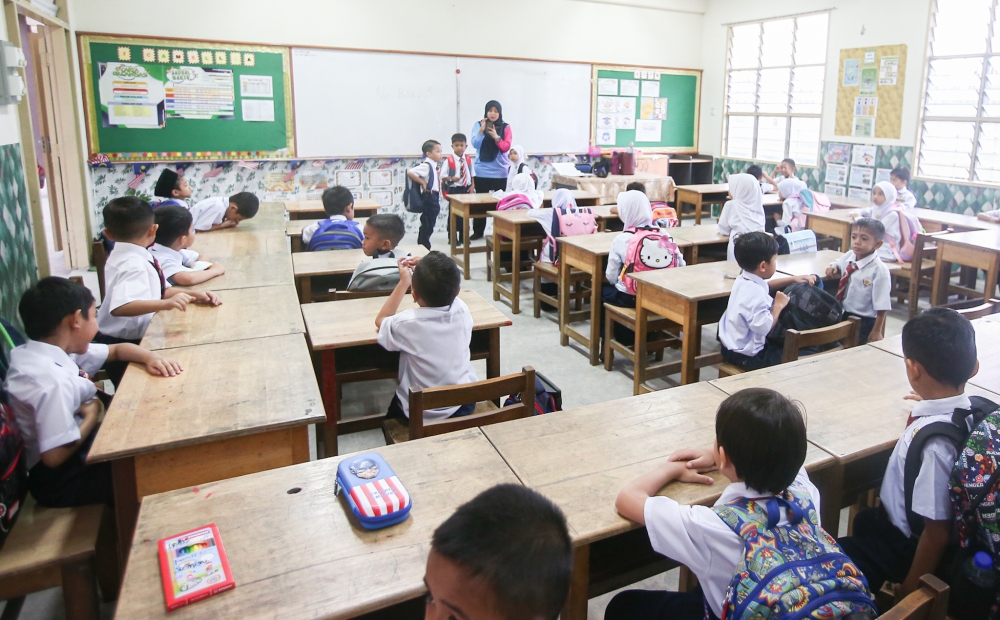
Malaysia's teaching profession faces a crisis of confidence as educators increasingly fear the legal and reputational consequences of disciplining students in their care. The National Union of the Teaching Profession has thrown its weight behind proposals for a Teachers' Protection Act, arguing that the profession desperately needs legislative safeguards against lawsuits and coordinated online attacks that have left many instructors paralysed by uncertainty about their authority in the classroom.
The union's position reflects mounting frustration within the education sector over what members characterise as an erosion of teachers' capacity to maintain order and standards. When educators face potential civil litigation or viral social media campaigns after enforcing basic rules, the practical consequence is that classroom management deteriorates, with teachers opting for passivity over intervention. This defensive posture ultimately harms students who lose the structured environment necessary for effective learning and, more broadly, undermines the teaching profession's ability to function as intended.
The emergence of this protection mechanism reflects a broader tension in Malaysian society between parental rights, student welfare, children's protection from harm, and professional autonomy. While everyone agrees that teachers must never abuse their authority or inflict cruelty on students, the current environment has created a chilling effect where reasonable disciplinary measures become fraught with legal risk. Parents armed with social media platforms and legal counsel have weaponised complaints in ways that extend far beyond addressing genuine misconduct, creating a battleground where educators find themselves perpetually on the defensive.
The intersection of litigation and online public shaming has proven particularly effective at intimidating teachers. A single disciplinary action, when filtered through parents' social networks and amplified by commentators seeking engagement, can spiral into a narrative that bears little resemblance to what actually transpired. Teachers lack the resources to mount public defence campaigns or engage lengthy legal proceedings, making them vulnerable to asymmetrical conflict with parents who can mobilise community pressure and legal threat simultaneously.
This phenomenon is not unique to Malaysia. Educators across Southeast Asia and globally report similar anxiety about professional vulnerability. However, Malaysia's combination of active social media culture, growing litigation consciousness, and relatively evolving frameworks around teacher protections creates a particularly acute version of this challenge. The question of how to balance accountability with professional autonomy remains unresolved in most jurisdictions, but the cost of remaining paralysed is increasingly apparent in declining school discipline and teacher morale.
The proposed Teachers' Protection Act would presumably create legal clarity around what constitutes reasonable discipline, establish procedural protections for educators facing complaints, and potentially provide liability insurance or legal defence funding. Such mechanisms exist in various forms internationally, from statutory immunity provisions to professional liability schemes that shield teachers acting within their authority from frivolous claims. The act would need to be carefully calibrated to protect legitimate professional judgment without creating blanket immunity for actual misconduct.
Implementation challenges loom large. Defining the boundary between protected professional action and unprotected abuse requires precision. Overly broad protections could insulate genuinely abusive teachers; insufficient protections leave educators vulnerable to the current regime of uncertainty. The act would also need mechanisms for distinguishing between motivated parents and those with genuine grievances, a distinction often blurred in the court of public opinion.
The timing of this push reflects accumulated frustration across a profession already stretched by competing demands. Malaysian teachers face overcrowded classrooms, administrative burdens, pressure to boost examination results, and now the additional burden of legal anxiety every time they enforce a rule. The psychological toll has become measurable in recruitment and retention challenges, with fewer Malaysians pursuing teaching careers precisely because the profession no longer offers the autonomy and security that once attracted talented individuals.
Beyond the immediate protection measure, the push for the Teachers' Protection Act signals a deeper need for societal recalibration around what teachers do and why they do it. Teaching requires making difficult decisions in ambiguous situations, often with imperfect information and real consequences. Some decisions will be questioned in retrospect. The question is whether those decisions will be made in genuine uncertainty where teachers second-guess every action, or whether they will be made within a professional framework that recognises the inherent difficulty of educational judgment.
The union's backing carries political weight, representing organised teaching professionals who vote, organise, and communicate with public audiences. Policymakers cannot easily dismiss such a mobilised constituency, particularly given education's centrality to national development narratives. Whether Parliament will move quickly to pass protective legislation remains uncertain, but the pressure from the profession is clearly mounting and unlikely to dissipate without meaningful response.

