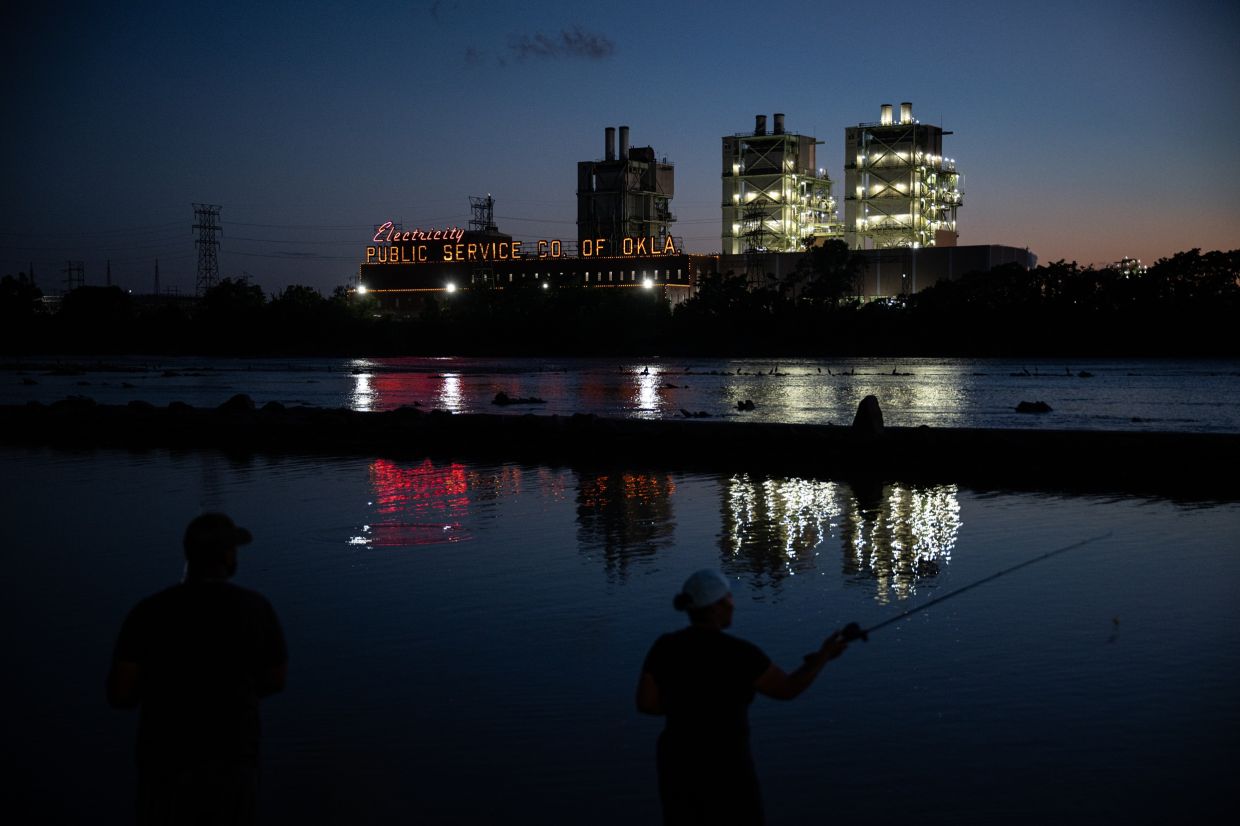
The expansion of artificial intelligence infrastructure into Indian Country represents a new frontier of corporate interest in Native American lands, one that mirrors historical patterns of outside exploitation whilst offering genuine economic opportunities that tribal leadership finds difficult to ignore. In Binger, Oklahoma, the hometown of baseball legend and Choctaw member Johnny Bench, this tension crystallised when Tracy Newkumet, a former tribal council member, articulated a fundamental concern shared by many Indigenous people: the necessity of water transcends any promises of technological advancement or wealth creation. As massive data centres require enormous quantities of water for cooling operations, communities dependent on finite water resources face an existential question about whether short-term economic gains justify potential long-term environmental damage.
The explosive growth of data centre infrastructure nationwide, driven by the artificial intelligence boom, has left communities across the United States grappling with unforeseen consequences involving noise pollution, water consumption, and electricity demand. This phenomenon takes on heightened complexity within tribal jurisdictions, where historical grievances about outside actors extracting resources and leaving communities worse off remain viscerally alive in collective memory. Technology companies view tribal lands as particularly attractive development sites because of their vast geography, strategic positioning, and regulatory environment that differs substantially from state and municipal oversight. The National Congress of American Indians initially sought to harness this momentum, with executive director Larry Wright Jr. framing tribal territories as ideal locations for advancing American artificial intelligence leadership under the Trump administration's development agenda.
Yet this ostensibly pro-development stance faced immediate pushback from within Indigenous communities themselves. Chebon Kernell, a Seminole Nation tribal council member, reframed the prosperity argument around a different conception of wealth, one rooted in family wellbeing and the ability to inhabit traditional lands without fear of environmental or health consequences. His words reflect a philosophical divergence between those tribal leaders pursuing economic development and community members prioritising environmental stewardship and cultural continuity. During a tour of his family cemetery east of Oklahoma City, Kernell articulated a values system that cannot be quantified in tax revenue or employment figures, yet resonates deeply within many tribal populations.
Community resistance has taken multiple forms across the country. At the National Congress of American Indians' annual conference in Seattle, activists disrupted artificial intelligence discussions with chants of "You can't drink data" and "The biggest lie is AI," capturing the essential contradiction between technological promises and survival needs. Traci L. Morris, an executive director at Arizona State University's American Indian Policy Institute and member of the Chickasaw Nation, drew parallels to earlier technological interventions, noting that when the federal government expanded broadband access to reservations in 2010, some tribes rejected participation entirely. The sudden arrival of data centre proposals forced Indigenous nations to confront decisions about technological integration more rapidly than many wished.
Oklahoma has emerged as the epicentre of this conflict, with the state's thirty-eight federally recognised tribes facing concentrated pressure from technology companies. The Yakama Nation in the Pacific Northwest pursued federal court action in May to block a clean energy project designed to power data centre infrastructure on sacred ancestral sites. The Indigenous rights organisation Honor the Earth launched a Stop Data Colonialism campaign with an interactive mapping tool that tracks proposed data centres, providing communities with visibility into projects affecting their territories. These initiatives represent coordinated resistance grounded in the recognition that data centre development operates as a contemporary form of colonial extraction, utilising different technologies but following similar patterns of resource appropriation.
The appeal of tribal lands to technology companies stems partly from the regulatory advantages they offer. According to research from the Payne Institute for Public Policy at the Colorado School of Mines, energy projects on nontribal lands typically encounter permitting delays spanning three to ten years, whereas projects on tribal territory often advance more rapidly because tribes exercise sovereign authority to establish their own regulatory frameworks and permitting procedures. This speed advantage, whilst commercially attractive to developers, creates vulnerability for tribal communities insufficiently prepared to negotiate complex technical agreements or foresee long-term consequences.
The Seminole Nation recently demonstrated that tribal sovereignty could operate as a brake on development. When Chebon Kernell discovered that his council planned to approve a nondisclosure agreement with a data centre developer without community consultation, he rapidly organised a town hall that drew substantial opposition from both tribal members and allied organisations. Subsequently, the Seminole Nation council unanimously passed the country's first tribal data centre moratorium, establishing a precedent for Indigenous-led resistance. Similarly, the Muscogee Nation rejected a proposal to rezone five thousand five hundred seventy acres from agricultural use to technology purposes, declining the development opportunity after intense community opposition. Jordan Harmon, a Muscogee lawyer and policy specialist for the Indigenous Environmental Network, connected this resistance to broader critiques of Big Tech and generative artificial intelligence embedded in the Stop Data Colonialism Manifesto.
Currently, attention focuses intensely on the Cherokee Nation, the United States' most populous tribe with four hundred eighty thousand enrolled members controlling a reservation nearly the size of New Jersey. Two prominent Cherokees—Oklahoma Governor Kevin Stitt and Homeland Security Secretary Markwayne Mullin—publicly advocate for data centre development, with Mullin previously highlighting a Google facility in Pryor, Oklahoma, that generates substantial tax revenue. In contrast, Cherokee Nation Principal Chief Chuck Hoskin Jr. has adopted a deliberately measured approach, establishing a task force to examine environmental and economic implications rather than rushing toward approval. His framing of cautious progress—not abandoning development opportunities but refusing to become passive actors in others' agendas—reflects the complex positioning many tribal nations navigate.
Resistance to data centre expansion extends beyond tribal territories into surrounding municipalities. Oklahoma City, Tulsa, and other regional cities have paused data centre development pending further study. State Representative Brad Boles, a Cherokee member, championed bipartisan legislation aimed at protecting households and businesses from electricity bill increases driven by data centre energy demands, suggesting that the impacts extend beyond tribal boundaries to affect broader regional populations and economies.
Amidst this conflict, the Colusa Indian Community of Northern California offers a potential model for bridging tribal scepticism and corporate interests. Having operated its own power plant and electricity grid for two decades, Colusa Indian Energy recently opened a Tulsa-area office to negotiate data centre projects on behalf of Indigenous nations. Ken Ahmann, the organisation's chief operating officer, acknowledged the deep mistrust of corporate America prevalent among Native communities whilst positioning Colusa as a trusted intermediary capable of protecting tribal interests during negotiations. The company is currently discussing proposals with the Caddo Nation and others to construct a power plant supporting data centre operations in Oklahoma before year's end, representing an attempt to ensure that tribal communities benefit economically whilst maintaining greater control over environmental and regulatory outcomes.
The data centre debate ultimately reflects broader Indigenous questions about development, sovereignty, and the terms under which technological modernity enters tribal territories. Unlike previous corporate encroachments, data centre projects cannot be characterised as unambiguously extractive—they generate employment, tax revenue, and economic opportunities that genuinely benefit some community members. Yet they simultaneously concentrate risks including water depletion, energy demands, and environmental degradation disproportionately upon Indigenous populations whose historical experiences with corporate exploitation justify profound scepticism. How tribal nations navigate this dilemma will likely establish precedents affecting Indigenous technological autonomy for decades to come, making the Oklahoma conflicts and tribal decisions of immediate relevance to Southeast Asian Indigenous communities facing similar pressures around digital infrastructure and resource control.

