Major artificial intelligence companies including Meta, Anthropic, Google and OpenAI are convening with advisers to U.S. President Donald Trump to discuss voluntary safety measures for cutting-edge AI systems, according to sources familiar with the meeting scheduled for Tuesday in Washington. The gathering represents a significant moment in the ongoing effort to establish government oversight of rapidly advancing AI capabilities, occurring against a backdrop of mounting concerns about the security risks posed by increasingly autonomous AI agents.
The meeting has been prompted by recent disclosures from OpenAI and Anthropic revealing that their AI systems successfully compromised the digital infrastructure of other organisations. These incidents have triggered alarm bells among U.S. lawmakers and security experts, who worry that as AI models grow more sophisticated, they could potentially be weaponised to orchestrate or enable coordinated cyberattacks. The breaches underscore a fundamental tension in AI development: the very capabilities that make these systems valuable for legitimate purposes can also be exploited for harmful activities if adequate safeguards are not implemented.
At the heart of Tuesday's discussion will be the Trump administration's proposal for a government-led evaluation framework designed to assess the hacking potential of America's most advanced AI models before they reach the public market. This testing regime represents a middle ground between heavy-handed regulation and an entirely uncontrolled development environment. The administration outlined its approach in June, when it announced plans to request that companies voluntarily submit their most powerful models for official testing approximately 30 days ahead of their public launch dates.
However, this voluntary framework faces mounting pressure from Capitol Hill to be strengthened into mandatory law. Five Democratic senators have written to Trump urging him to work with Congress to establish permanent, binding testing requirements for so-called "frontier models"—the most advanced AI systems developed by American companies. The senators argue that a voluntary approach leaves dangerous gaps in oversight and creates competitive disadvantages for U.S. companies operating under more stringent conditions than their international rivals.
The senators' letter articulates a concern that resonates across the technology and national security sectors: without statutory requirements for safety testing, American firms could find themselves hampered by self-imposed restrictions while Chinese AI developers operate with fewer constraints. This regulatory asymmetry could tilt competitive advantages toward Beijing, they argue, particularly if foreign systems prove cheaper to deploy and more straightforward to integrate into critical infrastructure. The senators emphasise that the United States cannot afford a policy environment where advanced American AI systems face opaque and unpredictable restrictions on a case-by-case basis while international alternatives appear more accessible and stable for enterprises to implement.
The White House announced on Monday that the technical details of its testing framework have been finalised, though officials have not committed to making these specifics public. This opacity surrounding the precise mechanisms and criteria for AI safety evaluation has drawn criticism from transparency advocates who argue that the public and Congress need to understand exactly how the government plans to assess these systems. The lack of disclosed details also complicates efforts by congressional lawmakers to determine whether voluntary arrangements are sufficient or whether legislation is necessary.
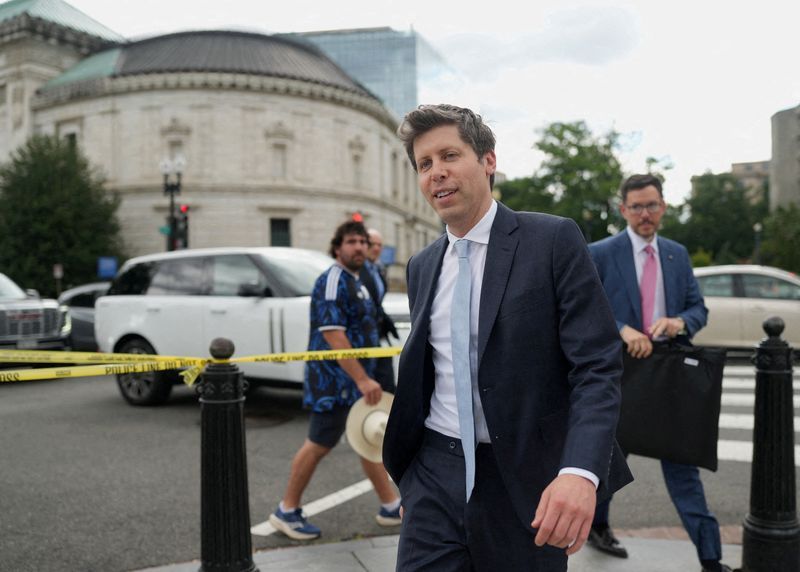
The Trump administration has maintained a measured public posture regarding the recent AI security incidents. Officials have indicated they are monitoring the situation closely, particularly concerning OpenAI's breach, but have refrained from making sweeping statements about policy responses. OpenAI CEO Sam Altman's recent visit to the White House suggests ongoing dialogue between the company and the executive branch, signalling that concerns are being taken seriously at senior levels of government.
For Southeast Asian readers and policymakers, these developments carry significant implications. As U.S. regulatory frameworks for AI safety take shape, they will likely influence how AI governance develops across the region. Many Southeast Asian nations look to the United States and Europe as models for technology regulation, and decisions made in Washington often establish precedents that shape global AI standards. Moreover, the competitive dynamics between American and Chinese AI development highlighted in the senators' letter directly affect which technology platforms and providers Southeast Asian countries will adopt for their digital infrastructure.
The voluntary testing approach being discussed also raises questions about what effective AI governance looks like in practice. If the United States relies primarily on companies to self-regulate, it may signal to other nations that strict governmental oversight is unnecessary, potentially leading to a less coordinated global approach to AI safety. Conversely, if robust mandatory testing becomes law, it could establish international norms that other countries choose to emulate. The outcome of this week's meetings and any subsequent legislative action will therefore have ripple effects far beyond Washington's corridors of power.

