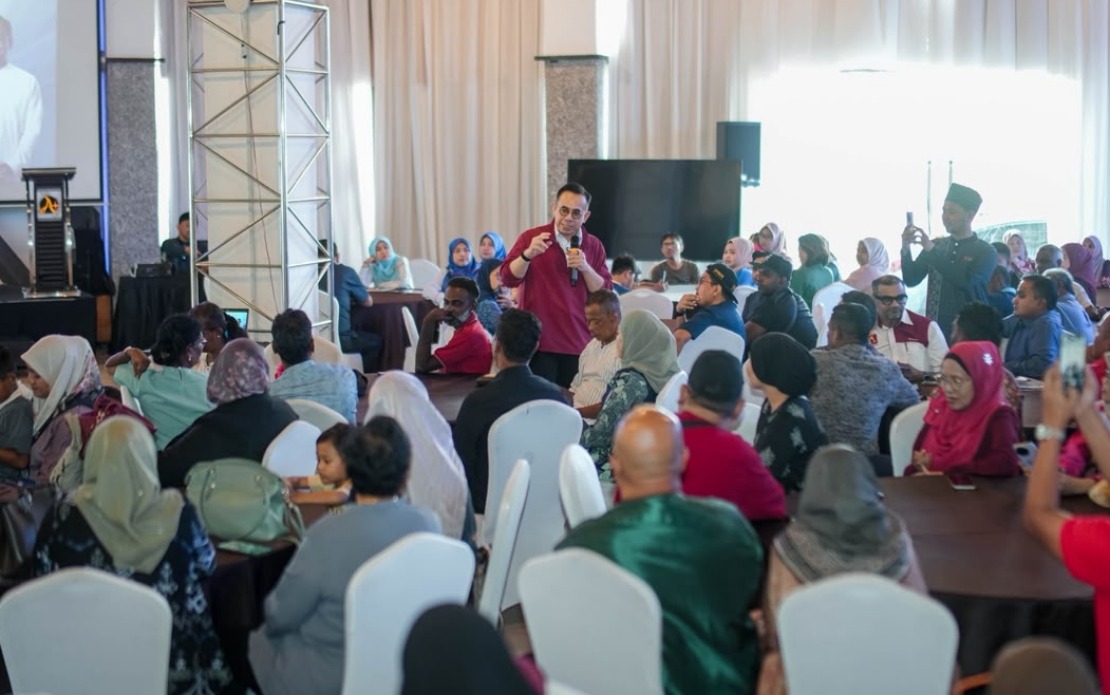
TEKUN Nasional has channelled RM36 million in financing to roughly 1,500 entrepreneurs across Negeri Sembilan by the end of June this year, underscoring the government's sustained commitment to small business development in the state. At the broader national level, the agency has rolled out RM540 million to approximately 25,600 entrepreneurs during the identical timeframe, reflecting an ongoing push to expand capital availability for Malaysia's micro and small enterprise sector.
Entrepreneur Development and Cooperatives Minister Steven Sim Chee Keong disclosed these figures during a visit to Seremban on July 20, where he engaged directly with TEKUN borrowers to understand their experiences navigating the loan process. The engagement underscored the ministry's recognition that policy frameworks must be grounded in genuine feedback from users rather than top-down assumptions about what entrepreneurs need. Over three decades since its establishment, TEKUN has become a significant pillar in Malaysia's entrepreneurship ecosystem, though Sim acknowledged that institutional weaknesses persist and demand continuous refinement.
Recognising delays as a persistent friction point in the financing system, the minister unveiled an ambitious timeline for loan decision-making. For applications of RM100,000 and below, TEKUN aims to communicate approval or rejection decisions within seven days of submission. For microfinancing of RM20,000 or less, the Ministry of Entrepreneur Development and Cooperatives (KUSKOP) is working toward a 24-hour turnaround. These targets address a longstanding complaint from entrepreneurs who have described approval waiting periods as detrimental to their ability to seize market opportunities or manage cash flow effectively.
Beyond mere speed in processing, Sim stressed that rapid decisions must be paired with equally swift fund disbursement. An approval that arrives promptly but sits in the system for weeks before the entrepreneur receives capital remains functionally useless for business operations. This integrated approach to accelerating both decision and payment cycles represents a shift toward treating the entire financing journey as a seamless customer experience rather than a series of isolated bureaucratic steps.
A particularly pointed directive emerged from Sim's remarks regarding the politicisation of loan applications. He made clear that TEKUN financing decisions must rest entirely on professional evaluation of applicant eligibility, divorced from political affiliations, party colours, or letters of endorsement from elected representatives. This stance directly confronts what has become an entrenched practice in Malaysian entrepreneurship: the expectation that securing capital requires cultivating political patronage. By asserting that blue, green, or red politics should hold no sway over loan approval, Sim signalled an attempt to dismantle the informal gatekeeping structures that have historically privileged entrepreneurs with political access over those without.
The minister emphasised that applications will be assessed on their inherent merits regardless of applicant ethnicity, religion, or political alignment. This commitment to colour-blind, transparent evaluation carries particular weight in Malaysia, where race-conscious policies have long shaped economic opportunity. The explicit rejection of support letters as decision criteria challenges a practice whereby third-party endorsements—often from politicians—have functioned as de facto co-signers or credibility vouchers.
Parallel to these procedural reforms, the government has expanded targeted financing schemes for underrepresented communities. The Indian Community Entrepreneur Development Scheme (SPUMI) has received a boost from RM30 million to RM50 million, while the Indian Community Entrepreneur Financing Package (MUDRA) mobilises RM220 million this financial year. These allocations reflect recognition that certain demographic groups historically face steeper barriers in accessing mainstream financing and benefit from dedicated support mechanisms.
Sim articulated a broader strategic vision: Malaysia's entrepreneurs should be understood as competitors in a single Malaysian market rather than representatives of separate ethnic or communal groups. When Malaysian firms pitch products abroad, they compete as Malaysian enterprises, not as companies belonging to specific ethnic communities. This framing reorients entrepreneurship from an identity-based social policy into an economic competitiveness imperative. The logical corollary is that fragmented, ethnicity-siloed support systems undermine national productivity and global market positioning.
The minister's declaration that "if we want to succeed internationally, we must succeed together; if we fail, we fail together" encapsulates a philosophy that ties inclusive entrepreneurship to national economic performance. This messaging attempts to shift the conversation from zero-sum debates about who deserves financing toward a recognition of shared interest in growing Malaysia's small business base as a whole.
For Malaysian entrepreneurs and policymakers, these developments carry several implications. The push for faster approvals addresses a genuine pain point, though implementation will be critical; targets mean little if underlying resource constraints or procedural complexity prevent timely execution. The depoliticisation agenda, while admirable in principle, faces the challenge of changing institutional cultures where political patronage has become normalised. Entrepreneurs accustomed to seeking political endorsement may need reassurance that merit-based evaluation is genuinely in effect before trusting the system.
Regionally, Malaysia's emphasis on streamlining micro-lending and expanding access across communities offers a model worth observing for other Southeast Asian economies grappling with similar challenges of small business financing and inclusive growth. The three-decade track record of TEKUN, despite its imperfections, demonstrates that dedicated financing institutions can scale capital to thousands of entrepreneurs when political will exists.
The real test of these reforms will emerge in coming quarters as new timelines are tested against ground-level implementation capacity, and as entrepreneurs from traditionally marginalised groups report whether the promised depoliticisation has materialised in practice.

