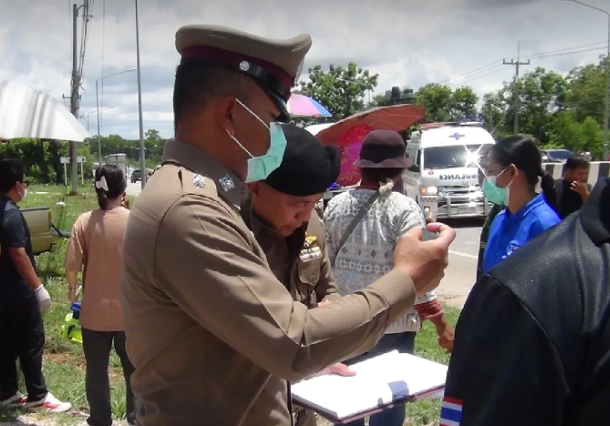
A catastrophic collision in Mukdahan province, northeastern Thailand, has left 10 Buddhist monks dead and another 10 injured after a young boy drove an unsecured pickup truck into a religious procession on Thursday. The incident, which occurred as worshippers walked along a roadside during a pilgrimage, has prompted an ongoing investigation by local authorities and raised serious questions about vehicle security and child supervision in the region.
According to Mukdahan Hospital's latest medical updates released on Friday, the casualties remain significant, with five monks pronounced dead at the crash scene and an additional five succumbing to their injuries whilst undergoing treatment. The hospital continues to provide care for ten survivors, among whom two remain in critical condition with serious injuries, whilst eight others are receiving treatment for less severe wounds sustained in the collision.
The procession, comprising 35 Buddhist monks and five lay followers, had been participating in a pilgrimage activity when the incident occurred. Without warning, the truck veered into the group gathered on the roadside, creating a scene of chaos and devastation. Preliminary investigations indicate that the vehicle had been taken from the driver's parents without their knowledge or consent, suggesting a troubling lapse in domestic vehicle security measures that allowed a pre-adolescent child unsupervised access to the automobile.
Prayut Ruanthongkam, the chief of Mukdahan City Police, confirmed to international media that the young driver was unable to provide a formal statement to investigators due to his age and the traumatic circumstances of the incident. Following standard procedure, the child has been referred to Thailand's child welfare authorities for comprehensive psychological and behavioural assessment. He remains in the custody of his mother whilst authorities determine appropriate next steps.
Thailand's legal framework affords significant protection to children under 12 years old, who are exempt from criminal liability under the country's justice system. This legal provision means that the child cannot face criminal charges directly for the deaths and injuries resulting from the collision, though the incident highlights broader concerns about how such tragic circumstances should be handled when young people are involved in fatal accidents. The focus of the investigation has consequently shifted toward understanding how the child gained access to the vehicle and understanding the circumstances that led to the procession being in the vehicle's path.
Police investigators are systematically gathering testimony from the surviving monks who were present during the procession. These eyewitness accounts are proving crucial to reconstructing the sequence of events and determining whether any factors beyond the young driver's control contributed to the tragedy. Officers have prioritised obtaining statements from monks who witnessed the collision directly, treating these religious figures with the cultural respect befitting their status within Thai society.
In Thai society, Buddhist monks occupy an extraordinarily elevated position within the social and spiritual hierarchy. These ordained practitioners are deeply venerated across the kingdom as custodians and transmitters of Buddhist teachings derived from the historical Buddha. Their role extends far beyond purely spiritual functions; monks are seen as moral exemplars and remain central to Thai cultural identity and daily religious practice.
Processions involving monks represent important communal and religious activities throughout Thailand, with such gatherings reflecting the profound integration of Buddhism into everyday Thai life. Public processions provide opportunities for ordinary citizens to demonstrate respect and devotion through offering alms and other acts of goodwill. These processions have become cultural touchstones, with widespread participation from communities seeking spiritual merit and connection to their religious heritage.
Wat Roi Phra Phutthabat Phu Manorom, a hilltop temple situated within Mukdahan province, has opened its facilities to accommodate the surviving monks and lay followers affected by the tragedy. The temple's response represents the broader Buddhist community's effort to provide sanctuary and support to those traumatised by the incident. The provision of shelter at the temple offers not merely physical accommodation but also spiritual comfort during a period of collective grief and processing.
The incident raises profound questions for Southeast Asian societies grappling with rapid motorisation and the challenges of integrating increasing vehicle numbers into communities with long-established patterns of public religious and cultural activity. Malaysian observers may recognise similar vulnerabilities in their own communities, where religious processions and public gatherings must coexist with vehicular traffic. The case underscores the necessity of enhanced safety protocols, improved vehicle security practices, and continued public education regarding the risks posed by unsupervised access to motor vehicles, particularly in communities where vulnerable groups regularly gather for religious observance.
The tragedy has generated significant regional attention, particularly given Thailand's significance as a major Buddhist nation and the profound symbolic weight carried by any incident resulting in the deaths of ordained monks. The incident's impact extends beyond the immediate grieving process to encompass broader conversations about community safety, religious protection, and the responsibilities of vehicle owners in preventing unauthorised use.

