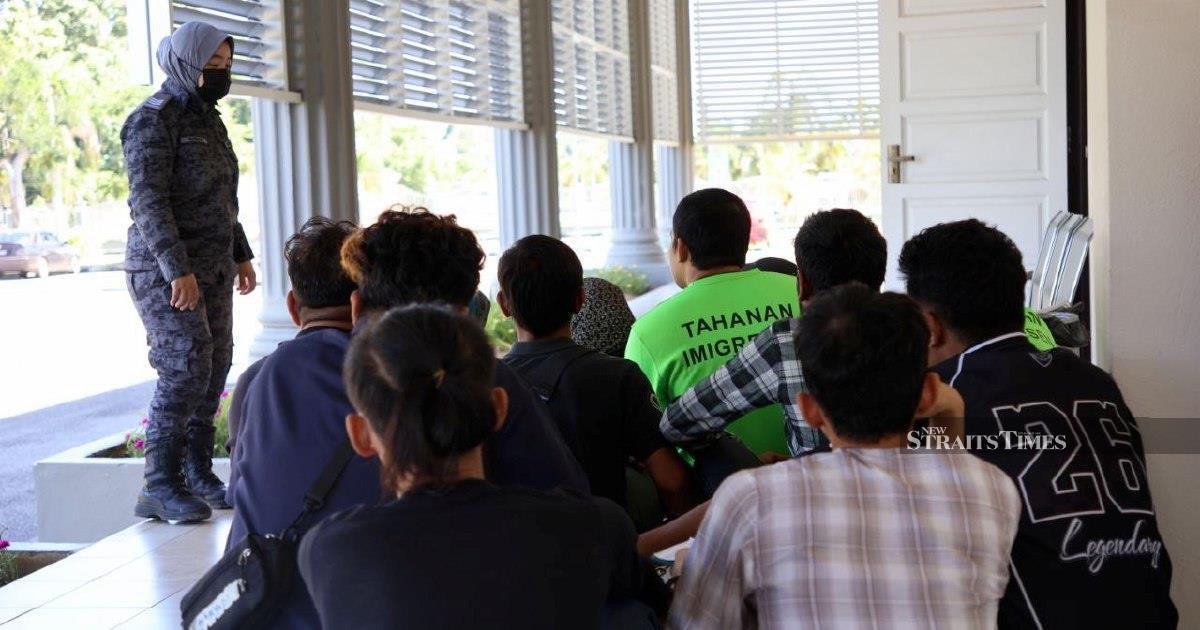
The Pasir Mas Sessions Court has processed charges against ten undocumented migrants accused of violating Malaysia's immigration laws through multiple infractions. The group comprised seven men and three women, all of foreign nationality, who appeared before the court to answer charges related to their illegal presence in the country. The charges encompassed overstaying beyond authorised periods, unauthorised entry across Malaysian borders, and the fraudulent use of social visit passes intended for temporary tourism and business purposes.
This court action reflects ongoing enforcement efforts by Malaysian immigration authorities to address the persistent challenge of undocumented migration across the nation's land and maritime borders. The Pasir Mas district in Kelantan, located near the Malaysian-Thai border, has historically served as a significant transit point for irregular migration flows into the country. Immigration officials in the area have intensified monitoring and detection operations to intercept individuals attempting unauthorised entry or those overstaying their permitted duration.
The misuse of social visit passes represents a particularly concerning trend in Malaysia's immigration landscape. These documents, designed to facilitate legitimate short-term visits for tourism, family gatherings, and business engagements, have become targets for exploitation by individuals seeking to establish unauthorised residence. The fraudulent application or modification of these passes diverts resources from immigration agencies and creates security vulnerabilities that undermine the integrity of Malaysia's border control systems.
Overstaying represents one of the most common immigration violations in Malaysia, with enforcement agencies identifying thousands of cases annually. Individuals who remain beyond their authorised stay duration face significant penalties, including fines, detention, and deportation. For repeat offenders and those involved in smuggling networks, consequences escalate to criminal prosecution rather than simple administrative action, as appears to be the case with these Pasir Mas defendants.
The demographics of this particular group, including the presence of three women among the ten charged, underscores how irregular migration networks encompass diverse participants. Research into undocumented migration patterns indicates that women often assume different roles within smuggling chains compared to men, though reliable data remains limited. The involvement of women raises questions about vulnerability factors, including potential trafficking scenarios or economic desperation driving their participation in illegal entry schemes.
Malaysia's immigration enforcement structure operates through multiple agencies coordinated at federal and state levels. The Royal Malaysia Police, supported by immigration department officers and border security personnel, conduct patrols, intelligence-led operations, and community tip-off investigations. Courts at every level, including the Sessions Court hearing this case, process both administrative and criminal immigration matters, establishing precedent and deterrence through consistent application of penalties.
Regional considerations amplify the significance of border enforcement in Kelantan and other northern states. Thailand, Malaysia's primary overland neighbour, experiences its own migration pressures driven by economic differentials, conflict in Myanmar, and refugee displacement. The porous nature of the Malaysia-Thailand border, despite fencing and checkpoint infrastructure, creates repeated challenges for enforcement authorities seeking to screen incoming individuals against security databases and immigration records.
Penalties for immigration violations in Malaysia vary according to the specific nature and severity of the breach. Simple overstaying may result in fines ranging from hundreds to thousands of ringgit alongside mandatory deportation. Illegal entry convictions carry potential imprisonment alongside deportation orders. Those convicted of facilitating others' illegal entry face substantially heavier sentences, reflecting the distinction Malaysian law makes between individuals seeking entry and organisers of smuggling operations.
The broader context of this prosecution extends beyond immediate law enforcement concerns. Malaysia, as a middle-income nation with growing economic opportunities compared to neighbouring countries, continues attracting migrants seeking employment and improved living standards. Simultaneously, the country hosts substantial populations of registered migrant workers across construction, agriculture, domestic service, and manufacturing sectors. Balancing legitimate labour migration with border security represents an ongoing policy challenge for Malaysian government agencies.
These prosecutions also intersect with Malaysia's commitments under international conventions regarding human trafficking and migrant rights. While enforcement against illegal entry represents legitimate state sovereignty, authorities must simultaneously identify potential trafficking victims among detected undocumented migrants and provide appropriate protections. The distinction between voluntary irregular migration and coerced trafficking remains critical for appropriate case management and victim support.
The Sessions Court proceedings in Pasir Mas form part of Malaysia's broader immigration enforcement narrative, spanning from the northern states through to Sabah and Sarawak on Borneo. Consistent prosecution sends deterrent signals to potential offenders and their facilitators, though effectiveness depends partly on public awareness and on-ground resources available to enforcement teams. As migration pressures persist across Southeast Asia, individual prosecutions like this case contribute to a broader governmental strategy attempting to maintain border integrity while processing the complex realities of human mobility in the region.

