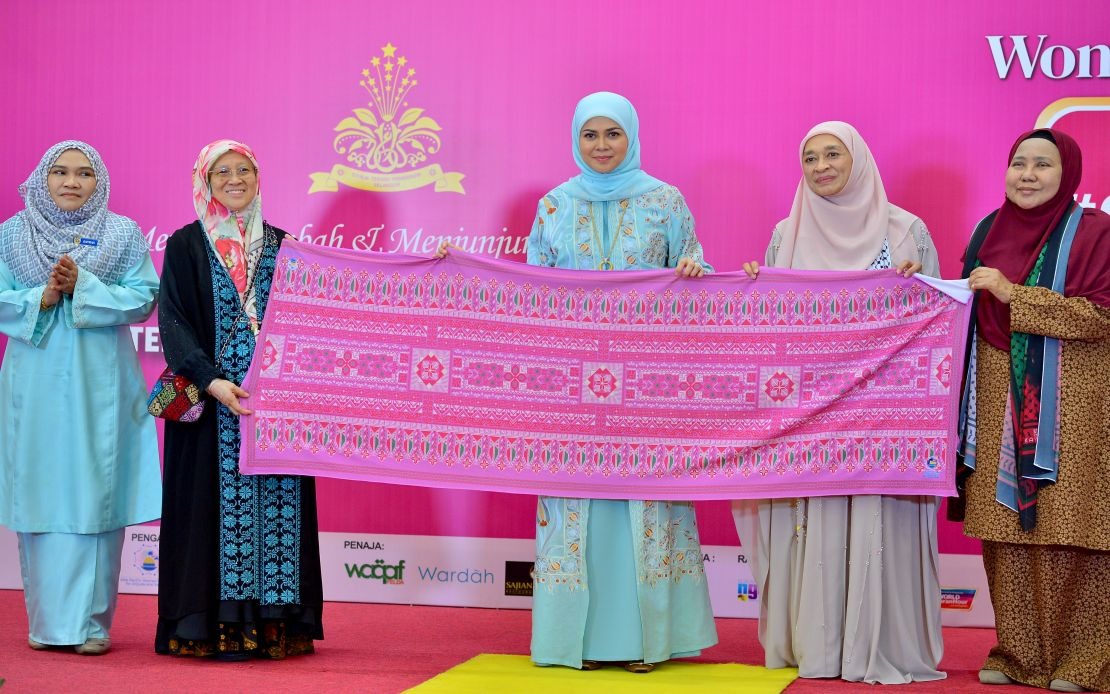
Selangor's Tengku Permaisuri Norashikin presided over the Women Summit & Women #QuranHour 2026 programme at Dahlia Auditorium in Sultan Salahuddin Abdul Aziz Shah Mosque, Shah Alam on June 24, marking a significant gathering dedicated to strengthening women's character through Islamic teachings. The ceremonial opening at 9.30am underscored the religious and social importance of the initiative, which united approximately 400 women from across Selangor alongside participants from Singapore, Indonesia and other regional nations. This multi-national attendance reflects growing regional interest in faith-based women's empowerment programmes that draw from Islamic scholarly traditions.
The event, jointly orchestrated by Yayasan Warisan Ummah Ikhlas (WUIF) and the Asia Pacific Women's Coalition for Al-Quds and Palestine (ApWCQP), centred on the theme "Women of Grit"—a conceptual framework examining how women cultivate inner fortitude while navigating adversity. This thematic focus derived deliberately from the experiences of Palestinian women, particularly those in Gaza, whose circumstances amid ongoing conflict have demonstrated remarkable commitment to preserving family structures, educational continuity and spiritual practice despite encountering profound loss and devastation. The organisers sought to translate these international examples of resilience into practical frameworks applicable to women across Southeast Asia facing their own distinct yet interconnected challenges.
Tengku Permaisuri Norashikin's attendance conveyed official recognition of women's spiritual development as a matter of state concern. Her reception by WUIF chief executive officer Marhaini Yusoff and ApWCQP president Dr Fauziah Mohd Hasan established the programme's credibility within both charitable and activist circles, legitimising discussions around feminine agency within Islamic contexts. The participation of notable figures including 2014 International Quran Recitation Champion Tirmizi Ali and International Islamic University Malaysia senior lecturer Associate Prof Dr Nora Mat Zin—whose psychiatric expertise adds clinical depth to discussions of spiritual wellbeing—demonstrated the organisers' commitment to bridging religious scholarship with contemporary psychological understanding.
Women Summit director Gharizah Hashim articulated the programme's dual purpose: cultivating strength to overcome hardship whilst simultaneously developing tranquility of spirit and discernment rooted in Quranic guidance. Her vision extended beyond reactive resilience, instead promoting proactive character development enabling women to rise from trials, serve as anchors within families, and contribute meaningfully to broader societal progress. This articulation distinguishes the initiative from generic motivational frameworks by grounding empowerment specifically within Islamic textual sources and epistemologies, appealing to participants seeking faith-consistent approaches to personal development.
The thematic emphasis on "grit" carries particular resonance for Malaysian audiences navigating rapid economic transformation, family structure evolution, and competing cultural narratives. Women across the country increasingly balance professional ambitions, educational pursuits, and traditional expectations—challenges that Quranic frameworks present as navigable through spiritual discipline and moral clarity. By explicitly connecting ancient religious texts to contemporary lived experience, the programme positions Islamic scholarship not as historical artifact but as dynamic resource for addressing twenty-first century complexity.
Marhaini's announcement regarding expansion through the Rumah Ngaji network signals ambitious scaling intentions. These community-sponsored Quranic study circles, operating freely across Malaysia's diverse states, represent grassroots infrastructure capable of transmitting the summit's insights to substantially larger female populations. This network-based approach acknowledges that sustainable women's empowerment requires sustained local engagement rather than singular metropolitan events, embedding Quranic learning within neighbourhood contexts where women already gather for religious observance and social connection.
The presence of Rumah Ngaji representatives from multiple states at the Shah Alam summit served ceremonial function—legitimising the gathering as movement-launching occasion rather than isolated conference. This deliberate architectural choice signals to state-level organisers that a structured nationwide campaign exists, inviting their participation within broader coordinated framework. For Malaysian women residing outside metropolitan centres, such decentralisation offers access to premium programming that might otherwise remain geographically inaccessible, democratising what could otherwise become elite urban initiative.
The international participation from Singapore and Indonesia reflects broader Southeast Asian appetite for Islamic women's discourse that bridges devotional practice with contemporary empowerment language. Regional audiences increasingly seek frameworks synthesising traditional Islamic learning with modern psychological and social understanding, rejecting false dichotomies between spirituality and agency. This summit's positioning as space for such integration may catalyse similar initiatives across the region, establishing new standards for how Muslim-majority societies approach women's development through faith-centred rather than secular-exclusively frameworks.
The programme's emphasis on character development rooted in Quranic study carries implicit critique of purely material or individualistic empowerment narratives. By centering spiritual resilience, moral clarity, and familial contribution alongside personal achievement, the organisers present alternative framework suggesting that feminine strength encompasses emotional stability, ethical consistency, and community orientation. For Malaysian women navigating competing messages about success and fulfilment, this integrated approach offers coherent alternative to fragmented prescriptions treating professional advancement, family relationships, and spiritual life as separate domains requiring separate navigation strategies.
As Marhaini indicated, the summit functions as inauguratory moment for expanded movement rather than conclusion of initiative. The commitment to sustained state-level programming through Rumah Ngaji suggests resource mobilisation and volunteer recruitment extending well beyond June 2024. For Malaysian women's organisations and religious institutions, this trajectory signals emerging collaborative model where formal religious authority (evidenced by Tengku Permaisuri's patronage), grassroots civil society (WUIF and ApWCQP), and neighbourhood-level learning infrastructure (Rumah Ngaji) combine toward systematic female empowerment aligned with Islamic values and contemporary requirements.

