Tengku Puteri Seri Kemala Tengku Datuk Seri Aishah, the elder sister of Pahang Sultan Al-Sultan Abdullah Ri'ayatuddin Al-Mustafa Billah Shah, was laid to rest today at the Royal Mausoleum in Pekan. The 69-year-old passed away at 9.25 pm yesterday at a private hospital in Kuala Lumpur, prompting a swift series of funeral arrangements completed within 24 hours in accordance with Islamic tradition and royal protocol.
The burial ceremony represented a significant moment for the Pahang royal household, with Al-Sultan Abdullah and his consort Tengku Ampuan Tunku Azizah Aminah Maimunah Iskandariah both attending the final rites. Their presence underscored the importance placed on honouring family bonds within Malaysia's institutional monarchy, where royal siblings hold particular ceremonial and symbolic significance. Accompanying them was Tengku Mahkota Tengku Hassanal Ibrahim Alam Shah, the heir to the Pahang throne, reflecting the multi-generational nature of royal observances in the state.
The funeral proceedings commenced early in the day at the Khalid bin Al-Walid Mosque situated along Jalan Padang Tembak in Kuala Lumpur, where the Islamic funeral prayers were solemnised before family and close associates. Following this initial ceremony, the remains were transported to Subang Air Base for the flight back to Pahang, a journey that allowed the royal family to arrange final preparations in the state capital. This logistical arrangement, though brief, provided time for additional governmental officials and ceremonial preparations to be completed ahead of the main burial service.
Upon arrival in Pekan, the cortège proceeded to the Sultan Ahmad 1 Mosque, where the remains arrived at 1.25 pm for a second recitation of funeral prayers following the zuhur prayers. This dual-mosque arrangement reflects customary practice in royal funerals, ensuring that both the immediate family circle and the broader Pahang community have opportunities to pay respects according to Islamic convention. The extended timing also allows senior state officials to participate fully in the ceremony.
The actual interment took place at the Royal Mausoleum adjoining the Sultan Ahmad 1 Mosque, where the burial was conducted with full ceremonial honours befitting a member of the immediate royal family. Pahang Mufti Datuk Dr Asmadi Mohamed Naim led the recitation of Yasin, the traditional Quranic chapter recited at Muslim funerals, followed by tahlil and supplementary prayers. These religious observances provide spiritual closure for the deceased according to Islamic teachings while allowing family members to express their grief within a structured framework.
The presence of senior political figures highlighted the state-level significance of the occasion. Melaka Yang Dipertua Negeri Tun Mohd Ali Rustam attended alongside Pahang Menteri Besar Datuk Seri Wan Rosdy Wan Ismail, indicating cross-state recognition of the Pahang royal family's standing within Malaysia's constitutional framework. Such attendance by political figures demonstrates the interconnected nature of Malaysia's royal and governmental systems, where state executives maintain formal relationships with their respective sultans and extended royal households.
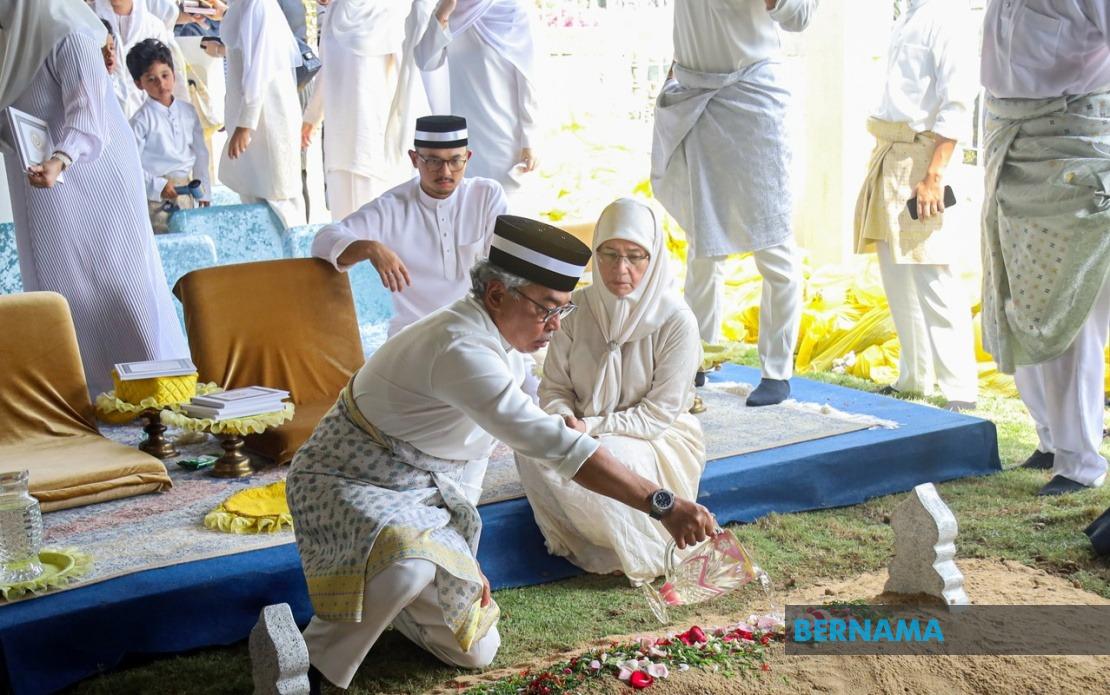
The final moments of the ceremony saw Al-Sultan Abdullah and Tunku Azizah performing the traditional acts of sprinkling rose water and scattering flowers upon the grave. These gestures, performed by the closest family members, constitute the concluding ritual in Muslim burial practices and carry profound emotional significance. The Sultan's personal participation in these acts underscores the intimate family dimension underlying state ceremonial functions, reminding observers that institutional roles do not diminish personal bonds between relatives.
Tengku Puteri Seri Kemala's passing represents the end of a significant chapter in Pahang's modern history. As the elder sister of the reigning Sultan, she would have witnessed decades of constitutional developments, state economic transformation, and the evolution of Malaysia's federal system. Her life trajectory, though less publicly prominent than her brother's official role, intersected with numerous moments of national and state importance.
The burial arrangements reflect the careful balance maintained in Malaysian royal protocol between Islamic religious observance and constitutional ceremony. The rapid completion of funeral rites honours both the Islamic requirement for swift burial and the practical demands of coordinating state-level participation. For Malaysian citizens observing from afar, such ceremonies offer windows into how the nation's plural identity integrates Islamic traditions with constitutional monarchy and democratic governance structures.

