Putrajaya became the epicentre of Malaysian patriotism on August 31 as tens of thousands of citizens from across the country descended upon Dataran Putrajaya to commemorate the nation's 69th year of independence. The celebration painted a vivid picture of national cohesion, with residents of all ages and ethnic backgrounds joining together in a collective display of pride and festive spirit beneath the Putrajaya skyline. The infectious enthusiasm that rippled through the crowd underscored the enduring emotional connection Malaysians maintain with their national identity, even as the country navigates the complexities of modern governance and development.
This year's National Day observance carried the thematic banner of "Malaysia MADANI: Kesejahteraan Dinikmati", reflecting the government's broader vision of national prosperity and inclusive wellbeing. The slogan encapsulates aspirations that resonate across Malaysian society—the promise that economic progress and social advancement should benefit all citizens regardless of background. By anchoring the festivities to this particular messaging framework, organisers sought to connect ceremonial commemoration with contemporary policy priorities, transforming Independence Day from a purely retrospective exercise into a forward-looking statement about national direction and ambition.
Putrajaya's selection as host venue underscored its continued prominence in Malaysia's ceremonial and administrative landscape. The federal capital has proven itself a reliable stage for major national events, having previously hosted the National Day celebrations in 2003, 2005, 2018, 2019, 2023, 2024, and 2025. This frequency of selection reflects both the logistical infrastructure available in Putrajaya and the symbolic significance of conducting such celebrations in the seat of government. The concentration of these events in Malaysia's purpose-built administrative hub demonstrates how modern nation-states instrumentalise physical spaces to project authority and organised spectacle.
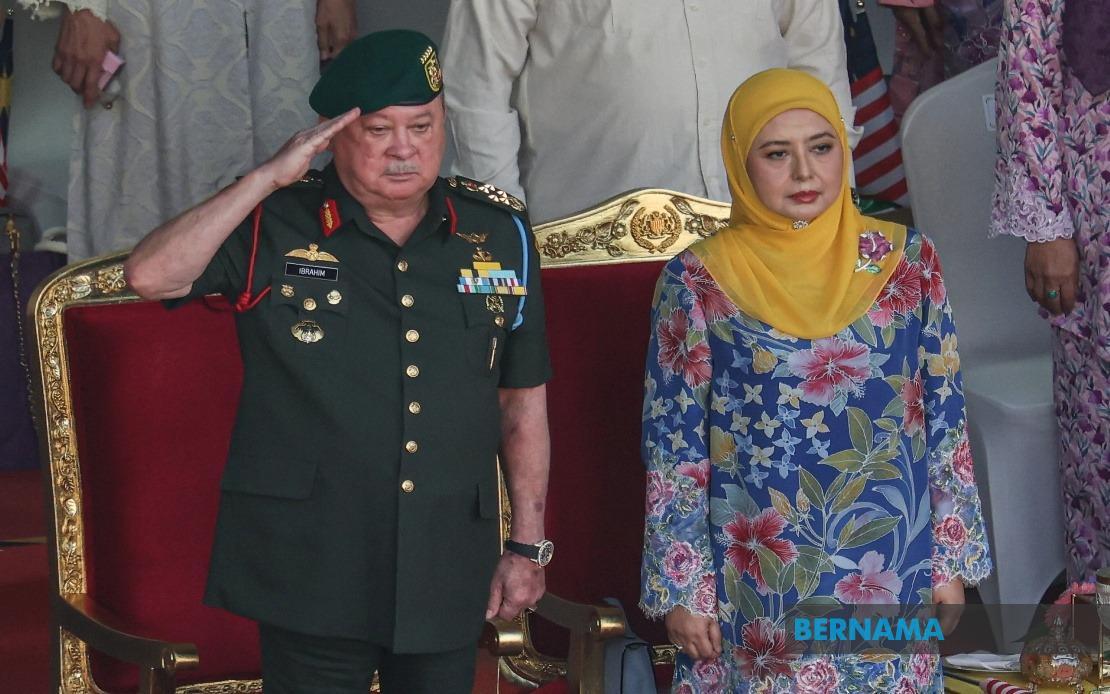
Proceedings commenced in the early morning hours with the arrival of Prime Minister Datuk Seri Anwar Ibrahim and his wife, Datuk Seri Dr Wan Azizah Wan Ismail, who took their positions at the royal stage at 7:53 am. The musical accompaniment of "Hormat Perdana" marked this ceremonial moment, establishing the formal tone for festivities that would unfold throughout the day. Minutes later, at 8 am, the focus shifted to the appearance of Malaysia's reigning monarchs, Their Majesties Sultan Ibrahim and Raja Zarith Sofiah, whose arrival triggered an elaborate aerial display featuring five helicopters trailing the Jalur Gemilang in formation, while orchestral renderings of Negaraku and "Hormat Diraja" underscored the spectacle.
The pageantry extended beyond mere ceremonialism to encompass substantive ritual elements that anchor Malaysian identity in constitutional and symbolic frameworks. Following the singing of Negaraku, the 41st Battery of the Royal Artillery Regiment (Ceremonial), under the command of Major Hafizan Mat Ghani, executed a 14-gun salute accompanying the raising of the Jalur Gemilang—each report symbolising one of Malaysia's constituent states. This numerical choreography transforms geographical and political reality into sonic and visual poetry, reminding citizens of their federation's federated nature at the precise moment when national unity rhetoric reaches its zenith.
The ceremony's emotional climax arrived with the recitation of the Rukun Negara, Malaysia's foundational civic creed encompassing the five principles undergirding national philosophy. Led by Malaysian Fire and Rescue Department Deputy Commissioner Datuk Abdul Razak Muda and accompanied by 69 JBPM personnel and sign language interpreter Nur Alyanatasha, this moment broadened participation beyond elite political figures to encompass frontline public servants. The inclusion of a sign language interpreter reflected evolving consciousness around accessibility and inclusive national commemoration, ensuring that citizens with hearing impairments could engage fully with constitutive national narratives rather than remaining passive spectators.
The crescendo of patriotic sentiment built toward the iconic cry of "Merdeka"—independence—which reverberated across Dataran Putrajaya seven times in succession. Each repetition carried accumulated emotional weight, embodying not merely historical fact but lived aspiration. The gathered multitude responded viscerally, hoisting their miniature Jalur Gemilang in unison, creating a sea of red and yellow that visually manifested the abstract concept of national solidarity. This carefully choreographed moment, refined through decades of Independence Day observances, remains among the most emotionally resonant in Malaysia's annual ceremonial calendar.
The guest list reflected Malaysia's positioning within regional and global diplomatic frameworks. Deputy Prime Minister Datuk Seri Dr Ahmad Zahid Hamidi, various Cabinet ministers including Communications Minister Datuk Seri Fahmi Fadzil—who chaired the organising committee for both National Day and Malaysia Day festivities—alongside foreign diplomats and international delegates, affirmed the ceremony's dual significance as both domestic commemoration and international statement. The presence of foreign representatives transformed Dataran Putrajaya into a venue for Malaysia to project its contemporary identity and values to the world, positioning national independence day celebrations as occasions for diplomatic messaging and soft power projection.
For Malaysian observers, particularly those in Southeast Asia, National Day observances carry layers of significance extending beyond ceremonial tradition. They represent punctuation marks in national narrative, moments when societies collectively pause to reaffirm foundational principles and assess progress toward declared aspirations. The theming around "Kesejahteraan Dinikmati"—enjoyed prosperity—reflects ongoing tensions within Malaysian society between development achievements and remaining inequalities, between inclusive growth rhetoric and distributional realities. By staging these commemorations with such elaborate ceremonial apparatus and mass participation, the state demonstrates commitment to managing national identity as a centralised project requiring coordinated expression and symbolic alignment.

