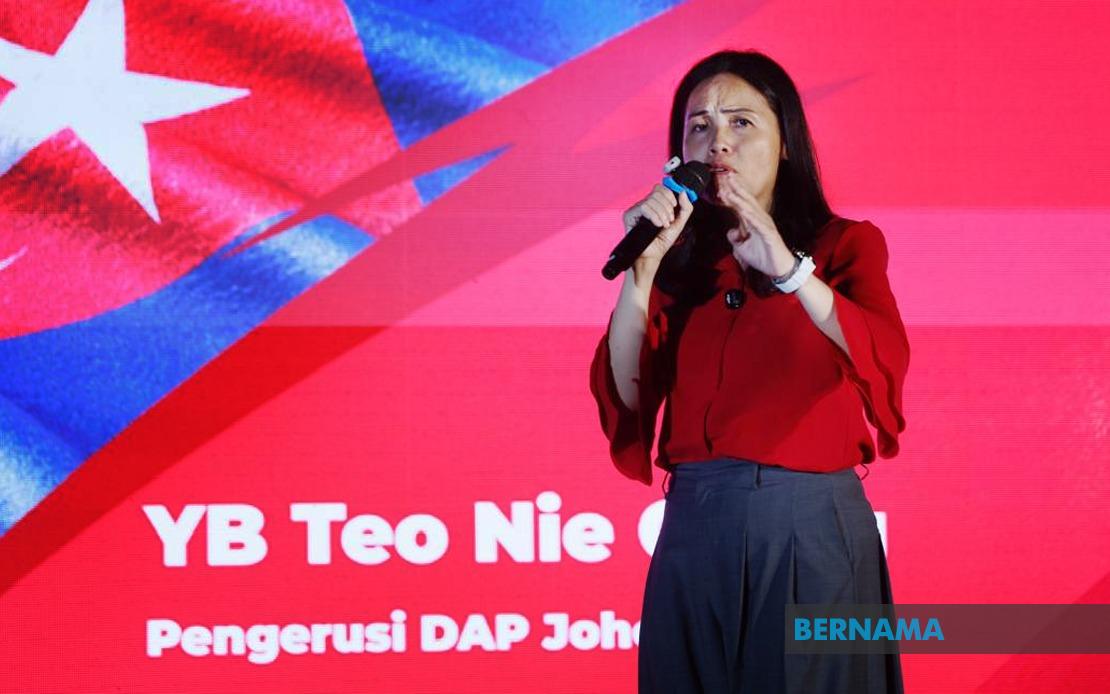
In a forceful critique delivered at a Pakatan Harapan rally in Paloh, Johor DAP chairman Teo Nie Ching has challenged the state government's rationale for establishing appointed state assemblymen, raising pointed questions about the mechanism's true purpose and democratic implications. Speaking as the election campaign enters its final phase ahead of Saturday's polls, Teo highlighted fundamental concerns about how such positions might circumvent voter accountability, a cornerstone principle of representative democracy that her party considers inviolable.
The controversy centres on legislation passed by the Johor State Legislative Assembly on May 7, which amended the state enactment to permit the appointment of up to five assemblymen. State authorities have framed this move as a means to strengthen the assembly's overall function and composition, though the announcement has sparked debate within opposition quarters and among democracy advocates. Teo's intervention suggests the issue has become a significant talking point in the electoral campaign, with implications for how the state legislature might operate should the current administration continue.
Teo, who also serves as National DAP Wanita chairman and Deputy Communications Minister, articulated specific concerns about the mechanism's potential to erode governance transparency. By allowing individuals to enter the legislative assembly without facing voter scrutiny at the ballot box, she argued, the arrangement creates a democratic deficit that could undermine public trust in the institution. Her pointed question—asking who exactly would be appointed and whether such positions might reward political allies, particularly those from coalition partners like PAS—suggests she suspects the appointments could become a tool for political patronage rather than merit-based legislative enhancement.
The timing of Teo's remarks carries particular weight given Johor's electoral context. The ruling coalition has indeed benefited from PAS support during the current election cycle, and the creation of appointed positions could theoretically be used to strengthen their legislative majority or to accommodate political figures who failed to win seats at the ballot. Teo's questioning implicitly raises the concern that democratic representation is being subtly compromised through institutional mechanisms that, while technically legal, may violate the spirit of electoral democracy that citizens expect to see functioning in their state assembly.
Despite her criticism of the appointed assemblymen proposal, Teo used the rally to mount a broader defence of the Unity Government's overall record since taking office at the federal level. She acknowledged frankly that the MADANI Government cannot claim perfection and that substantial room for improvement remains across multiple policy domains. However, she contended that meaningful systemic reforms have been implemented systematically and deliberately, with particular emphasis on education and social welfare sectors where citizens experience direct benefits from policy changes.
Among the specific achievements Teo highlighted was a guarantee ensuring that all secondary school students who achieve 10 distinctions in the SPM examination receive placement in matriculation programmes, irrespective of their socioeconomic background or family circumstances. This policy represents a significant shift toward more equitable access to higher education pathways and eliminates barriers that previously excluded high-performing students from disadvantaged communities. Additionally, the government has expanded educational opportunities for holders of the Unified Examination Certificate, a credential particularly significant for students from independent Chinese schools, thereby broadening the post-secondary options available to this cohort.
Financial allocation to Chinese independent schools has increased substantially under the current administration, rising to RM20.16 million in the current fiscal year from RM12 million in 2019. This increase reflects a commitment to supporting vernacular education and represents a tangible reversal of budgetary constraints that had previously affected these institutions. For many Malaysian Chinese, such financial commitment signals government recognition of the importance of mother-tongue education and cultural preservation within the national education framework, addressing long-standing concerns about the adequacy of resources directed toward this educational sector.
Teo characterised these various reforms as part of a coherent strategy to construct more resilient and equitable systems that will benefit both present and future generations of Malaysians. Rather than promising revolutionary change or dramatic transformations, she framed the Unity Government's approach as incremental but purposeful system-building, acknowledging that democratic governance and institutional reform necessarily operate within temporal constraints and political realities. Her rhetoric suggests that the coalition intends to appeal to voters on the basis of demonstrable, practical improvements in service delivery and educational opportunity rather than ideological appeals or promises of sweeping restructuring.
The electoral context surrounding these remarks is significant, as 2.7 million voters across Johor are expected to participate in Saturday's polls to elect 56 state representatives. The state election carries implications beyond Johor's borders, as results may influence calculations about coalition stability at the federal level and the sustainability of the Unity Government arrangement. For Malaysian observers, the tension between Teo's defence of government achievements and her criticism of the appointed assemblymen proposal illustrates ongoing debates within the coalition about balancing pragmatic governance with democratic principles—a tension that has characterised Malaysian politics since the 2018 election cycle initiated the first significant shifts in the political landscape in decades.
The appointed assemblymen issue also connects to broader questions about institutional design and democratic representation that extend beyond Johor's specific circumstances. As states and the federal government continue to grapple with questions about optimal legislative composition and how to balance representation with effective governance, the mechanisms chosen—whether elected or appointed—carry important implications for public confidence in democratic institutions. Teo's insistence that the government provide transparent explanation and maintain accountability reflects a wider concern within civil society and opposition parties that institutional changes should undergo rigorous public scrutiny rather than proceeding primarily through technical legislative amendments that attract limited public attention.
Looking toward 2026, when the next federal election is scheduled, Teo's campaign message emphasises the need for continued voter support to sustain and expand the systemic reforms that the Unity Government claims to be implementing. Her framing suggests that these changes require more than a single electoral cycle to reach fruition, implying that political continuity and stability are necessary prerequisites for meaningful institutional reform. For voters evaluating the performance of the current government, such arguments require weighing tangible benefits like expanded educational access and increased resource allocation against concerns about democratic standards and institutional integrity that critics like Teo herself have highlighted.

