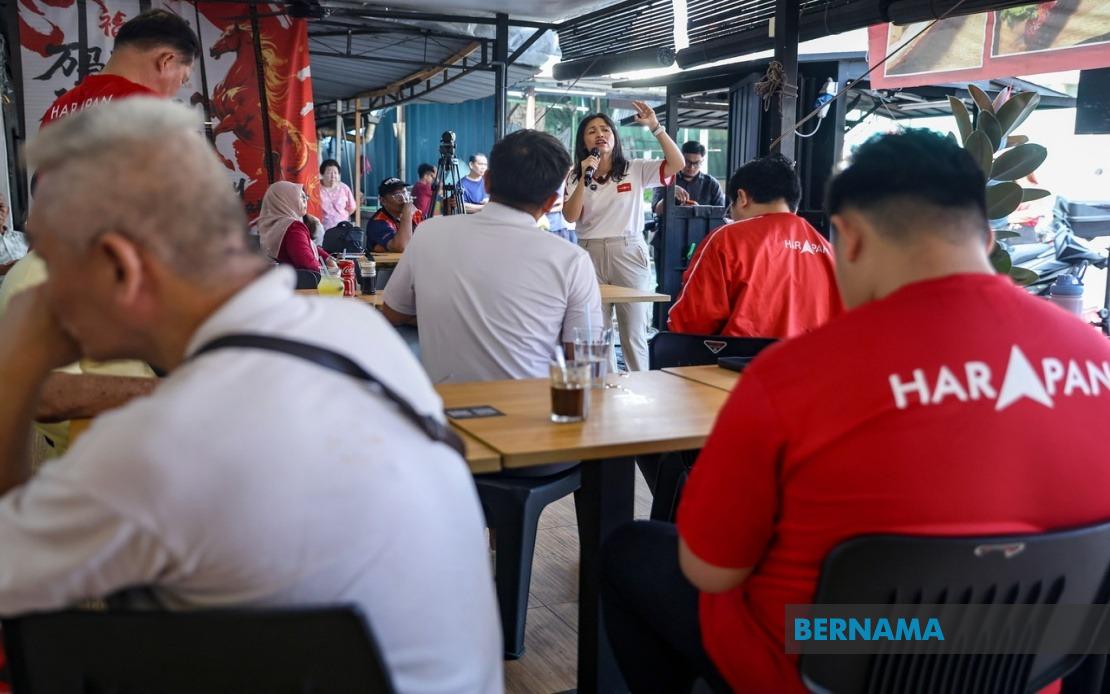
Johor's opposition coalition has escalated scrutiny of the ruling government's conduct during the state election campaign, with a senior Democratic Action Party figure demanding clarity on whether a mandatory vocational training programme was repurposed for political advantage. The row centres on an event held on July 4 at a government revenue office in Kluang, where the Johor MARA Technical and Vocational Education and Training Roadshow allegedly crossed the line from administrative function into partisan electioneering.
Johor DAP chairman Teo Nie Ching, who serves as Deputy Communications Minister at federal level, drew attention to grievances filed by parents and students who claimed they were effectively coerced into attending the gathering. According to complaints received by the opposition party, attendees faced warnings that non-participation would be recorded as unauthorised absence, creating substantial pressure on young people to show up regardless of personal circumstances or competing commitments.
What transformed the gathering from routine vocational promotion into political controversy, according to DAP's account, was the presence and conduct of Menteri Besar Datuk Onn Hafiz Ghazi. Rather than confining remarks to the ostensible purpose of the event—showcasing technical education pathways—he allegedly took the opportunity to solicit electoral support, explicitly referencing a Barisan Nasional candidate's nomination number in appeals to the student audience.
The strategic problem this creates cuts to the heart of election law and propriety. Teo articulated the dilemma with precision: either the programme was genuinely governmental in nature, in which case deploying it for partisan campaigning represents a misuse of public resources and state machinery, or it functioned as a party political event, which would require examining whether a government-owned facility—the Inland Revenue Board Hall—could legitimately host such activity. The distinction matters legally and ethically, particularly when attendance was mandatory for students with limited power to refuse.
The DAP contingent came equipped with documentary and audiovisual evidence to substantiate their complaint. Party officials indicated possession of the original programme schedule, the formal letter mandating student participation, and video material purporting to capture the candidate-endorsement remarks. This accumulation of materials suggests the opposition did not rely on anecdotal accounts alone but pursued what they characterise as a factual record of the event's progression.
Teo reframed the controversy in personal terms that may resonate beyond partisan lines. Her invocation of parental concern—asking observers to consider how they would react if their own children were compelled to attend an event and then pressured toward political allegiance—shifted the narrative from abstract rules about campaign conduct to immediate, relatable ethics. She was explicit that her objection stemmed from civic principle rather than party advantage, a rhetorical move designed to neutralise accusations of opportunism.
Regarding potential consequences, Teo indicated the matter would likely progress through formal channels. Pakatan Harapan candidates, she suggested, would evaluate whether to lodge official complaints with the Election Commission, Malaysia's designated authority overseeing campaign compliance. Such a step would initiate investigation into whether the July 4 event breached electoral regulations governing the use of public facilities and compelled participation in politically inflected gatherings.
The disagreement extends beyond the single event into broader governance philosophy. Teo also contested Menteri Besar Onn Hafiz's recent criticism of several federal policies, characterising his complaints as strategically dishonest. Her counterargument held that the state government selectively claims credit for popular initiatives while deflecting blame for unpopular measures onto the Prime Minister and opposition coalition partners—a pattern she attributed to electoral calculation rather than principled policy analysis. She noted that major policies require Cabinet approval, suggesting that state-level criticism deflects from shared responsibility.
Senior opposition figures reinforced the campaign's thematic messaging. Tan Sri Lim Kit Siang, the veteran DAP leader whose presence underscored the incident's significance, articulated a broader electoral vision centred on transcending racial divisions. He called upon Johor voters to consolidate behind what he termed the Malaysian Dream—an aspirational framework emphasising equality, expanded freedoms, widely shared prosperity, and institutional respect for human rights. His remarks implied that parochial or divisive politics represented regression from this unifying vision.
Lim's exhortation against vote-splitting carried practical import. In a fractious political landscape where opposition support could scatter across competing candidates, consolidated backing for designated Pakatan Harapan contenders represented a prerequisite for meaningful electoral challenge to the ruling coalition. The strategic context involved 172 candidates competing for 56 state assembly seats, with early voting occurring on July 7 and main polling scheduled for July 11.
The timing and framing of the TVET complaint warrant consideration within this electoral calendar. By publicising the allegations during early voting, the opposition ensured maximum visibility while voters remained actively engaged in the electoral process. The narrative—that government machinery was being instrumentalised for campaign purposes—addressed voter concerns about fairness and institutional integrity, potentially affecting decisions still to be finalised.
For Malaysian observers beyond Johor, the episode illustrates persistent tensions regarding the boundary between government functions and party activity. State apparatus, facilities, and compulsory attendance mechanisms remain potent campaign resources when election monitoring remains imperfect. Whether election authorities substantiate DAP's allegations may determine not only the immediate political consequences but also the precedent governing future state elections across Malaysia.

