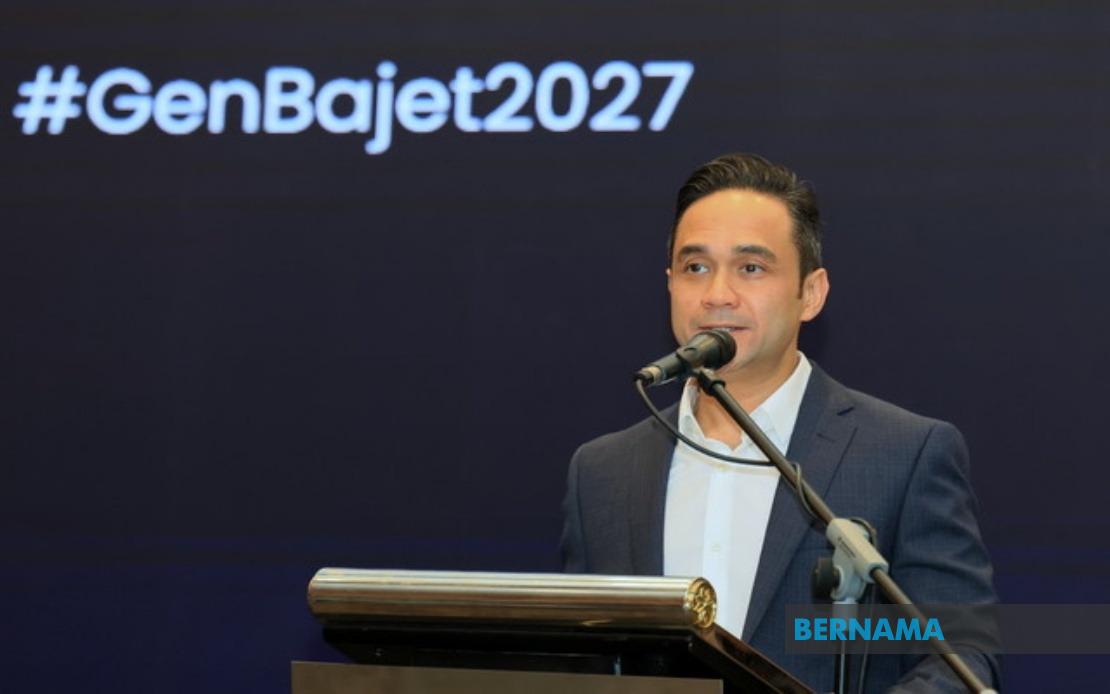
The Bumiputera Agenda Steering Unit (TERAJU) has formally requested that the upcoming federal budget earmark dedicated resources for advancing the Bumiputera Economic Transformation Plan 2035 (PuTERA35), signalling growing urgency around the execution of this decade-long initiative designed to reshape the trajectory of Bumiputera economic participation across Malaysia.
Speak at an event in Cyberjaya, Nik Nazree Nik Abdul Rahman, senior director of TERAJU's Strategic Services Division, underscored that securing adequate financial resources represents the critical enabling factor for translating the roadmap's 132 identified initiatives into tangible outcomes that measurably strengthen the Bumiputera community's economic standing and purchasing power. His remarks come at a pivotal moment, as policymakers prepare annual budget deliberations and competing ministry demands jostle for limited fiscal allocation.
The comprehensive initiative, formally launched on August 19, 2024, represents a wholesale restructuring of government strategy toward Bumiputera economic empowerment. Rather than pursuing incremental adjustments to existing programmes, PuTERA35 operates through three foundational pillars supported by twelve distinct operational drivers, collectively targeting enhanced Bumiputera participation, ownership stakes, and economic control across key sectors through 2035. This structural approach reflects a recognition that achieving meaningful transformation requires coordinated intervention across multiple fronts simultaneously.
Rather than merely recounting the sheer number of initiatives, Nik Nazree articulated a more nuanced concern about implementation effectiveness. While TERAJU reports achieving 67 per cent progress on the plan's implementation trajectory, this metric masks a deeper question about whether current activities are actually generating the desired socio-economic improvements for target communities. This distinction matters considerably; mechanically executing initiatives without validating their genuine impact on enterprise viability or household incomes would represent a failure of strategic intent despite apparent bureaucratic progress.
The energy transition sector exemplifies TERAJU's strategic thinking. As Malaysia navigates the global shift toward renewable and cleaner energy systems, policymakers recognize this transition creates an unprecedented economic window for Bumiputera entrepreneurs to establish themselves in emerging industries before competitive dynamics solidify. Supporting Bumiputera participation in renewable energy development, grid modernization, and related value chains could generate both immediate commercial opportunities and longer-term industrial capacity-building. However, such opportunities require sustained capital investment and technical support mechanisms that existing budgetary allocations have reportedly failed to provide comprehensively.
Capital market development represents another critical gap TERAJU has identified. The organisation has highlighted that Bumiputera enterprise access to diverse financing mechanisms remains underdeveloped despite Malaysia's sophisticated financial infrastructure. Unlike venture capital ecosystems in other developing economies that actively cultivate emerging entrepreneurs, domestic capital markets have insufficiently oriented themselves toward funding Bumiputera business expansion and innovation. This structural constraint means that even promising enterprises struggle to scale operations or invest in technological upgrading, ultimately limiting their long-term competitiveness.
The governance architecture surrounding PuTERA35 extends beyond TERAJU itself, involving multiple coordinating bodies and working committees that monitor implementation across different sectoral and functional domains. Prime Minister Datuk Seri Anwar Ibrahim chairs the Bumiputera Economic Council, indicating the government's stated commitment to high-level coordination and prioritization. Yet such institutional arrangements, while theoretically sound, require corresponding budget lines and staff resources to function effectively. Without adequate financing, coordinating bodies risk becoming symbolic structures rather than operational mechanisms driving genuine policy integration.
TERAJU's announcement that it will release a comprehensive implementation performance report by year-end suggests the organisation is preparing a detailed assessment of progress against stated targets. This report will likely prove consequential for subsequent budget negotiations, as it will provide empirical grounding for claims about whether current resource allocation levels have proven sufficient or whether budgetary constraints have impeded achievement of interim milestones. For Malaysian policymakers accustomed to assessing government programme effectiveness through systematic evaluation, such a document could meaningfully influence 2027 budget deliberations.
From a Malaysian perspective, the TERAJU initiative carries substantial implications beyond bureaucratic programme management. The Bumiputera framework remains contested in both domestic and regional discourse, with critics questioning whether targeted policies effectively serve intended beneficiaries or disproportionately concentrate benefits among connected elites. How effectively PuTERA35 actually improves conditions for ordinary Bumiputera workers, small traders, and rural entrepreneurs versus generating opportunities primarily for well-connected business groups will substantially determine the initiative's legitimacy and broader social acceptance.
The Southeast Asian regional context also bears on Malaysia's PuTERA35 implementation. As regional economies compete for foreign investment, talent, and integration into regional value chains, Malaysia's approach to enabling particular community segments' economic participation affects the country's overall competitiveness. Investors evaluating Malaysia against competing destinations consider not only macroeconomic fundamentals but also social stability and perceived fairness of economic opportunity distribution. How Malaysia manages Bumiputera empowerment objectives while maintaining investment attractiveness requires sophisticated policy calibration that adequate funding can more readily facilitate.
For Budget 2027 deliberations, TERAJU's funding request enters a context of Malaysia's broader fiscal constraints and competing development priorities. The government simultaneously pursues infrastructure modernization, education sector enhancement, healthcare expansion, and poverty reduction initiatives across all communities. Justifying substantial PuTERA35 budget allocation requires demonstrating that channelling resources toward Bumiputera-specific initiatives generates superior developmental returns compared to alternative uses of equivalent funding. Such analytical frameworks remain underdeveloped in Malaysian budgetary processes, leaving the PuTERA35 request competing largely on the basis of political prioritization rather than systematic cost-benefit comparison.
The timing of TERAJU's budget advocacy also deserves consideration. By mid-2027, the initiative will have been operational for approximately three years, sufficient for generating preliminary outcome data rather than merely implementation metrics. If the performance report Nik Nazree references substantiates that funded initiatives are generating measurable improvements in Bumiputera enterprise viability, employment, and household incomes, such evidence would substantially strengthen the case for enhanced 2027 allocation. Conversely, if the report reveals implementation shortcomings or questionable outcomes despite existing funding, budget gatekeepers may demand structural programme modifications before approving substantial new allocations.

