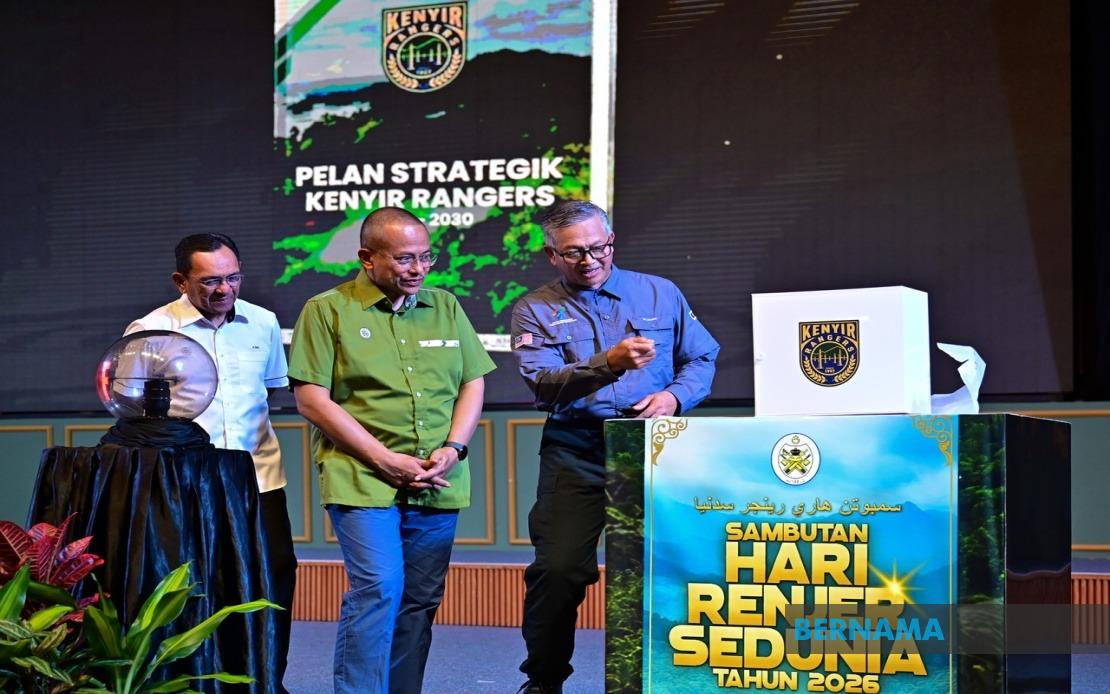
Terengganu Menteri Besar Datuk Seri Dr Ahmad Samsuri Mokhtar has stressed the urgency of collaborative action among multiple stakeholders to effectively mitigate human-wildlife conflicts in the state, particularly the increasingly dangerous encounters between elephants and vehicles on major highway corridors. Speaking during the opening ceremony of the state-level World Ranger Day 2026 celebration at Wisma Darul Iman in Kuala Terengganu on August 10, the menteri besar highlighted the critical need for coordinated efforts that extend beyond individual government departments to create a comprehensive safety framework protecting both wildlife populations and road users.
The call for enhanced cooperation encompasses a broad range of government and regulatory bodies, with particular emphasis on strengthening ties between the Wildlife and National Parks Department and the Malaysian Highway Authority. These two agencies, the menteri besar suggested, must establish more robust communication channels and joint operational protocols to address the growing frequency of wildlife incursions into transportation corridors. Such coordination becomes especially vital in managing wildlife movement patterns that frequently intersect with infrastructure development, creating inherent conflict zones where both animal and human safety remain perpetually at risk.
Among the concrete measures being contemplated is a significant expansion of patrol activities at locations identified as critical conflict hotspots, where wildlife encounters have historically proven most probable and dangerous. The menteri besar emphasized that these patrols must be strategically positioned and adequately resourced to respond swiftly to emerging threats, particularly during specific seasonal windows when wildlife behaviour patterns shift dramatically. Additionally, the installation of electric fencing around identified wildlife habitats and established animal migration corridors represents a technological intervention currently under serious consideration by state authorities.
The menteri besar acknowledged, however, that the financial implications of comprehensive electric fencing implementation present a considerable constraint. Given that highway networks sprawl across vast geographical distances, deploying electric barriers along every section would incur prohibitive costs that strain state resources. Consequently, the approach favours selective installation targeting priority zones immediately adjacent to wildlife habitats and documented migration routes, where the probability of dangerous encounters reaches its highest. This strategic rather than blanket approach allows for more efficient resource allocation while still providing meaningful protection where risks concentrate most acutely.
Beyond physical infrastructure, the menteri besar indicated that technological innovations capable of generating real-time early warning systems about wildlife movements represent a promising longer-term solution deserving serious investment. Such systems would theoretically provide highway users and transport authorities advance notice of animal presence, enabling timely warnings and speed reductions that could significantly diminish collision severity and frequency. The potential for integrating such technology into existing highway management systems merits exploration given the technology sector's rapid advancement in remote sensing and animal monitoring capabilities.
The menteri besar's statements came in direct response to a deeply troubling recent incident that occurred on August 5 along the East Coast Expressway 2, when a Toyota Estima driven by a married couple struck a herd of elephants at Kilometre 274.6, in the section between the Cheneh Toll Plaza and Kuala Terengganu. Both the driver and passenger sustained injuries in the collision, an outcome that underscored the tangible dangers confronting motorists when unexpected wildlife encounters occur at highway speeds. The incident crystallized in dramatic fashion the abstract policy challenge of human-wildlife conflict management into a concrete tragedy affecting real individuals and families.
The menteri besar characterized the expressway collision as a tragedy that demands serious reflection from both government and the public about the inherent risks posed by wildlife populations occupying territories that intersect with critical transportation infrastructure. He emphasized that the accident represented not merely an isolated misfortune but rather a symptom of a broader systemic imbalance created by development patterns that have progressively encroached upon traditional animal habitats and migration routes. The emotional and sympathetic dimension of his remarks—extending condolences to those directly affected—reflected the human cost implicit in environmental conflicts that increasingly define the relationship between development and conservation in rapidly urbanizing states like Terengganu.
The menteri besar's emphasis on the particular vulnerability of highways during monsoon seasons demonstrates sophisticated understanding of ecological patterns driving wildlife behaviour. During rainy periods, animals abandoning their habitats in search of shelter and alternative food sources create predictable spikes in road-crossing activity, transforming certain highway sections into effectively high-risk zones during specific temporal windows. Strengthening patrol presence during these seasonal peaks represents a targeted intervention that acknowledges both animal behaviour science and practical resource management constraints.
The remarks also reflected broader Southeast Asian challenges with human-wildlife conflict that extend across multiple countries sharing similar biogeographical characteristics and developmental pressures. Malaysia, alongside Thailand, Indonesia, and other regional neighbours, continues grappling with the fundamental tension between protecting critically endangered megafauna like Asian elephants and maintaining modern transportation infrastructure essential for economic development and regional connectivity. The Terengganu case thus carries implications beyond state boundaries, offering lessons applicable throughout the region for agencies confronting comparable dilemmas of conservation versus infrastructure expansion.
The state government's approach, favouring multi-stakeholder coordination and layered intervention strategies rather than singular technological solutions, reflects matured thinking about complex environmental challenges that defy simple remedies. By combining enhanced monitoring, selective physical barriers, seasonal precautions, and exploratory technology deployment, Terengganu authorities acknowledge that reducing human-wildlife conflict requires sustained commitment across multiple domains simultaneously. The menteri besar's public advocacy for such integrated approaches may prove instrumental in catalysing the budgetary commitments and bureaucratic coordination changes necessary for meaningful progress on a problem that will likely intensify as development pressures mount across Malaysian states.

