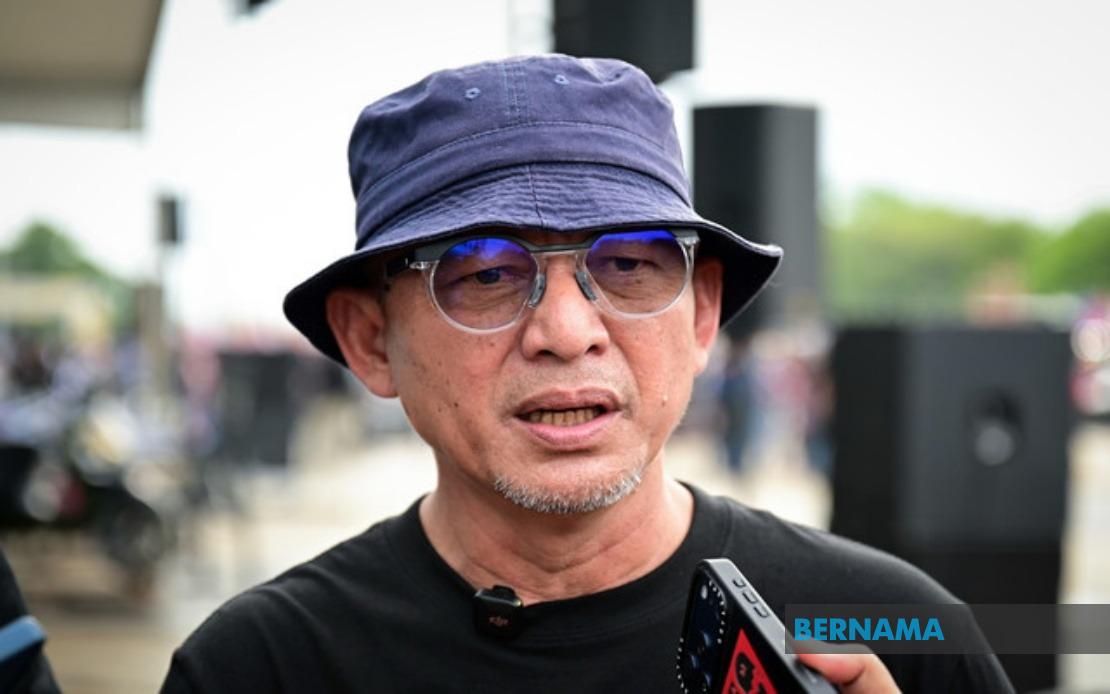
The Terengganu state government has moved to reassure the public that its freshly unveiled Visit Truly Terengganu 2027 tourism logo has been meticulously designed to align with Islamic principles and cultural guidelines, despite introducing a significantly modernised visual identity. Speaking at the conclusion of the Terengganu Classic Festival 2026 at Dataran Shahbandar, State Tourism Committee chairman Datuk Razali Idris emphasised that the logo's development underwent careful consideration to ensure religious compliance while delivering contemporary appeal.
The redesign maintains the sea turtle as the centrepiece of Terengganu's tourism branding, recognising its status as the state's most recognisable and enduring symbol. However, the imagery has undergone substantial transformation compared to its 2007 predecessor. Where the previous iteration presented a more static, sculptural representation, the updated version employs vibrant colour palettes and dynamic geometric forms to convey movement and energy, reflecting modern design sensibilities whilst respecting religious considerations.
Critically, the turtle motif has been rendered in an abstracted manner that deliberately avoids depicting complete anatomical detail. This stylisation addresses concerns within Islamic jurisprudence regarding the depiction of animals in visual media, particularly given the logo's broad application across merchandise and promotional materials. Datuk Razali highlighted a specific religious consideration influencing the design decision: Islamic principles prohibit wearing garments decorated with animal imagery during prayer observance. By adopting a stylised rather than naturalistic portrayal, the logo navigates these restrictions whilst maintaining recognisability and cultural continuity.
For Malaysian and Southeast Asian observers, this episode illuminates the nuanced balance that state governments must strike when modernising public-facing symbols whilst respecting religious sensitivities in Muslim-majority regions. Terengganu, as a state with constitutional provisions for Islamic law and governance, operates within a framework where religious compliance forms a legitimate consideration in cultural and tourism policy decisions. The logo redesign demonstrates how contemporary design practices can integrate with Islamic guidelines rather than existing in opposition to them.
The timing of the logo's introduction aligns with Terengganu's ambitious tourism expansion strategy. Datuk Razali disclosed that the state government maintains confidence in achieving its target of attracting nine million tourists by year's end, a projection grounded in encouraging visitor statistics from the first half of 2024. During the initial three-month period, Terengganu welcomed 2.45 million tourists, encompassing both domestic and international visitors, with resort islands constituting a significant portion of this influx.
Vehicle traffic data provides an additional indicator of regional tourism momentum. Toll plaza records documented 600,000 vehicle entries during March and April combined, a figure that increased substantially to 829,000 in May before moderating to 608,000 in June. These metrics, whilst subject to reconciliation through the state's independent counting systems, suggest consistent visitation patterns and seasonal variation consistent with Malaysian tourism trends. The state government plans to present comprehensive six-month tourism data during the forthcoming state legislative assembly session, providing a fuller picture of visitor trends.
The Terengganu Classic Festival 2026, at which the logo announcement occurred, provided contextual evidence of the state's diversifying tourism offerings. The event showcased more than 500 classic vehicles spanning motorcycles and automobiles primarily from the 1960s era, attracting nearly 10,000 participants. This festival category represents an important niche within heritage tourism, appealing to automotive enthusiasts and collectors whilst generating significant visitor engagement. The success of such events demonstrates Terengganu's capacity to develop tourism attractions beyond conventional beach and marine-based offerings.
From a broader Southeast Asian perspective, Terengganu's approach to integrating Islamic compliance within tourism branding reflects evolving practices across the region. Malaysia and other Muslim-majority nations increasingly recognise that religious sensitivity and tourism development are complementary rather than contradictory objectives. The visibility of Terengganu's proactive approach to this integration may influence similar initiatives across the region, particularly among states seeking to expand international visitor numbers whilst maintaining strong cultural and religious identity.
The reliance on the turtle as Terengganu's signature symbol carries environmental and cultural significance beyond mere branding considerations. Sea turtles represent a critical conservation concern in Malaysian waters, with nesting beaches in Terengganu constituting important breeding grounds. By maintaining turtle imagery within the tourism logo whilst updating its visual presentation, the state government subtly reinforces connections between tourism development and marine conservation, though the extent to which the redesign explicitly emphasises environmental stewardship remains understated.
Datuk Razali's detailed explanation of the logo's Islamic compliance suggests anticipatory management of potential public concerns or criticism. By transparently articulating the religious considerations embedded within the design process, the state government positions itself as demonstrating genuine commitment to Islamic principles rather than applying superficial religious compliance post-hoc. This proactive communications approach reflects awareness that cultural symbols carry significant meaning within Muslim communities and warrant explicit justification when modernised.
The integration of Shariah standards into commercial design represents a practical manifestation of how Islamic principles function within modern governance and business contexts. Rather than existing purely as legal or spiritual frameworks, these principles shape material outputs including visual identity, merchandise, and promotional materials. For Malaysian policymakers and corporate entities, the Terengganu case study demonstrates feasible methodologies for achieving contemporary design outcomes whilst maintaining religious compliance, potentially offering templates for other governmental and commercial branding initiatives.
Looking forward, the success of the Visit Truly Terengganu 2027 logo will ultimately be measured through visitor response and tourism performance metrics rather than design criticism. If the state achieves or approaches its nine million visitor target whilst maintaining strong domestic and international appeal, the logo redesign will be retrospectively validated as effective rebranding. Should visitor numbers plateau or decline, stakeholders may reassess whether the modernisation successfully attracted new demographics or alienated existing visitor bases, providing practical lessons for regional tourism authorities undertaking similar brand evolution exercises.

