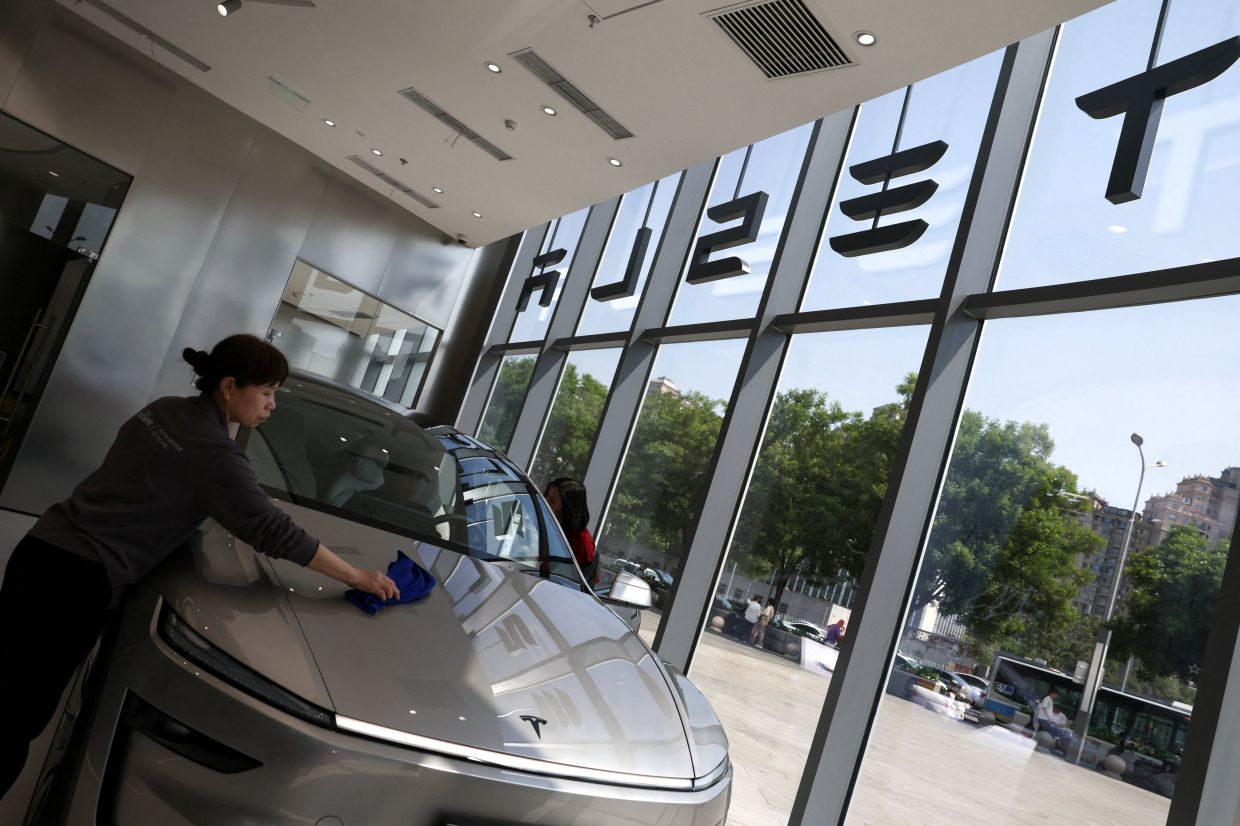
Tesla has initiated what amounts to the most extensive vehicle recall in China's burgeoning electric car sector, with the American manufacturer committing to address door-handle defects across approximately 2.98 million units. The extraordinary scale of this recall underscores mounting safety concerns within China's rapidly expanding EV industry and signals a decisive regulatory pivot toward stricter vehicle safety standards. Though Tesla is far from the only automaker affected by the emerging restrictions, the sheer volume of its recall operation highlights the company's significant market penetration in the world's largest EV market.
The regulatory crackdown gained momentum following a tragic incident in Sichuan province last October, when a Xiaomi SU7 Ultra electric vehicle caught fire with a 31-year-old occupant inside. The incident exposed a critical vulnerability in contemporary EV design: passers-by attempting a rescue found themselves unable to open the vehicle's doors, ultimately unable to extract the trapped driver. This harrowing episode catalysed public outcry and drew sharp scrutiny from Chinese safety authorities, transforming what might have remained an obscure engineering debate into a matter of urgent national concern.
In response to these safety revelations, China's Ministry of Industry and Information Technology announced in February an impending prohibition on retractable door handles. Beginning next year, all vehicles sold domestically will be required to feature both internal and external door handles capable of mechanical operation under all circumstances—including during accidents or complete electrical system failures. The regulation represents a fundamental recalibration of safety expectations, forcing automakers to fundamentally reconsider design philosophies that have become industry standard across multiple manufacturers worldwide.
Tesla's remediation strategy encompasses two distinct but complementary measures. Beginning September 25, the company will affix warning labels to internal door handles across all recalled vehicles. Simultaneously, Tesla plans to deploy an over-the-air software update targeting the window-control system, programming windows to lower automatically following collision detection. This approach reflects Tesla's characteristic reliance on digital solutions to address hardware-adjacent safety concerns, though the addition of physical warning labels acknowledges the limitations of software-only interventions in critical safety scenarios.
The recall encompasses a second cohort of approximately 2.74 million Model 3 and Model Y vehicles manufactured at Tesla's Shanghai facility, which will receive a separate over-the-air software update. This secondary recall addresses driver-assistance system functionality, ensuring that steering assistance and other autonomous safety features remain active when drivers fail to respond promptly to collision warnings. The dual recall structure reveals how contemporary vehicle safety encompasses not merely mechanical reliability but sophisticated integration of electronic systems across multiple functional domains.
Shanghai-based automotive maintenance specialist Zhang Wenjie characterises the recall campaign as indicative of a broader market maturation. According to Zhang, the door-handle controversy gained traction only after late last year, when both regulatory bodies and Chinese consumers elevated their collective focus on safety standards. The industry observer anticipates that comprehensive recalls by Tesla and domestic competitors will collectively function as a corrective mechanism, ultimately raising baseline quality expectations and design consciousness throughout China's automotive sector. This assessment suggests that the recall phenomenon, whilst immediately burdensome for manufacturers, may generate longer-term competitive advantages for companies demonstrating superior safety architecture.
The Shanghai manufacturing facility constitutes an absolutely critical node within Tesla's global production network. During 2025, the plant generated approximately 851,000 vehicles destined for both Chinese domestic consumption and export markets—representing more than half of Tesla's worldwide output that year. Against this backdrop, the Chinese recall operation carries strategic implications extending far beyond the domestic market. Any disruption to Shanghai's production rhythm or quality protocols reverberates across Tesla's entire global supply chain and delivery timeline.
Tesla's overall 2025 production declined 8.6 percent to 1.63 million units globally, a contraction that contextualises the severity of the challenges confronting the company. The Shanghai facility's continued strength—maintaining output exceeding half of Tesla's total production despite broader company challenges—underscores both the facility's operational excellence and China's irreplaceable importance to the company's financial performance. China remains Tesla's second-largest market worldwide, trailing only the United States in revenue significance.
For Malaysian automotive consumers and policymakers, the Chinese regulatory intervention carries instructive implications. Malaysia's automotive regulatory framework, traditionally more permissive than certain international counterparts, may face escalating pressure to harmonise with emerging Chinese safety standards as competition intensifies in the regional EV market. The retractable door-handle prohibition represents precisely the type of technical standard that could eventually migrate across Southeast Asian markets as Chinese and international manufacturers seek regulatory consistency. Companies operating across multiple Asian jurisdictions increasingly confront the burden of managing divergent safety regimes, creating subtle pressure toward regulatory convergence.
The recall episode also illustrates how single catastrophic incidents can catalyse sweeping regulatory transformation. Malaysia's own automotive safety framework might benefit from comparable incident-response mechanisms that swiftly identify systemic vulnerabilities and mandate comprehensive remediation before problems achieve epidemic proportions. The Chinese regulatory response—moving from isolated accident to sector-wide prohibition within mere months—demonstrates governmental capacity for decisive action when public safety imperatives demand it.
Beyond technical considerations, the Tesla recall phenomenon reflects evolving consumer consciousness regarding vehicle safety in the EV era. As electric vehicles proliferate throughout Malaysian and Southeast Asian markets, purchasers increasingly scrutinise not merely conventional safety metrics but novel vulnerabilities inherent to contemporary EV architecture. The door-handle controversy, seemingly trivial compared to structural crash performance or battery management systems, nonetheless captures imaginations precisely because it represents a failure mode utterly specific to modern design philosophy.
Manufacturers operating within the region must navigate an increasingly complex safety landscape where Chinese regulatory precedent carries substantial weight. Tesla's enormous recall commitment signals that even market-leading companies cannot insulate themselves from stringent requirements when safety imperatives demand intervention. For Malaysian consumers contemplating EV purchases, the transparency with which manufacturers address safety concerns—rather than concealing problems—may ultimately prove as consequential as engineering specifications themselves.
The coming months will reveal whether Tesla's remediation measures adequately address regulatory concerns or whether additional interventions prove necessary. Chinese authorities, having mobilised political capital to force industry-wide change, possess strong incentive to ensure compliance proves comprehensive. The Tesla recall, far from representing an isolated quality incident, signals the beginning of a fundamental recalibration of how Asia's booming EV sector prioritises safety against competing design objectives.

