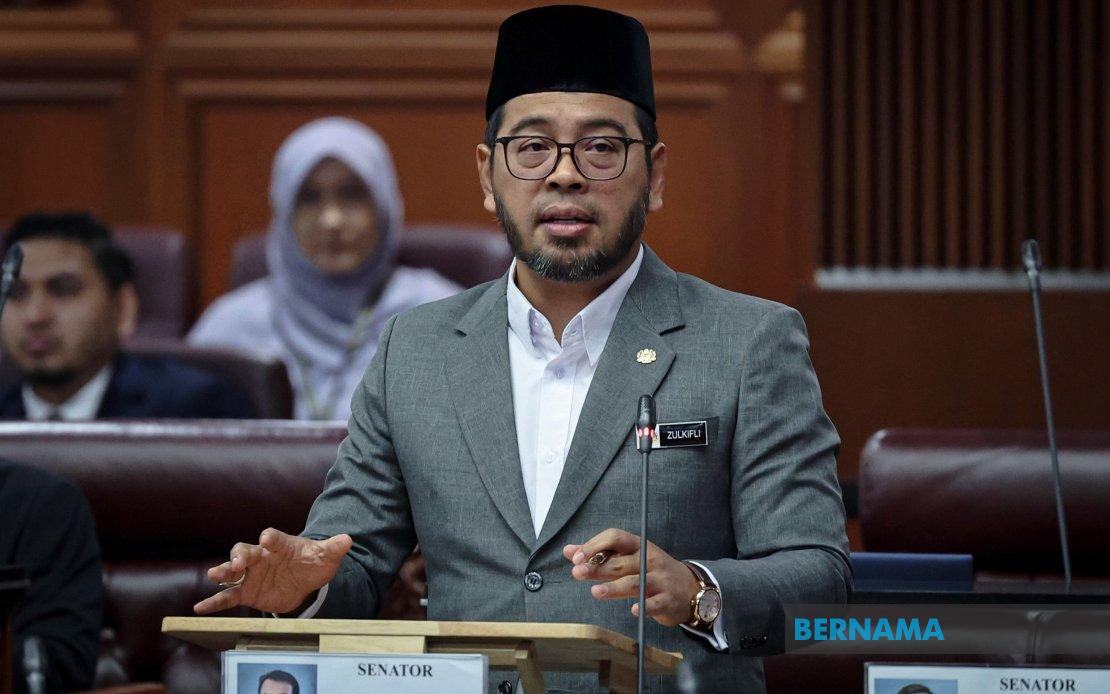
Depositors in Malaysia's Tabung Haji (TH) can rest assured that their zakat obligations have been met in full compliance with Islamic law, according to Dr Zulkifli Hasan, the Minister in the Prime Minister's Department (Religious Affairs). Speaking during a special parliamentary sitting in Kuala Lumpur, Dr Zulkifli provided detailed reassurance about the religious propriety of TH's zakat practices, addressing concerns that had emerged from scrutiny of the institution's financial management over the past decade.
The minister's statement came in response to findings contained in the Royal Commission of Inquiry report on TH, which was publicly released in July this year after three years of investigation. Dr Zulkifli explained that TH's Syariah Advisory Committee had thoroughly examined the zakat payment procedures employed before 2019, when the institution shifted to using a wakalah (agency) arrangement. The committee concluded in September 2020 that all zakat payments made on behalf of depositors during those earlier years remained valid and entirely compliant with Islamic jurisprudence, providing a clear basis for institutional accountability.
Critically, Dr Zulkifli emphasised that TH's zakat obligations do not rest with the institution itself, but rather TH acts as an intermediary on behalf of its depositors. This distinction, established by the National Fatwa Committee for Islamic Religious Affairs Malaysia in May 1979, is fundamental to understanding TH's religious role. The fatwa determined that while TH as an entity is exempt from zakat, it bears the responsibility of discharging the zakat obligation on behalf of all depositors whose funds are held within the institution. TH has consistently operated in accordance with this ruling across all subsequent decades.
Regarding the specific period from 2016 to 2019, when TH employed the Wadiah Yad Damanah contract framework, the minister clarified that business zakat was calculated and paid collectively on the pooled funds of all depositors that were placed into active trading operations. This approach ensured that the zakat calculation reflected the actual investment activity undertaken with depositors' money, rather than treating funds as purely static savings. The distinction between different zakat methodologies—depending on how funds are managed—demonstrates the complexity of applying Islamic financial principles to modern institutional banking operations.
Dr Zulkifli highlighted that TH's current governance structure provides multiple layers of Syariah oversight. The institution's Syariah Advisory Committee, composed of recognised experts in Islamic law and Islamic finance, continuously monitors and approves all zakat operations. These operations are guided by comprehensive Zakat Guidelines that have been formally approved by the committee and are regularly reviewed to ensure continued compliance with evolving Islamic standards. This institutional architecture represents a deliberate safeguard against potential drift in religious compliance.
The minister's parliamentary address also addressed one of the Royal Commission's key recommendations: that matters concerning TH's zakat practices be referred to the National Council for Islamic Religious Affairs (MKI) Muzakarah Committee for further deliberation. Dr Zulkifli confirmed that this referral had already been completed, with the matter presented to and endorsed by the Muzakarah Committee in June 2024. Subsequently, the committee's findings were submitted to the 267th Meeting of the Conference of Rulers in October 2024, ensuring that the highest levels of Islamic authority in Malaysia had reviewed and approved TH's zakat arrangements.
The Royal Commission of Inquiry itself, which was established in 2021 and formally commenced operations in January 2022, had been tasked with investigating governance and operational weaknesses at TH spanning the period from 2014 to 2020. The resulting 211-page report, presented to the Yang di-Pertuan Agong in August 2022 and released publicly in July 2024, contained 25 specific recommendations for institutional improvement. By the time the report became public, TH had already implemented approximately 75 percent of these recommendations, demonstrating significant institutional responsiveness to identified deficiencies.
Beyond the zakat question, Dr Zulkifli indicated that TH has taken serious note of the RCI's broader recommendations concerning the management of the hajj pilgrimage programme, which represents the institution's primary service function. The minister noted that particular emphasis has been placed on recommendations relating to hajj eligibility criteria and the duration of waiting periods for prospective pilgrims. These policy areas directly affect millions of Malaysian Muslims who depend on TH as their primary avenue for undertaking the annual pilgrimage to Mecca.
The government is currently in the final stages of refining comprehensive improvements to TH's hajj management policies, with an announcement anticipated in the near term. These refinements are designed to establish clearer, more systematic planning for hajj operations, aligned with the Islamic concept of istito'ah—the principle that hajj should be undertaken only by those possessing genuine physical, financial, and spiritual ability. The revised framework will also emphasise greater advance preparation and planning, moving away from approaches that may have relied on more ad-hoc arrangements or inadequate preparation time for intending pilgrims.
These policy enhancements represent an effort to strike a balance between the practical constraints of managing hajj operations for a large Muslim population and the religious imperatives underlying the pilgrimage obligation. Malaysia's hajj quota from Saudi Arabia has historically been limited, creating extended waiting periods for prospective pilgrims. More systematic eligibility criteria and improved planning could potentially optimise the distribution of places while ensuring that those selected are genuinely prepared for the demanding spiritual and physical experience of hajj.
The minister's reassurances come at a time when TH has been working to restore confidence in its institutional management following a period when operational deficiencies created significant public concern. The zakat issue, in particular, held symbolic importance because it touches on religious observance that extends beyond financial management into questions of individual spiritual obligation. By securing explicit endorsement from multiple tiers of Islamic authority—from TH's own Syariah Advisory Committee through the National Fatwa Committee and the Muzakarah Committee to the Conference of Rulers—the government has attempted to remove any lingering ambiguity about the religious validity of TH's practices.
For Malaysian depositors, many of whom have contributed to TH over decades as a form of forced savings specifically designated for hajj, the minister's statement offers reassurance that their accumulated zakat obligations have been properly discharged throughout their relationship with the institution. The layering of Syariah oversight ensures that going forward, institutional practices will remain continuously aligned with Islamic principles, providing a foundation for rebuilding public trust in an institution that remains central to Malaysian Muslim life.

