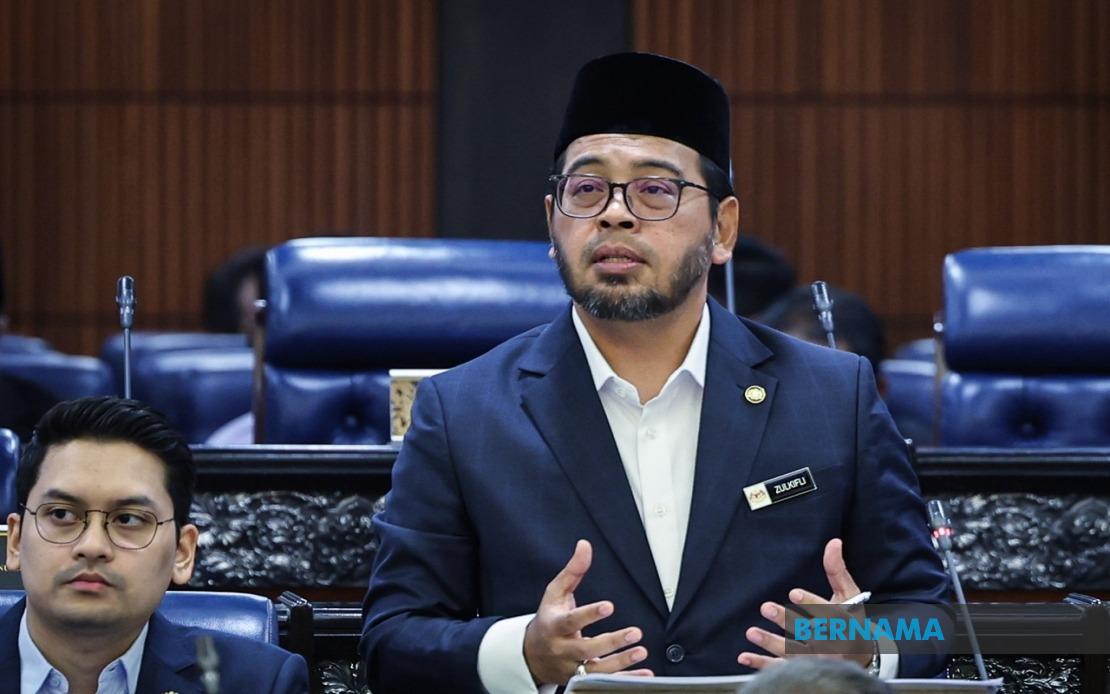
The financial catastrophe that engulfed Tabung Haji (TH) need never have occurred, according to Religious Affairs Minister Dr. Zulkifli Hasan, who traced the roots of the crisis to a decade-long pattern of ignored regulatory warnings. Speaking during the parliamentary debate on the Royal Commission of Inquiry report into TH, Zulkifli highlighted that Bank Negara Malaysia issued five separate warning letters to TH's leadership between August 2014 and September 2016, each flagging serious concerns about the pilgrimage fund's financial position, reserve adequacy, and liquidity management. The minister's remarks underscore a critical governance failure that allowed one of Malaysia's most important Islamic financial institutions—which manages savings for millions of Muslim Malaysians planning to undertake the hajj—to spiral into near-collapse.
The severity of TH's deterioration becomes apparent when examining the timeline presented by Zulkifli. Rather than implement corrective measures in response to BNM's early interventions, TH's financial position worsened dramatically over the subsequent four years. By the end of 2018, the institution's liabilities exceeded its assets by approximately RM10 billion, necessitating an unprecedented government bailout to prevent systemic financial instability. This trajectory reveals not merely poor management but institutional inertia, where warning signals from the central bank—an authority specifically mandated to safeguard the nation's financial stability—were essentially disregarded. The failure to act in 2014 or 2015, when TH still had time to implement remedial strategies, transformed what might have been a manageable correction into a full-blown financial emergency requiring massive taxpayer intervention.
Central to Zulkifli's critique is the finding that TH's auditors should never have issued clean audit certificates during the period when the institution was deteriorating. The RCI report endorsed this assessment, concluding that matters which auditors labelled as "Emphasis of Matter"—items warranting attention but not considered non-compliance—should instead have been classified as qualified opinions reflecting actual non-compliance with regulatory standards. This distinction matters enormously in audit governance because a clean certificate provides false assurance to stakeholders and regulators, potentially delaying intervention. TH's continued declaration of dividends to depositors despite liabilities exceeding assets represents a particularly egregious violation, contravening Section 22 of the Tabung Haji Act and fundamentally misrepresenting the fund's financial health. The practice of distributing dividends (termed hibah in Islamic finance) without reference to actual financial capacity continued throughout 2017, compounding the deception.
The BNM's supervisory role during this period reveals the complexity of financial regulation in Malaysia. As a non-bank financial institution, TH falls under BNM's monitoring jurisdiction, and the central bank conducted ongoing examinations and engaged in discussions with TH management about the flagged issues. However, these discussions yielded only superficial compliance gestures rather than substantive remedial action. When BNM raised concerns, TH's leadership provided assurances that steps were being taken, yet the institution's subsequent behaviour demonstrated these commitments were hollow. This discrepancy between stated intentions and actual performance highlights a persistent weakness in Malaysia's regulatory framework: the capacity of large institutions to acknowledge warnings while simultaneously ignoring them, knowing that enforcement mechanisms may be slow to activate and that political considerations might temper supervisory action.
The implications of TH's collapse extend far beyond a single institution's accounting failure. Millions of Malaysian Muslims rely on TH to safeguard their hajj savings, treating the fund as a trusted intermediary backed implicitly by government guarantee. The crisis shattered that confidence and exposed fundamental governance weaknesses within Islamic financial institutions that should serve as models of Islamic principles and financial probity. The fact that TH declared dividends while insolvent betrays not only secular financial ethics but also Islamic principles emphasizing honesty and prohibition of riba (usury) and gharar (excessive uncertainty). For ordinary Malaysians who entrusted their savings to TH in good faith, the revelation that regulators issued warnings as far back as 2014 while management ignored them amounts to a betrayal of fiduciary responsibility.
Zulkifli's assurance that legislative amendments to the Tabung Haji Act 1995 will proceed immediately signals the government's acknowledgment that statutory frameworks require reinforcement. Governance improvements, while important, prove insufficient without legal backing. The minister also indicated that forensic auditing of TH's investments listed in the RCI report has commenced, a necessary step to understand precisely how the fund squandered resources and whether recovery is possible. The proposed Multi Agency Task Force to investigate investments identified as loss-prone represents a more aggressive investigative approach than TH's internal processes permitted. These measures suggest the government is attempting to recalibrate its supervisory mechanisms to prevent similar failures.
The parliamentary debate itself consumed more than ten hours with 39 members of parliament participating, reflecting the gravity with which both government and opposition treat the TH debacle. The special session concluded with confirmation that a third meeting is scheduled for October, providing opportunity for ongoing scrutiny of the RCI findings and implementation of remedial measures. This extended engagement contrasts sharply with TH's own institutional inertia and demonstrates parliament's commitment to accountability, even if that accountability arrived years after regulators first sounded alarms.
For Malaysian policymakers and financial regulators, the TH case provides sobering lessons about institutional complacency and the dangers of separating regulatory warnings from enforcement consequences. Bank Negara's ability to issue letters of concern means little if recipient institutions can ignore them with impunity. Moving forward, Malaysia's regulatory architecture must feature clearer escalation protocols, where persistent non-compliance with central bank guidance triggers automatic supervisory actions rather than relying on voluntary cooperation from institutions already demonstrating bad faith. The government's commitment to investigate, enforce, recover assets, and strengthen legal frameworks represents necessary steps, yet the real test will be implementation rigour and political will to hold senior officials and board members accountable for decisions made between 2014 and 2018.

