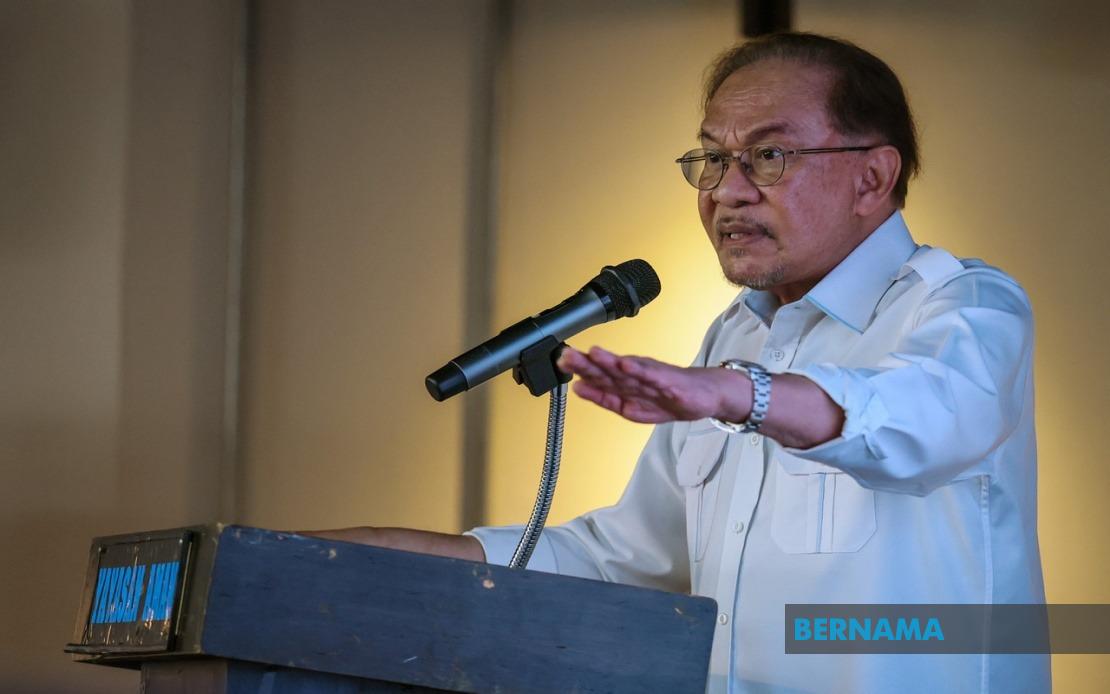
Prime Minister Datuk Seri Anwar Ibrahim has reiterated the government's commitment to pursuing the investigation into findings from the Royal Commission of Inquiry report on Lembaga Tabung Haji, emphasising that the probe must continue to safeguard the nation from additional financial harm. Speaking at an event in Bukit Mertajam on Thursday, Anwar acknowledged the challenging position the administration faces when addressing past losses at the hajj fund management institution, a matter that has drawn considerable public scrutiny and debate across the country.
The Prime Minister articulated a delicate balance between taking decisive action against wrongdoing and adhering strictly to legal and procedural standards. He underscored that any measures pursued by the government must be grounded in concrete evidence and comply with the rule of law, rejecting any suggestion that the administration would act arbitrarily or without foundation. This positioning reflects the government's broader governance philosophy, particularly when dealing with cases involving significant public interest and potential mismanagement of state funds.
Anwar expressed frustration at the polarised responses his administration receives regarding the Tabung Haji matter. He noted that critics argue the government should do more to hold individuals accountable, while simultaneously arguing that action taken represents political persecution. This paradox, he suggested, undermines productive dialogue about how the country should address historical financial irregularities without descending into partisan point-scoring.
Central to Anwar's statement was clarification regarding the RM12 billion figure that has become synonymous with the Tabung Haji controversy. The Prime Minister challenged commentators to explain precisely how this substantial sum was lost, when those losses occurred, and who bore responsibility. By posing these investigative questions publicly, Anwar signalled that the government's approach prioritises systematic inquiry over rushed conclusions or predetermined outcomes. This methodical stance aligns with the need for transparent fact-finding that can withstand legal scrutiny.
The Prime Minister outlined his preferred framework for handling the investigation: thorough examination of available evidence, presentation of findings to prosecutorial authorities, formal charges in court if warranted, and ultimately adjudication by independent judges. This conventional approach emphasises the separation of powers and the independence of the judiciary, principles that underpin Malaysia's legal system and are particularly important in high-profile cases involving allegations of financial misconduct.
Anwar made explicit that his government would not shield individuals from accountability should investigations unearth substantive evidence of wrongdoing. However, he equally emphasised that the administration would not pursue charges merely to satisfy political demands or public pressure. This dual commitment—both to justice and to procedural fairness—represents the difficult ground leaders must navigate when confronting historical scandals while maintaining institutional credibility.
The Tabung Haji institution holds profound significance in Malaysian society, managing funds contributed by millions of Muslims preparing for pilgrimage to Mecca. Any mismanagement at this organisation carries both financial and spiritual dimensions that resonate deeply with the Muslim majority population. The RCI investigation into the fund's operations therefore carries weight beyond conventional administrative accountability, touching on matters of public trust and religious responsibility.
For Malaysian observers tracking governance standards and anti-corruption efforts, the handling of the Tabung Haji case will likely become a benchmark against which to measure the government's commitment to accountability. How thoroughly the investigation proceeds, whether prosecutions materialise, and how courts ultimately adjudicate any charges will send important signals about institutional resolve to address past irregularities. Regional observers, particularly in Southeast Asia where concerns about governance and transparency remain prevalent, will similarly watch how Malaysia navigates this complex terrain.
The Prime Minister's comments also reflect broader tensions within Malaysian politics regarding retrospective investigations into past administrations. As governments change, questions about investigating predecessors' actions inevitably arise, yet the risk exists that such inquiries become weaponised for political purposes. Anwar's repeated emphasis on evidence, law, and due process appears designed to distance the current administration from suggestions that the Tabung Haji investigation represents politically motivated prosecution.
Moving forward, the success of the investigation will likely depend on its perceived independence and professionalism. If findings are transparent and prosecutorial decisions appear evidence-based rather than politically influenced, public confidence in the process may be sustained. Conversely, any perception that investigation results have been predetermined or that political considerations have influenced charging decisions could undermine both the legitimacy of outcomes and public faith in institutional competence.
The remarks made at the MADANI Permatang Pauh Usahawan Bangkit Scheme launch represent Anwar's continued effort to frame the Tabung Haji investigation within a broader narrative of responsible governance. By contextualising the probe within principles of due process and evidence-based decision-making, the Prime Minister attempts to position the government as committed to accountability without sacrificing legal standards or institutional independence. Whether stakeholders accept this framing ultimately depends on how investigation and prosecutorial processes unfold in coming months.

