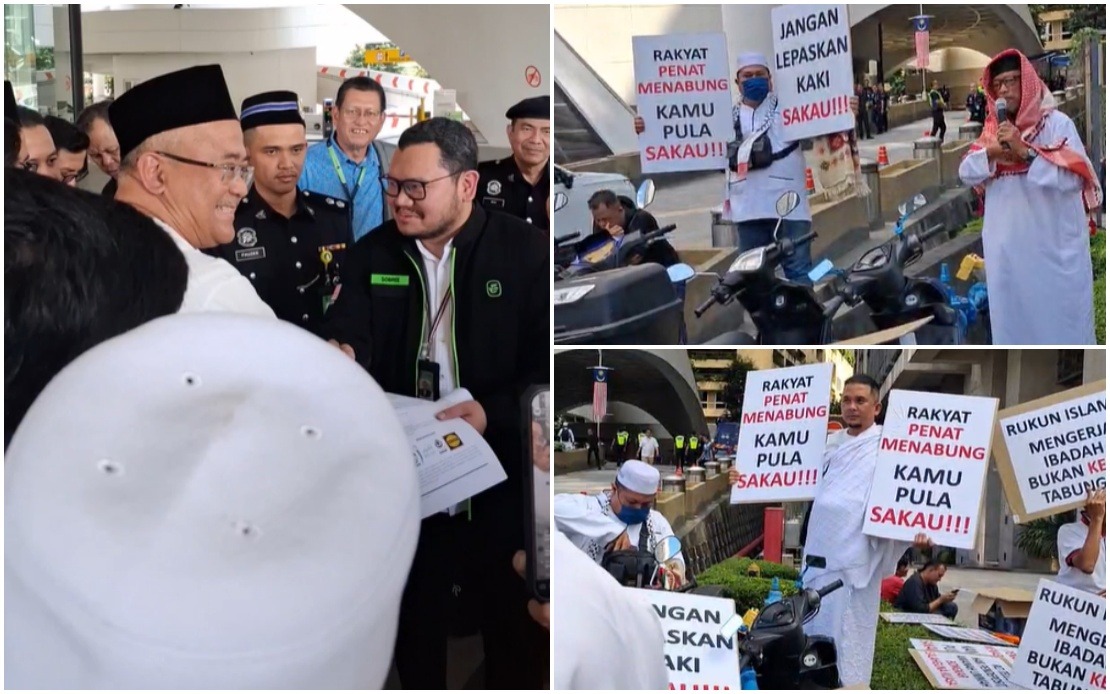
A prominent Malaysian political coalition has issued a forceful call for investigations stemming from the Royal Commission of Inquiry into Lembaga Tabung Haji to be conducted with full transparency and free from any form of interference, signalling growing concern that the findings could be compromised by political considerations. Amir Zuhair Abdull Khalid, chairman of Daie MADANI, made the remarks at a solidarity gathering held outside the Tabung Haji headquarters in Kuala Lumpur, underscoring the broader implications of how the inquiry's conclusions are pursued through the justice system.
The RCI's investigation covered operations at Malaysia's pilgrimage savings institution between 2014 and 2020, a period marked by significant controversy surrounding the organisation's financial management and governance practices. Rather than treating the matter as a routine administrative review, MADANI has positioned the investigation as fundamental to public trust in how the government manages religious institutions entrusted with the savings of millions of Muslim Malaysians. The coalition has expressed particular concern that any hint of political interference could delegitimise whatever outcomes the investigation produces, regardless of their ultimate findings.
Calling directly on the Prime Minister to ensure a level playing field for investigators, Amir Zuhair stressed that neither political actors nor any other interested parties should attempt to influence the Malaysian Anti-Corruption Commission's probe. His language was unambiguous: those found culpable must face court proceedings without exception, and the burden of proving innocence or guilt rests solely with the judiciary, not with public opinion or political narrative. This stance reflects a growing recognition that the credibility of Malaysia's anti-corruption efforts depends on demonstrable independence from electoral politics.
The RCI itself has already raised troubling questions about governance at Tabung Haji, including allegations that political considerations played a role in appointing board members and shaping institutional decisions during the seven-year period under scrutiny. Such findings, if substantiated through proper legal channels, could expose systemic weaknesses in how government-linked institutions are overseen and could prompt broader reforms across similar organisations. The inquiry's scope touches on a particularly sensitive area: the stewardship of funds belonging to ordinary Malaysian Muslims who depend on these savings for one of Islam's five pillars.
Beyond the immediate Tabung Haji matter, the MADANI coalition's emphasis on investigative independence reflects wider anxieties about institutional autonomy in Malaysia's political system. The coalition has positioned itself as a guardian of procedural integrity, arguing that the strength of any eventual legal action depends on its foundation in impartial investigation rather than political manoeuvring. This framing carries particular weight given that MADANI includes several influential Islamic civil society organisations, whose members represent significant constituencies among Muslim voters and religious stakeholders.
The Malaysian Islamic Movement Coalition (HIKAM), an umbrella organisation encompassing groups such as WADAH, IKRAM, HALUAN and ABIM, has articulated a comprehensive set of demands flowing from the RCI findings. These demands extend beyond mere prosecution and encompass concrete steps to recover any losses and misappropriated assets, implement the specific reforms recommended by the inquiry, and establish new governance frameworks under the current MADANI administration. The breadth of these demands suggests the coalition views the Tabung Haji investigation as an opportunity to reset institutional practices across the broader landscape of government-linked entities.
Recovery of losses and assets represents a particularly pressing concern for HIKAM and its constituent organisations, many of whose members and supporters are among the Tabung Haji depositors whose funds may have been affected by the institutional mismanagement detailed in the RCI report. The symbolic importance of recovering every ringgit extends beyond mere accounting; it signals whether Malaysia's system can actually deliver justice that is meaningful and tangible to ordinary citizens, rather than abstract legal proceedings that result in token punishments for powerful figures.
The emphasis on implementation of RCI recommendations also points to recognition that investigations alone are insufficient if the underlying systemic problems are not addressed. Governance reforms affecting everything from board appointment procedures to financial oversight mechanisms will determine whether similar situations can recur at Tabung Haji or spread to other institutions managing public or religious funds. The coalition's framing suggests that wholesale institutional reform, not merely individual accountability, is necessary to restore public confidence.
For Malaysian and regional observers, the Tabung Haji investigation represents a crucial test case of whether domestic institutions can pursue accountability free from political pressure. Southeast Asia has witnessed numerous high-profile corruption probes complicated or derailed by political interference, and Malaysia's experience with this particular inquiry may set precedents affecting future anti-corruption efforts. The coalition's insistence on institutional independence and transparent process reflects lessons learned from other regional experiences where investigative integrity was compromised by factional politics.
The statement from MADANI leaders also carries implications for the broader Malaysian public, regardless of religious affiliation. The governance issues at Tabung Haji demonstrate that institutional mismanagement at religious organisations directly harms ordinary savers and depositors, many of whom are among Malaysia's lower and middle-income earners saving specifically for religious obligations. The coalition's demands for asset recovery and compensation reflect this understanding that the consequences of institutional failure fall most heavily on vulnerable populations.
Moving forward, the trajectory of the Tabung Haji investigations will likely influence public confidence in Malaysia's anti-corruption architecture and judicial independence more broadly. If investigations proceed without demonstrable political interference and if charges are brought against those credibly implicated in wrongdoing, it would signal that Malaysia's institutions possess sufficient autonomy to pursue accountability regardless of the political status of those involved. Conversely, any perception of interference or unequal application of justice would reinforce cynicism about institutional impartiality.
The solidarity gathering convened by MADANI and HIKAM serves as both a pressure mechanism and a public declaration of expectations for how the investigation should unfold. By mobilising grassroots support and articulating specific demands, the coalition aims to create political space for investigators and prosecutors to operate without fear of retaliation, while simultaneously signalling to the public that watchdog organisations are monitoring the process. This approach recognises that in Malaysia's political context, protecting investigative independence sometimes requires active civil society engagement rather than passive reliance on institutional processes.

