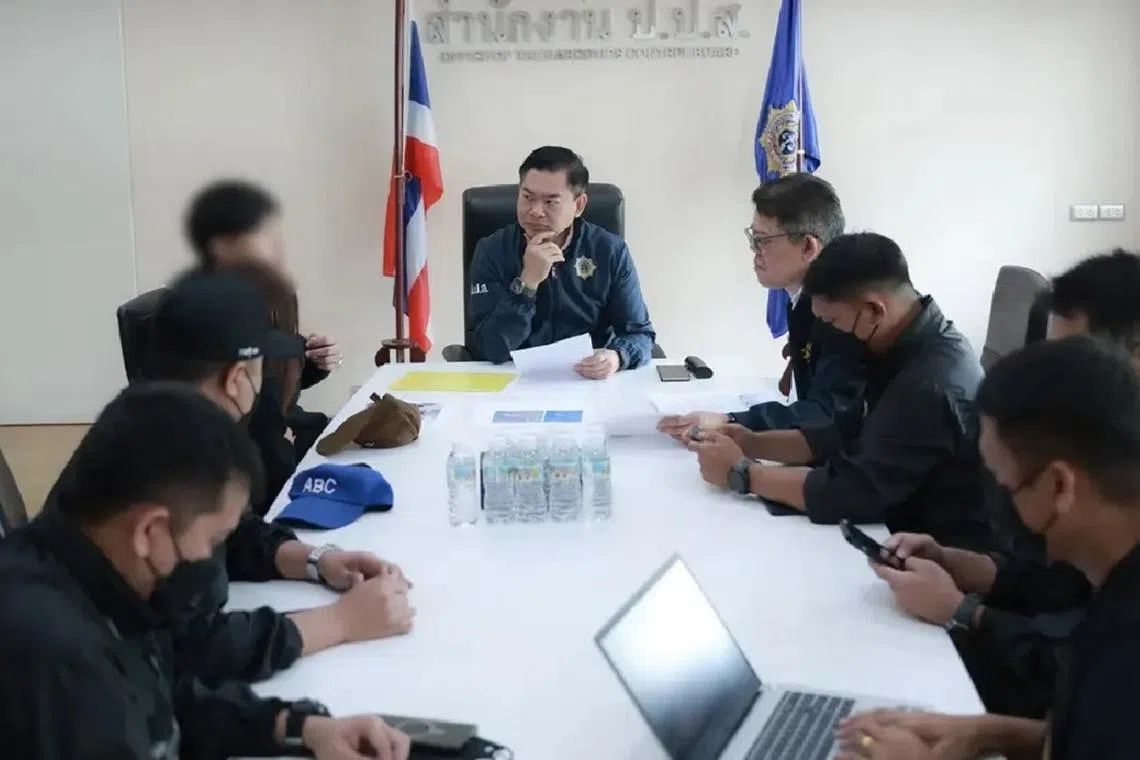
Thai narcotics officials have provided fresh details about the quantity and concealment method of heroin allegedly found in luggage belonging to a female airline crew member arrested by Australian authorities, revealing that only two of twelve bags in a parcel contained the illicit drugs. The Office of the Narcotics Control Board (ONCB) said on Wednesday that Australian Federal Police initially weighed one opened bag and discovered approximately 900 grams of suspected heroin, with estimates placing the combined total from both bags at no more than 2 kilograms. Police Major Suriya Singhakamol, secretary-general of the ONCB, cautioned that Thai authorities were still awaiting official laboratory confirmation from Australia to verify the substance and establish its precise weight.
What makes this case particularly significant for Southeast Asian law enforcement is the sophisticated concealment technique employed by the suspected trafficking network. Rather than simply hiding the drugs in conventional compartments, the criminal operation embedded heroin directly into the fabric of the bags themselves, a method that demonstrates considerable planning and technical knowledge. This approach suggests the involvement of experienced smugglers familiar with customs procedures and detection methods, pointing to an organised operation rather than amateur trafficking. The deliberate selection of only two bags for drug placement among twelve suggests an attempt to reduce the likelihood of detection, as customs officials and airport authorities cannot feasibly conduct exhaustive searches of every item in large shipments.
The investigation has taken on multinational proportions with the establishment of Task Force Storm, which brings together the Thai ONCB, Australian Federal Police, Thai Customs Department, and Thailand's Department of Special Investigation. This coordinated approach reflects growing recognition among regional authorities that drug trafficking networks operate seamlessly across borders and require unified enforcement responses. The integration of Thai and Australian investigative capabilities allows authorities to trace both the origin and destination of the shipment while simultaneously pursuing leads in each country. Officials held detailed talks between ONCB representatives and AFP counterparts on July 1 to exchange critical information, demonstrating the operational depth of the cooperation beyond routine information sharing.
A significant development emerged when authorities successfully cleared an innocent delivery rider who initially came under suspicion. The rider voluntarily reported to ONCB offices to declare his innocence, and after careful examination of CCTV footage and supporting evidence, investigators confirmed he was not the person who delivered the suspicious parcel. The discrepancies were substantial and multiple: the innocent rider delivered a different parcel on June 23 at around 5pm, whereas the suspicious parcel arrived on June 22 shortly after noon. The packaging differed markedly, with the suspicious item being a large brown cardboard box while the rider's delivery was a black plastic box. Additionally, the innocent rider wore a yellow shirt and white helmet, whereas CCTV footage showed the actual courier wearing a black helmet. These specific details underscore the careful investigative work being conducted and the importance of not prematurely accusing service workers in an industry susceptible to exploitation by criminal networks.
The hunt for the actual delivery rider continues as a priority for investigators, as this person may provide crucial information about who arranged the shipment and how the operation was coordinated. However, authorities have recognised that the courier is likely a low-level operative who may have been deceived about the contents of the parcel or recruited through deceptive means. More significantly, investigators are pursuing the person behind the Facebook account "Rose," which allegedly was used to arrange the delivery through a Facebook group. Police Major Suriya indicated that the ONCB is not limiting its investigation to the publicly visible Facebook profile information alone but is working to identify the actual person controlling the account, recognising that online anonymity is a common tactic among sophisticated trafficking networks.
The geographical context of this case reflects broader drug trafficking patterns affecting the region. According to ONCB officials, substances including crystal methamphetamine, heroin, and methamphetamine pills are not manufactured in Thailand but smuggled in from the Golden Triangle area in neighbouring countries such as Myanmar and Laos, where production remains endemic. However, the specific packaging and concealment process—particularly the technique of embedding drugs into fabric—could have occurred either in a neighbouring country or within Thailand itself. This uncertainty reflects the complexity of modern transnational trafficking, where operations may span multiple jurisdictions and involve specialised services provided by different actors in different locations.
The case has significant implications for Malaysia and other Southeast Asian nations, as it demonstrates how maritime and air routes through the region are exploited for drug trafficking. Airlines and courier services have become unwitting conduits for trafficking networks that recruit employees or exploit airport security gaps. The sophistication demonstrated in this case, from the fabric-embedding technique to the deliberate selection of only a subset of bags for drug placement, suggests that trafficking organisations are adapting their methods to evade detection. Malaysian authorities, which face similar pressures on their transportation networks, can draw lessons from the Thai-Australian investigation regarding investigative cooperation and the importance of international coordination.
The involvement of airline crew members as couriers presents a particular challenge for authorities throughout Southeast Asia. Crew members benefit from streamlined security procedures at airports and often enjoy greater freedom of movement across borders, making them attractive recruitment targets for trafficking networks. The fact that this crew member was caught suggests that some recruitment attempts are detected, but it raises questions about how many operations remain undetected. Airlines and aviation authorities across the region have begun implementing stricter protocols for employee screening and baggage handling, though the balance between security and operational efficiency remains delicate.
As the investigation progresses, the cooperation between Thai and Australian authorities may set a precedent for enhanced regional responses to transnational drug trafficking. The detailed information exchange and coordinated enforcement approach suggest that Southeast Asian nations and developed countries are increasingly recognising that fragmented responses are ineffective against networks that operate across multiple borders and jurisdictions. For Malaysia, which sits at a crucial intersection of trafficking routes between the Golden Triangle and markets in developed countries, such international cooperation models are essential. The investigation into Task Force Storm's efforts will likely yield insights applicable to Malaysian law enforcement agencies working to combat similar operations within their own territory and across regional borders.

