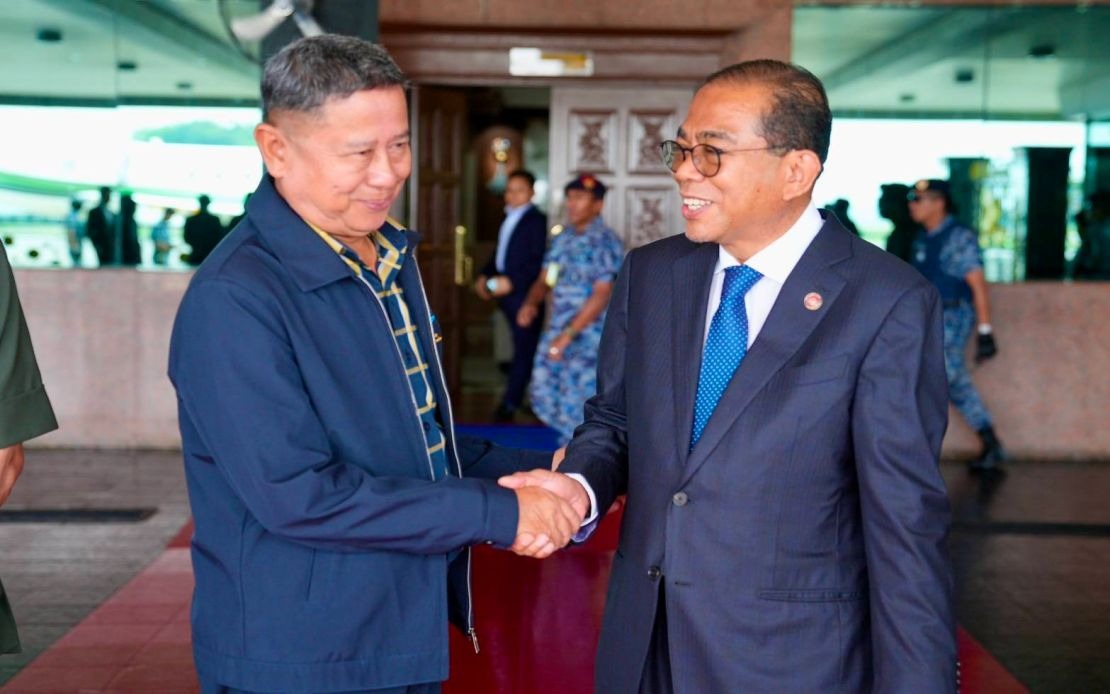
Thailand's Defence Minister Lt Gen Adul Boonthamcharoen travelled to Kuala Lumpur on Wednesday for an urgent consultation with Malaysian Defence Minister Datuk Seri Mohamed Khaled Nordin, signalling Bangkok's determination to coordinate closely with its neighbour as security pressures mount in Thailand's troubled southern border region. The high-level meeting reflected the gravity of the situation following a violent attack in Narathiwat province that had forced Thailand's government to declare martial law across thirteen districts just days earlier.
The timing of the bilateral engagement carried particular significance given that Bangkok had announced the temporary suspension of peace negotiations with southern insurgent groups on the previous day. Those talks, which were slated to resume in Malaysia during September, now remain indefinitely postponed following the deadly assault in Narathiwat. The suspension underscores how security incidents continue to derail diplomatic efforts and complicate the long-running struggle to find a negotiated settlement in Thailand's restive southern border provinces, where decades of conflict have claimed thousands of lives and displaced countless communities.
According to a statement released by the Thai Defence Ministry, Adul emphasised Bangkok's commitment to advancing peace-building initiatives while simultaneously safeguarding civilians and enhancing their living conditions. The message attempted to balance Thailand's security imperatives with its stated goal of achieving lasting reconciliation, though the suspension of talks suggested that military and security concerns had temporarily taken precedence over diplomatic channels. Officials stressed that Bangkok remains focused on building confidence among all stakeholders, a challenging objective given the entrenched positions of various groups operating within the conflict zone.
During their discussions, both defence ministers examined the evolving security landscape along Thailand's southern frontier, a region characterised by complex networks of militant organisations, criminal syndicates, and civilian populations caught between competing forces. The exchange of perspectives reflected the urgent need for regional powers to develop coordinated responses to threats that frequently spill across borders, affecting stability in both nations. Malaysia's role as a neighbouring state and home to significant Thai diaspora communities makes it an indispensable partner in Thailand's security architecture.
The two ministers reaffirmed their mutual commitment to expanding strategic security partnerships, with particular emphasis on intelligence sharing and border security coordination. This commitment reflects a broader recognition that traditional threats in Southeast Asia now require collaborative frameworks that transcend bilateral relationships. Intelligence cooperation remains essential given that militant movements operating in Thailand's south often maintain networks extending into Malaysia, where they may seek sanctuary, conduct fundraising, or plan operations.
Adul articulated Thailand's view that Malaysia occupies a uniquely important position within Bangkok's security calculus, both as a geographical neighbour and as a strategic partner with considerable influence across Southeast Asia. By publicly reiterating Thailand's attachment to this relationship, the Defence Minister signalled that despite tensions and occasional disagreements, Bangkok views the Malaysia partnership as fundamental to regional stability. This framing also acknowledged Malaysia's role in previous peace initiatives, where Malaysian territories and mediators have facilitated dialogue between Thai authorities and insurgent representatives.
The Defence Minister emphasised that sustainable peace in Thailand's southern border provinces could only materialise through genuine cooperation, demonstrated sincerity, and coordinated action across multiple state and non-state actors. This statement implicitly acknowledged the limitations of unilateral Thai security operations, suggesting that political solutions require regional buy-in and sustained commitment from neighbouring governments. Thailand's positioning of itself as willing to collaborate closely with Malaysia on the basis of mutual trust and shared interests represented an attempt to strengthen bilateral bonds at a moment when security challenges threatened to overshadow diplomatic progress.
The backdrop to this meeting involved the decision by Thanat Suwannanont, who directs Thailand's National Intelligence Agency and chairs the Southern Border Provinces Peace Dialogue Panel, to halt the scheduled peace talks indefinitely. The announcement came after a particularly violent incident in Narathiwat that prompted the government to extend martial law across multiple districts, demonstrating how cycles of violence continue to disrupt negotiation timelines and complicate peace-building efforts. Such suspensions, while sometimes presented as temporary measures, often signal deeper frustrations with the dialogue process and may reflect hardening positions within the Thai security establishment.
For Malaysia, the implications of Thailand's security crisis are substantial and multifaceted. Cross-border militant movements, weapons trafficking, and refugee populations fleeing violence have long posed challenges to Malaysia's own security and social stability. The Malaysian government's interest in facilitating Thai peace talks reflects recognition that instability in Thailand's south creates conditions affecting Malaysian border communities and generates regional humanitarian concerns. By hosting these discussions and cooperating on intelligence matters, Malaysia attempts to manage spillover effects while contributing to regional conflict resolution.
The larger strategic context involves competing approaches to resolving Thailand's southern insurgency. Military-dominant frameworks emphasise security operations and intelligence gathering, while peace-oriented approaches prioritise dialogue and addressing root causes of grievance. The temporary suspension of talks reflects the periodic dominance of security-focused perspectives within Thai policy-making, though Defence Minister Adul's emphasis on peace-building suggests that Thailand's leadership recognises the fundamental inadequacy of military solutions alone. Regional partners like Malaysia therefore face the ongoing challenge of balancing support for Thai security needs with encouragement of negotiated settlements.
The commitment to deeper security cooperation between Thailand and Malaysia addresses the practical reality that borders in Southeast Asia remain porous and that security threats operate across jurisdictions. Enhanced intelligence sharing and coordinated border operations may improve both nations' capabilities to detect and counter militant activities, though such measures carry risks of civilian impact and may prove insufficient without parallel political progress. The challenge for both governments involves demonstrating that security cooperation and peace-building efforts can advance simultaneously rather than in opposition.
Looking ahead, the suspension of peace talks creates uncertainty about when dialogue might resume and under what conditions. Thailand's government faces pressure to demonstrate security competence following violent incidents, yet prolonged suspension of talks risks entrenching the positions of hardliners and reducing opportunities for political accommodation. Malaysia's role as a potential mediator and hosting country will likely remain central to any future negotiation efforts, making the maintenance of strong Thai-Malaysian relations essential for regional stability and conflict resolution prospects.

