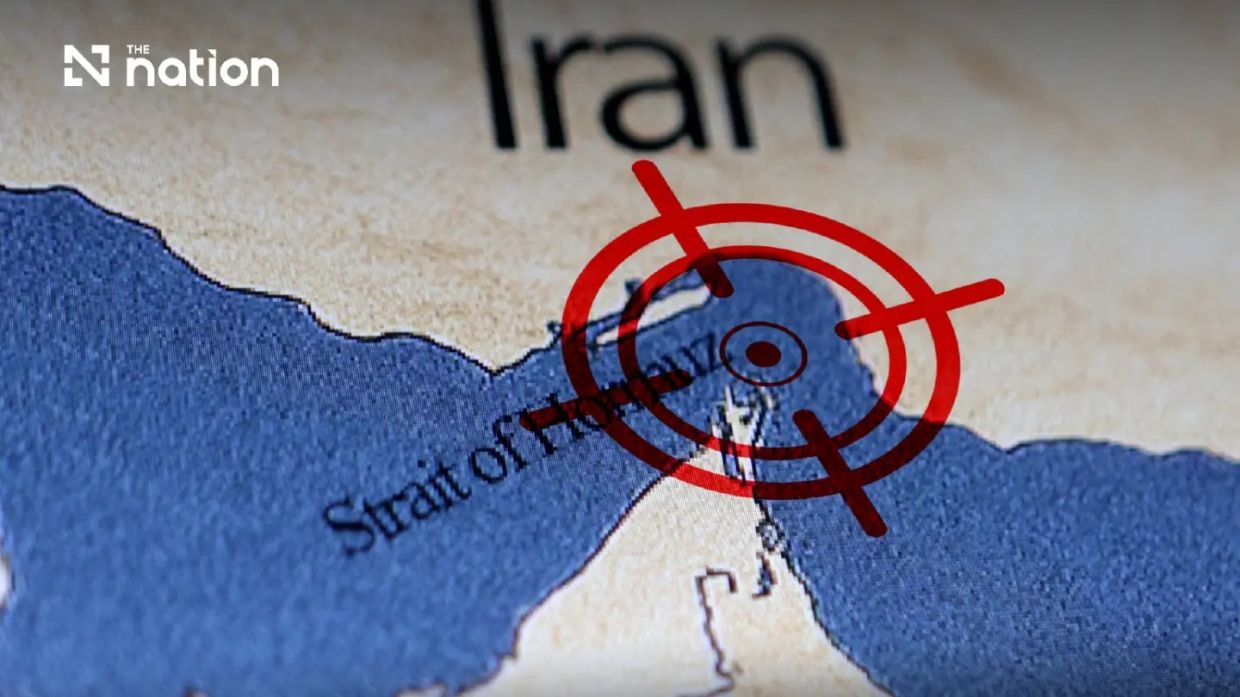
Commercial shipping in one of the world's most strategically vital waterways faces mounting peril as a Thai-flagged vessel has reportedly come under attack from Iranian forces attempting to navigate the Strait of Hormuz. The incident, reported by Iran's semi-official Tasnim news agency, underscores the rapidly deteriorating security environment in the Persian Gulf region as military tensions between Washington and Tehran reach unprecedented levels. However, the identification of the vessel remains unclear, with Iranian state media withholding crucial details about the ship's ownership, cargo, destination and the nationality of its crew, while Thai authorities have yet to issue any official confirmation of the attack.
The reported assault on the Thai-registered ship arrives amid a dramatic escalation of military operations throughout the Strait of Hormuz, where Tehran has issued repeated warnings to international shipping companies to heed notices distributed by its armed forces. According to Iranian state reporting, the Islamic Revolutionary Guard Corps Navy has characterized the waterway as "extremely unsafe" and declared it completely closed due to what it describes as American aggression. This declaration carries particular weight given that the Strait of Hormuz serves as the conduit for approximately one-third of the world's seaborne traded oil, making any disruption to its transit routes a matter of concern for global energy markets and economies dependent on stable energy supplies.
Beyond the reported attack on the Thai vessel, Iranian state media has documented multiple additional maritime incidents within the strategic waterway. Tasnim reported that two oil tankers experienced fires and explosions after attempting to traverse an area characterised by Iranian authorities as a minefield in the southern portion of the strait. Separately, the Islamic Revolutionary Guard Corps Navy claimed to have intercepted four separate oil tankers that were purportedly transiting with United States military support. According to the IRGC Navy's account, these four vessels were ordered to halt their passage while the Iranian force conducted a joint military operation involving missiles and unmanned drones, with Iranian officials warning shipowners that compliance with Iranian military directives offered superior protection compared to reliance on American naval forces.
The maritime incidents have triggered serious concern among the international shipping community regarding vessel safety in one of the world's most critical maritime chokepoints. Any sustained disruption to commercial traffic through the Strait of Hormuz could precipitate significant increases in freight charges and marine insurance premiums, while simultaneously threatening the reliability of energy supplies to Asia, Europe and other regions heavily dependent on Gulf oil and natural gas. For Southeast Asian economies, including Malaysia, which rely substantially on consistent energy imports and benefit from stable international shipping costs, such disruptions pose tangible risks to industrial competitiveness and consumer energy prices. The potential for extended shipping delays could reverberate throughout global commodity markets and supply chains that depend on predictable transit times through this essential corridor.
The maritime escalation coincides with an intensified aerial bombing campaign launched by the United States against Iranian military installations. United States Central Command announced through social media that a seventh consecutive night of air strikes commenced at 7pm Greenwich Mean Time on Friday, representing a sustained and methodical application of military pressure against Tehran's defence capabilities. According to American military statements, these operations are specifically designed to "continue degrading Iran's military capabilities," though CENTCOM provided limited details regarding specific targets or the full scope of resulting damage. The scale and duration of this bombing campaign distinguishes it as a major escalation in direct military action between the two countries.
Iranian authorities have contested American characterizations of the strike campaign, alleging that United States forces have inflicted substantial damage upon civilian infrastructure throughout Iran's southern regions. Iranian officials reported that previous bombing runs destroyed bridges, airports, electrical power facilities and railway infrastructure. Foreign Minister Abbas Araghchi stated that three individuals were killed in an attack directed at a bridge located in Bandar Khamir, placing those deaths among eight total fatalities resulting from overnight American military strikes. Additionally, Iranian state sources cited a deputy governor from Bushehr province as reporting that the United States had targeted an Iranian oil tanker positioned at Kharg Island. These casualty figures and damage assessments remain unverified by independent observers, reflecting the challenge of confirming facts amid competing claims from both parties.
In response to American military action, Iranian defence forces have mounted retaliatory attacks against what they characterize as United States military assets and installations distributed across multiple Gulf countries. The Iranian military claimed responsibility for strikes against American positions and military bases located in Bahrain, Jordan, Kuwait and Qatar. Qatari authorities reported that their armed forces successfully intercepted an incoming Iranian attack, though a child sustained injuries from falling debris during the defensive operation. The IRGC also claimed responsibility for additional attacks targeting other American-linked military facilities throughout the broader region, though the actual extent of any resulting damage remained ambiguous and unconfirmed.
Military claims and counter-claims have proliferated as both nations assert their operational successes. The Islamic Revolutionary Guard Corps Navy asserted that it had destroyed an American MQ-9 Reaper surveillance drone while it operated over the Iranian port city of Bushehr, allegedly employing a newly developed air-defence system incorporated into Iran's integrated air-defence network. However, the United States military has not yet confirmed the loss of any MQ-9 unmanned aircraft in the specified location, creating further uncertainty about the actual military situation on the ground.
The convergence of the reported attack on the Thai-flagged vessel, the multiple claimed incidents involving tankers and the ongoing exchange of military strikes between the United States and Iran demonstrates the expanding risk confronting both civilian and commercial shipping operations as the confrontation between Washington and Tehran intensifies. For Malaysia and other Southeast Asian nations, the situation poses considerable implications for energy security, shipping costs and broader economic stability. The Strait of Hormuz remains irreplaceable as a maritime route, meaning regional economies cannot easily circumvent the deteriorating security environment despite the mounting dangers. International shipping insurance costs will inevitably rise, effectively raising the price of energy and goods transported through the corridor, ultimately affecting consumers and industries throughout Asia. The lack of clear communication channels and the proliferation of unverified military claims increase the risk of accidental escalation, potentially triggering a larger regional conflict that could devastate global energy markets and disrupt supply chains for months.

