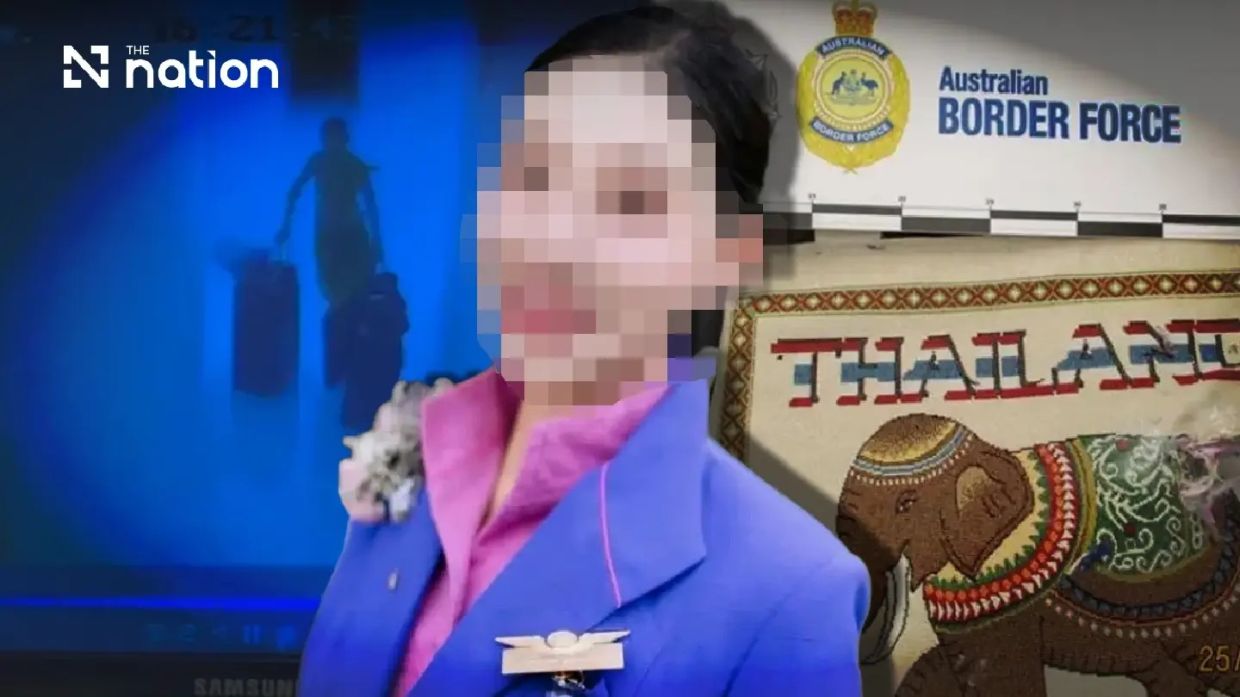
Thai narcotics authorities are expanding their investigation into a transnational heroin-smuggling operation after a Thai flight attendant was detained at Melbourne Airport with 900 grammes of the drug in her possession. The Office of the Narcotics Control Board and multiple security agencies are now coordinating across borders to determine the full scope of the network, which appears to involve sophisticated recruitment tactics targeting airline workers and international travellers.
The flight attendant, whose name has not been disclosed, remains in legal custody but has not yet been formally charged. Areepak Ngernbamroong, deputy secretary-general of the ONCB, clarified this important distinction during a briefing on Monday, emphasising that Thai authorities are preparing evidence to support the woman's legal defence in coordination with Australian police and Thai diplomatic officials. This approach suggests investigators harbour doubts about her level of culpability or whether she acted with full knowledge of the cargo's contents.
The breakthrough in understanding the operation's structure came through concurrent arrests in Bangkok, which led to the seizure of more than 26 kilogrammes of heroin. These domestic arrests have been transferred to the Department of Special Investigation because the network operates as a large-scale international criminal enterprise rather than a simple drug-trafficking case. The arrests included a delivery rider who transported the parcel containing the elephant-pattern bags to the flight attendant, as well as a Lao couple whose role in the supply chain is still being clarified.
Investigators have identified a sophisticated recruitment strategy that distinguishes this operation from conventional smuggling networks. Rather than directly approaching targets, the syndicate creates fake social media avatar accounts and sends mass messages to flight attendants and frequent international travellers, offering payment for transporting packages across borders. Metropolitan Police Bureau deputy commissioner Pol Maj-General Theeradet Thumsuthee characterised this approach as a scamming technique designed to exploit the financial vulnerabilities of workers in the aviation industry.
A crucial figure in the Australian operation has emerged—a Thai national known only as "Dear" who has been living in Australia for approximately a decade. Thai authorities have now identified this person's real name and passed the information to the Australian Federal Police. The evidence suggests Dear is not a mere recipient but rather a key node in a larger distribution network, as investigations revealed similar deliveries have occurred multiple times previously using the same contact person. This pattern indicates a systematic operation rather than isolated incidents.
The payment structure associated with the smuggling network remains partially unclear, adding another layer of complexity to the investigation. While Australian police found evidence of an 8,800 baht payment on a recovered mobile phone, Thai investigators have also identified reports of two separate 1,700 baht transfers—allegedly made upon delivery of goods and when an airline ticket became available. However, examination of the flight attendant's bank records has failed to confirm these transactions, suggesting either she was never the intended recipient or payments were channelled through alternative methods. This discrepancy is critical because it could indicate whether she knowingly participated in the smuggling operation.
The delivery sequence raises important questions about the flight attendant's awareness of the operation. Her boyfriend told police that after receiving a parcel box containing multiple elephant-pattern bags via a delivery rider, the attendant opened and inspected each bag, finding nothing inside before placing them in her luggage. The suitcase subsequently passed through Thai airport X-ray screening without detection. This sequence of events—the visible inspection, the clean scan, and the later discovery of heroin at Melbourne Airport—suggests either the drugs were inserted after the Thai inspection or she was genuinely unaware the bags had been specially prepared.
The geographical dimension of the smuggling network points to significant shifts in trafficking routes across Southeast Asia. Investigators traced the heroin's origin to syndicates operating in the Golden Triangle, the mountainous border region where Thailand, Laos and Myanmar converge. However, rather than attempting the historically common northern Thai routes, traffickers have increasingly shifted operations toward northeastern Thailand, exploiting its porous border with Laos. The Mekong River crossing points in provinces including Nakhon Phanom, Bueng Kan, Loei and Nong Khai present challenges for Thai authorities due to the river's width variations and the difficulty of maintaining continuous surveillance across such extensive borders.
This shift in trafficking patterns reflects the intensified interdiction efforts that Thai police have deployed in traditional drug-smuggling hotspots. By pressuring networks away from northern routes, authorities have inadvertently channelled traffickers toward the northeastern corridor, where personnel shortages and geographical challenges make comprehensive monitoring difficult. The trafficking methodology typically involves drugs being packaged and pre-positioned inside Thailand through multiple handoff points before being loaded onto cargo—sometimes using unwitting couriers like the flight attendant.
The coordination between Thai authorities and Laos remains active, with officials emphasising continuous information exchange between the two countries. Areepak stressed that Laos has not neglected border security, though the tactical challenges of controlling remote river crossings extend beyond any single country's capacity. The heroin seized in this case may represent only one operational line of a significantly larger organisation with multiple distribution channels, suggesting that dismantling the network will require sustained international collaboration and intelligence sharing.
The case underscores the vulnerability of airline workers to exploitation by transnational criminal networks that view them as conduits into international distribution systems. The payment amounts offered—ranging from 1,700 to 8,800 baht—represent substantial sums relative to many workers' salaries, making the recruitment pitch attractive despite the obvious legal risks. Thai authorities are now examining whether additional flight attendants or airline employees may have received similar recruitment approaches, indicating that this case may represent only the exposed tip of a larger recruitment operation.
As investigations proceed, the distinction between the flight attendant's status as a detainee rather than an accused person carries significant weight. Thai authorities are clearly building a narrative suggesting she may have been deceived into participating, either through misinformation about the contents of the bags or by payment incentives insufficient to establish guilty knowledge. This approach—providing evidence for her legal defence rather than aggressively prosecuting—reflects either confidence that she was manipulated or institutional recognition that convicting someone on circumstantial grounds in a foreign jurisdiction could damage Thailand's diplomatic relationship with Australia. The coming weeks will reveal whether investigators develop evidence confirming her unwitting participation or whether charges will be upgraded.

