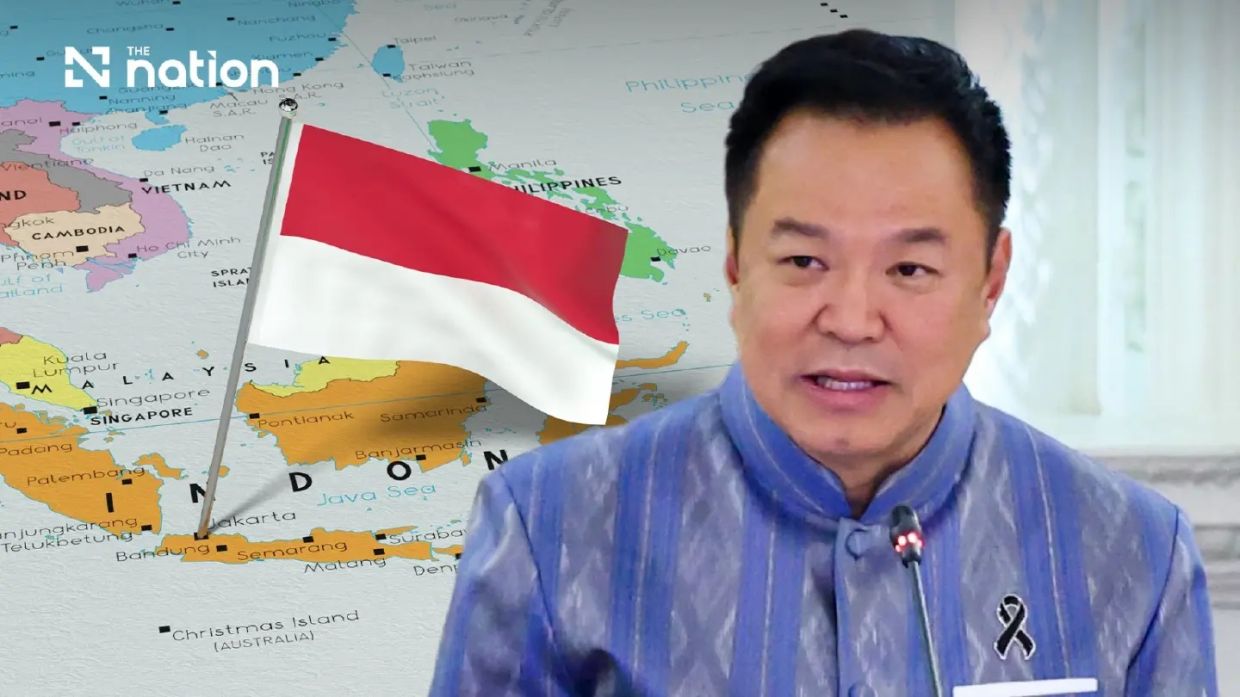
Prime Minister and Interior Minister Anutin Charnvirakul will undertake an official visit to Indonesia on August 3–4, marking a significant diplomatic milestone as the first such visit by a Thai prime minister in over a decade and a half. The journey underscores Bangkok's renewed emphasis on cementing ties with its neighbour across the Straits of Malacca at a moment of considerable geopolitical and economic flux across Southeast Asia.
During his two-day stay, Anutin is scheduled to meet with Indonesian President Prabowo Subianto to explore avenues for deepening bilateral cooperation. The agenda spans an ambitious range of domains: trade and investment frameworks, tourism promotion, security arrangements, food security initiatives, energy partnerships, educational exchanges and business collaboration. The breadth of these discussions reflects both nations' recognition that their relationship extends far beyond ceremonial courtesy into practical economic and strategic realms that affect millions of citizens across both countries.
A centrepiece of Anutin's programme will be a major foreign-policy address delivered at the Asean Secretariat in Jakarta. The speech is expected to articulate Thailand's vision for regional architecture and outline the country's priorities heading into its tenure as Asean chair in 2028, a position that carries considerable responsibility for steering the bloc's agenda and shaping its collective response to regional challenges. This platform provides Thailand with an opportunity to assert leadership within the organisation at a time when Asean's cohesion and effectiveness remain subjects of intense international scrutiny.
Government Spokesperson Rachada Dhnadirek characterised the visit as instrumental in translating the Thailand–Indonesia strategic partnership from diplomatic rhetoric into concrete, measurable outcomes. She highlighted Indonesia's significance as Asean's economic powerhouse, home to approximately 280 million people and representing the bloc's largest economy and most densely populated state. For Thai policymakers, this reality underscores Indonesia's potential as both a substantial market for Thai goods and an attractive destination for capital investment, while also presenting opportunities for Thai enterprises to tap into Indonesia's vast consumer base and supply networks.
The economic dimensions of this engagement carry particular importance for Thailand's business community. Large corporations and small and medium-sized enterprises alike stand to benefit from enhanced market access, particularly in sectors where Thai products and services possess competitive advantages. Rachada indicated that the government views the visit as a vehicle for expanding Thai agricultural exports and processed food products into Indonesian markets, while simultaneously creating employment opportunities and facilitating skills transfer between the two nations. This approach reflects a broader strategic calculation that regional diplomacy must yield tangible returns in job creation and household income generation to justify the commitment of ministerial time and resources.
Beyond straightforward commercial considerations, both governments recognise complementarities in specific sectors that warrant knowledge and technology exchanges. The talks will establish mechanisms for identifying these areas of mutual strength and structuring collaborative programmes that enable both economies to benefit from shared innovation and expertise. Government messaging has consistently framed foreign policy as a tool for economic advancement, a departure from purely strategic or security-focused diplomacy that dominated earlier phases of bilateral relations.
Thailand and Indonesia's roles as founding members of Asean position them as natural architects of the bloc's future direction. Their bilateral conversations will inevitably touch upon broader questions confronting the organisation: how to maintain unity amid divergent member interests, how to craft effective responses to shifting global economic patterns, how to address transnational challenges ranging from organised crime to human trafficking, and how to navigate geopolitical competitions between major powers without compromising Asean's cherished principle of strategic autonomy. These discussions carry implications extending well beyond Jakarta, influencing regional stability and prosperity that affect all Southeast Asian nations, including Malaysia.
The itinerary for the first day encompasses traditional elements of high-level diplomatic engagement: an official reception ceremony, intimate discussions between the two leaders, a full delegation-level meeting encompassing broader government representation, and a joint press conference at the Indonesian Presidential Palace. This structured approach ensures multiple levels of government establish direct working relationships while the formal press engagement signals the visit's significance to international audiences and domestic constituencies in both countries.
August 4 shifts focus toward the private sector dimension, with Anutin attending the opening ceremony of a major business forum co-organised by the Indonesian Chamber of Commerce and Industry (KADIN) and the Thai Chamber of Commerce in Indonesia. This forum functions as a practical bridge between enterprises from both nations, creating networking opportunities and identifying concrete prospects for expanded bilateral trade and joint ventures. The government's engagement in this forum demonstrates recognition that sustainable economic integration requires sustained private-sector participation alongside government policy frameworks.
Additional activities scheduled for the second day include separate meetings with the Asean secretary-general on advancing regional cooperation initiatives and separate engagements with representatives of Indonesia's private sector to explore further business cooperation avenues. This packed schedule maximises the diplomatic and economic returns from Anutin's time in Jakarta, ensuring interactions with key governmental figures, multilateral institutions, and private-sector leaders who shape Indonesia's economic trajectory and regional influence.
Rachada framed the visit as reflecting a comprehensive foreign-policy reorientation emphasising strategic partnership development, balanced maintenance of international relationships, and strengthening of Thailand's economic negotiating position during an era marked by intensifying global competition and systemic uncertainty. This articulation suggests Thai policymakers view regional relationships not as static arrangements but as dynamic instruments requiring periodic recalibration to address emerging opportunities and threats. The Indonesia visit represents one manifestation of this broader strategic recalibration, with implications for Thailand's relationship with Malaysia and other Asean partners watching how Bangkok navigates the delicate balance between great-power competition and regional solidarity.

