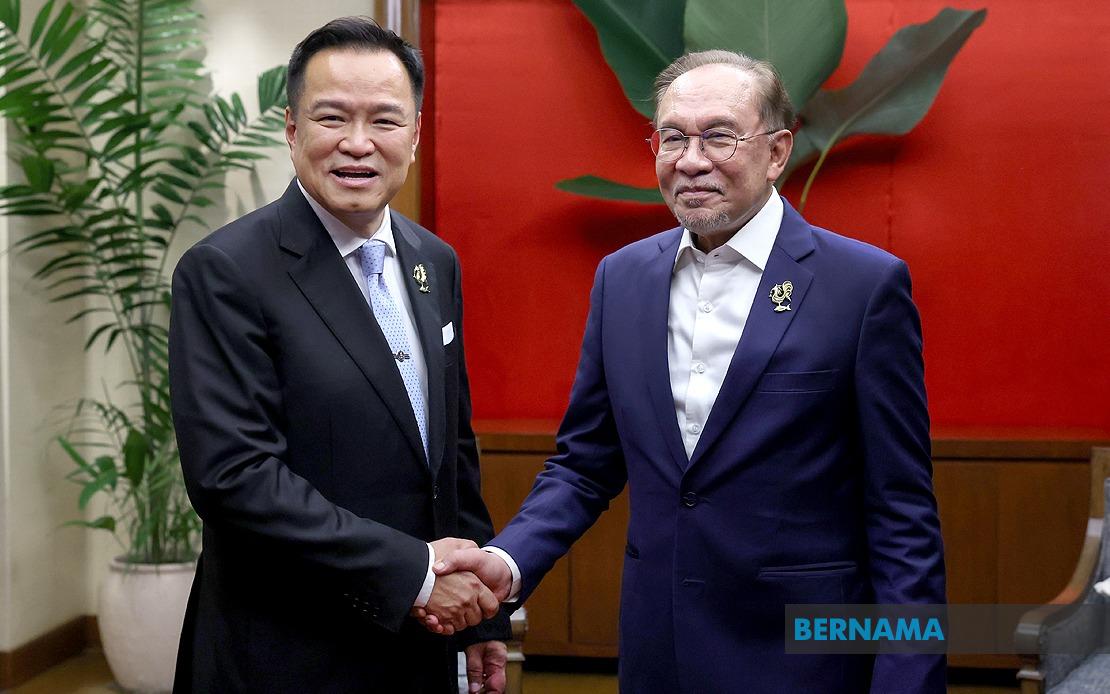
Thai Prime Minister Anutin Charnvirakul is set to arrive in Malaysia on Thursday for a two-day official visit, timing his trip strategically before the inauguration of a modernised border crossing that promises to transform logistics and commerce along one of Southeast Asia's busiest frontier routes. The visit, taking place at the invitation of Malaysian Prime Minister Datuk Seri Anwar Ibrahim, underscores both nations' determination to deepen institutional cooperation and achieve tangible results as they approach the 70th anniversary of their diplomatic relationship in 2027.
The centrepiece of this high-level engagement is the July 11 opening of the new permanent Sadao border checkpoint in Thailand's Songkhla province, which will replace the existing crossing and operate under enhanced operational standards. Thai government spokesperson Ratchada Thanadirek confirmed that the Thai Cabinet formally approved the checkpoint's opening on Tuesday, signalling the culmination of planning efforts to upgrade critical infrastructure at this strategic juncture. The new facility will function daily between 5 am and 11 pm Thailand time, establishing a consistent schedule that accommodates regional business patterns and travel rhythms.
The Sadao checkpoint holds particular significance for the broader Southeast Asian region because it will directly interface with Malaysia's Bukit Kayu Hitam facility in Kedah, creating a unified border crossing system that is expected to substantially reduce clearance times for goods and passengers. By consolidating customs, immigration, and quarantine operations into a single modern complex, the facility addresses longstanding bottlenecks that have constrained bilateral trade flows and complicated tourism development. The new infrastructure reflects lessons learned from similar modernisation projects across the region and incorporates contemporary standards for efficiency and traveller experience.
Beyond the checkpoint facility itself, Thai authorities have committed to implementing a comprehensive package of supporting measures designed to maximise the crossing's operational effectiveness. The Cabinet has directed relevant agencies to accelerate construction of connecting roads on the Thai side to enhance traffic circulation and prevent congestion spillover into surrounding areas. Additionally, shuttle bus services will link the checkpoint with inland communities, ensuring that residents in peripheral zones can access the new facility without requiring private vehicle ownership. These complementary investments demonstrate recognition that border infrastructure performs optimally only when integrated within broader transport networks.
Public communication represents another critical component of the rollout strategy. Government officials have been instructed to launch intensive awareness campaigns targeting both general populations and business communities, focusing on new traffic patterns, updated customs procedures, and immigration protocols. For traders and small entrepreneurs in the Dan Nok border community and surrounding districts, understanding these procedural changes is essential for maintaining business continuity and avoiding costly delays. The campaigns will also highlight mechanisms designed specifically to facilitate cross-border commerce, acknowledging that many small and medium-sized enterprises depend on efficient frontier crossing for their survival.
Anutin's visit represents his third journey to Malaysia since becoming prime minister, reflecting the depth of bilateral engagement at the executive level. His previous visits included attendance at the ASEAN Summit and Related Summits in Kuala Lumpur last October, followed by a dedicated official visit in late November. This pattern of regular high-level contact contrasts with periods in Thai-Malaysian relations when diplomatic engagement occurred more sporadically, suggesting institutional commitment to sustained dialogue channels and relationship management. The frequency of such visits often correlates with the progress of concrete initiatives, making Anutin's upcoming trip a visible endorsement of the Sadao checkpoint project and broader economic cooperation frameworks.
For Malaysia, the Sadao checkpoint represents an opportunity to strengthen its position as a regional logistics hub and to enhance connectivity with Thailand's emerging economic corridors. The Bukit Kayu Hitam checkpoint, which will receive cross-border traffic from the new Sadao facility, serves communities in northern Kedah and provides access to Malaysia's wider transport networks extending southward. Improved efficiency at this gateway could catalyse increased trade in automotive components, agricultural products, and manufactured goods, benefiting businesses in both nations and creating employment opportunities along the border zone. Malaysian authorities have similarly invested in supporting infrastructure and coordination mechanisms to ensure the checkpoint functions optimally from its opening date.
The timing of Anutin's visit carries diplomatic weight beyond the checkpoint symbolism. By personally attending the opening of this facility, the Thai prime minister signals to the business community, civil servants, and general public that border modernisation remains a government priority and that Thailand values its relationship with Malaysia sufficiently to warrant executive-level participation in infrastructure inauguration. Such gestures, though seemingly ceremonial, communicate commitment to international audiences and establish political accountability for successful implementation. The event also provides opportunities for Thai and Malaysian officials to conduct bilateral discussions on related matters, from security cooperation to coordinated tourism promotion, potentially yielding agreements or understandings that extend beyond the checkpoint itself.
Economic implications of the Sadao checkpoint extend beyond immediate logistics efficiency. The facility represents one component of broader regional integration efforts, including the proposed Southern Economic Corridor that aims to link Thailand, Malaysia, and other Southeast Asian economies through improved infrastructure and reduced transaction costs. By demonstrating successful cross-border facility upgrade, the Sadao project provides a model that other ASEAN nations may reference in their own infrastructure planning. Businesses operating in Thailand and Malaysia can plan expansion strategies with greater confidence when frontier bottlenecks diminish, and the facility's existence may attract logistics companies and manufacturing operations seeking sites adjacent to efficient border crossings.
Looking toward the 70th anniversary of Thai-Malaysian diplomatic relations in 2027, initiatives like the Sadao checkpoint renovation serve as tangible manifestations of bilateral commitment beyond ceremonial declarations. Infrastructure development projects carry longer-term significance than policy statements because they embed institutional cooperation into physical systems that will serve multiple generations of traders, travellers, and officials. The checkpoint will continue facilitating exchange long after contemporary political leaders have left office, establishing a legacy of functional integration that reinforces the relationship's material substance. For Malaysia and Thailand both, demonstrating progress on concrete partnership outcomes strengthens domestic political narratives around regional cooperation and validates investment in ASEAN mechanisms that sometimes face scepticism from constituencies unconvinced of multilateral benefits.

