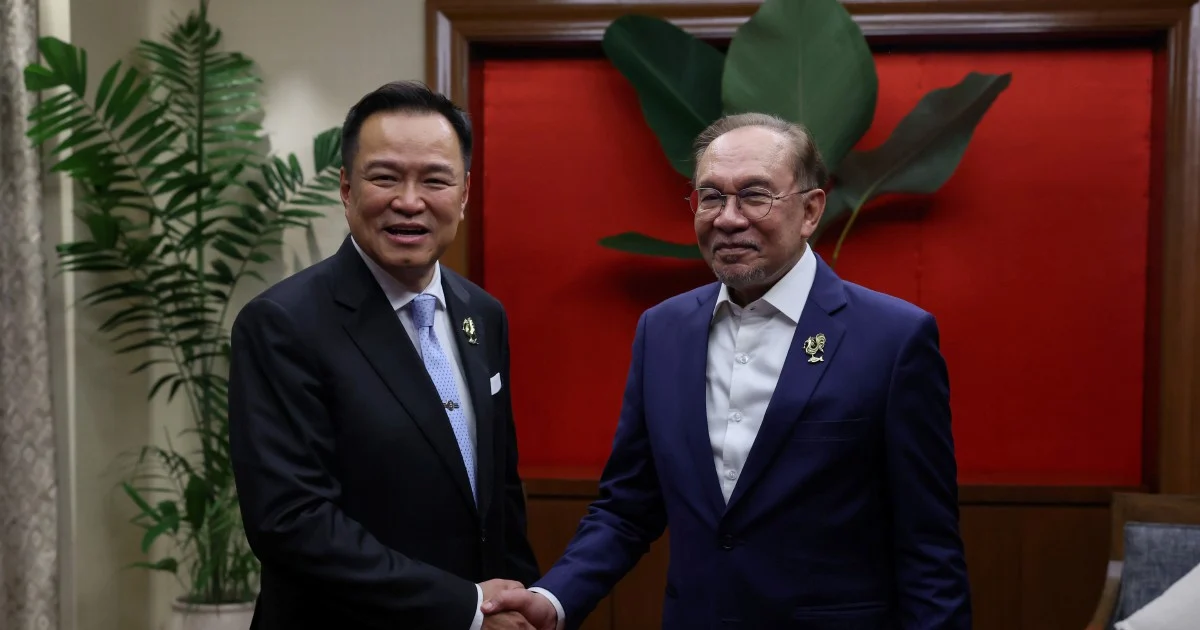
Thai Prime Minister Anutin Charnvirakul is set to visit Malaysia on July 9 and 10, marking a significant engagement between the two Southeast Asian neighbours as they seek to strengthen bilateral relations across multiple fronts. The visit will see him meet with Prime Minister Datuk Seri Anwar Ibrahim for talks expected to centre on security arrangements along their shared border and initiatives to boost economic collaboration.
The timing of this high-level visit reflects the growing importance both governments place on their bilateral relationship, particularly as they navigate shared challenges in the region. Thailand and Malaysia, despite geographical proximity and cultural connections, have historically faced complexities in their interactions. This visit signals a commitment from both administrations to maintain constructive dialogue and address mutual concerns through direct engagement at the highest levels.
Border security has long been a pressing concern for both nations. The Malaysia-Thailand border, spanning approximately 640 kilometres, presents ongoing challenges related to transnational crime, illegal immigration, and trafficking activities. These issues have required sustained cooperation between law enforcement agencies on both sides. The prime ministerial discussions will likely explore enhanced coordination mechanisms, intelligence sharing, and joint operations to tackle these persistent problems more effectively.
Beyond security matters, the bilateral relationship encompasses significant economic dimensions that warrant attention during such high-level visits. Thailand and Malaysia maintain substantial trade links, with both countries serving as important markets for each other's goods and services. Economic cooperation extends to investment flows, tourism, and sectoral partnerships that benefit businesses and workers in both nations. The visit provides an opportunity to identify new areas for commercial collaboration and address any trade barriers that may impede economic interaction.
For Malaysia, engaging with its northern neighbour carries particular strategic weight given the country's position as a major Southeast Asian economy and a critical player in regional stability. The bilateral relationship influences broader dynamics within the Association of Southeast Asian Nations and affects Malaysia's ability to manage regional affairs effectively. Strengthening ties with Thailand contributes to Malaysia's regional standing and helps facilitate coordination on issues of mutual concern.
Thailand's government under Anutin Charnvirakul has prioritised regional diplomacy as part of its broader policy framework. The visit to Malaysia fits within this strategy of consolidating relationships with key neighbours and maintaining Thailand's relevance in Southeast Asian affairs. For the Thai administration, successful bilateral engagement helps demonstrate its capacity to manage international relations and deliver tangible benefits to its constituents.
Security challenges in the region have become increasingly complex, with both nations facing transnational issues that transcend borders. Human trafficking networks, drug smuggling operations, and illegal arms trade represent serious threats that require coordinated responses. The discussions between Anutin and Anwar will likely examine how their respective security agencies can enhance operational cooperation and share intelligence more effectively to disrupt criminal networks operating across their frontier.
The economic dimension of the visit also reflects broader regional trends toward integration and interdependence. Both Thailand and Malaysia have expressed interest in deepening integration within ASEAN and participating in various regional trade frameworks. The bilateral talks may address how their respective nations can leverage complementary strengths to enhance regional competitiveness and create more opportunities for their businesses and workers.
Tourism represents another significant area where both countries have vested interests. Malaysian and Thai tourism industries are among the region's most developed, attracting millions of international and regional visitors annually. Cooperation in this sector, including simplified travel arrangements, coordinated tourism marketing, and infrastructure development, can generate benefits for both economies. The prime ministerial discussions may include initiatives to make cross-border tourism more seamless and attractive.
From Malaysia's perspective, the visit underscores the government's commitment to maintaining stable and productive relations with all neighbouring countries. As a nation with multiple international borders and maritime boundaries, Malaysia's stability and prosperity depend significantly on constructive relationships with its neighbours. The bilateral engagement with Thailand contributes to this broader objective and demonstrates proactive diplomacy.
The visit also provides an opportunity for both leaders to build personal rapport and establish working relationships that can facilitate problem-solving on contentious issues. Personal chemistry between leaders often determines the effectiveness of diplomatic efforts, and high-level visits create the conditions necessary for such relationship-building to occur naturally.
Regional observers will likely monitor this visit closely to gauge the trajectory of Thailand-Malaysia relations and assess whether the discussions yield concrete outcomes. The joint statements or agreements that may emerge from the talks could signal intentions regarding future cooperation and help clarify each nation's priorities in the bilateral relationship.
Ultimately, the Anutin visit to Malaysia represents an important moment for both nations to reaffirm their commitment to working together on shared challenges while exploring new avenues for mutual benefit. As Southeast Asia navigates complex geopolitical and economic terrain, strong bilateral relationships serve as anchors for regional stability and prosperity.

