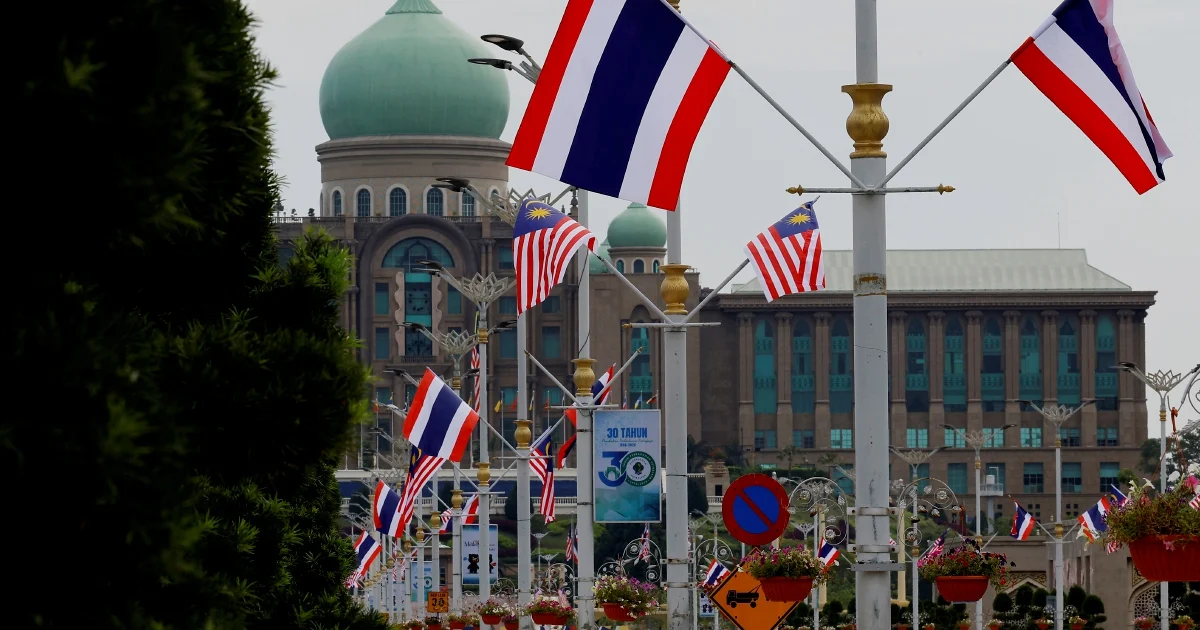
Thai Prime Minister Anutin Charnvirakul will arrive in Malaysia on Thursday for a two-day official visit aimed at strengthening bilateral relations between Bangkok and Kuala Lumpur. The high-level visit carries significant regional importance, as Thailand and Malaysia continue efforts to deepen cooperation across multiple sectors, with particular focus on infrastructure development linking their shared border regions and agricultural collaboration that benefits both nations' rural economies.
The centrepiece of Anutin's visit will be the official inauguration of a new border road, a project to be jointly opened with Prime Minister Anwar Ibrahim. This infrastructure corridor represents a tangible outcome of ongoing diplomatic efforts to improve cross-border connectivity, which has long been a priority for both governments. Such transportation links are vital for facilitating trade, tourism, and movement of goods between the two neighbouring countries, particularly for communities residing along the frontier zones.
The border road project reflects Thailand and Malaysia's shared commitment to enhancing regional integration through the ASEAN framework. Improved connectivity between Thai and Malaysian territories reduces transit times for commercial goods and enables faster people-to-people exchange, creating economic spillover effects in provinces and states nearest the international boundary. For Malaysian businesses, smoother cross-border infrastructure means better access to Thai markets and supply chains, while Thai enterprises gain similar advantages in reverse.
Beyond infrastructure, the visit will address agricultural cooperation, an area where both nations maintain complementary strengths. Thailand is a significant producer of rice, rubber, and tropical produce, while Malaysia has substantial agricultural sectors spanning palm oil, cocoa, and aquaculture. Collaborative initiatives in this domain can enhance food security across Southeast Asia, stabilise commodity prices, and support smallholder farmers through knowledge-sharing and technological advancement. The discussions will likely explore joint ventures, training programmes, and regulatory harmonisation to facilitate smoother agricultural trade.
Anutin's two-day itinerary underscores the bilateral relationship's multifaceted nature. State visits of this calibre typically involve meetings with senior Malaysian officials, parliamentary delegations, and business communities, creating platforms for identifying new partnership opportunities. The presence of both prime ministers at the border road inauguration signals the high political priority both governments attach to this initiative, sending a powerful message to investors and regional observers about the stability and forward momentum in Thai-Malaysian relations.
The timing of this visit is strategically significant within the broader context of Southeast Asian geopolitics. As ASEAN member states navigate complex regional dynamics, strengthened bilateral ties between individual nations contribute to the bloc's overall cohesion and economic resilience. Thailand and Malaysia, as neighbouring countries with interlinked economies and shared developmental challenges, benefit particularly from deepened integration. Cross-border cooperation addresses practical concerns such as wildlife trafficking, illegal migration, and transnational crime that affect both populations.
For Malaysian stakeholders, particularly in northern states such as Perlis, Kedah, and Terengganu, the improved border infrastructure promises tangible economic benefits. Reduced logistical costs for businesses operating near the frontier, enhanced tourism flows between northern Malaysia and southern Thailand, and increased employment opportunities in border towns are likely outcomes of improved connectivity. These developments can help address regional inequality by channelling investment and economic activity to areas that historically lag behind more developed urban centres.
The agricultural dimension of the visit carries particular resonance given ongoing global supply chain disruptions and food inflation concerns affecting Southeast Asia. Joint efforts between Thailand and Malaysia to strengthen agricultural trade and research collaboration can contribute to regional food security and provide Malaysian consumers with stable access to essential commodities. Conversely, Thai businesses gain market access and stability through formalised bilateral arrangements, creating mutual benefits that transcend traditional aid or one-directional trade models.
Anutin's tenure as Thai Prime Minister has been marked by efforts to revitalise diplomatic relationships across the region, and this Malaysia visit exemplifies that approach. Strengthening ties with immediate neighbours forms a cornerstone of Thailand's regional strategy, recognising that prosperity and stability in the Southeast Asian neighbourhood directly influence Thailand's own development trajectory. For Malaysia, reciprocal engagement signals commitment to balanced relationships across ASEAN, maintaining strong connections with key neighbours while avoiding excessive dependence on any single partner.
The border road inaugurated during this visit will likely become a symbol of Thai-Malaysian cooperation, visible daily to thousands of commuters, traders, and travellers crossing between the two nations. Beyond its practical utility, the project demonstrates how political will can translate into concrete infrastructure benefiting ordinary citizens. Such tangible outcomes from diplomatic engagement build public confidence in bilateral institutions and create momentum for tackling more complex cooperative challenges in subsequent negotiations.
Looking forward, this visit may establish the foundation for expanded partnerships in emerging sectors such as digital commerce, renewable energy, and sustainable tourism. Both nations possess complementary assets in these domains, and collaborative initiatives could position Thailand and Malaysia as regional leaders in green development. The agricultural discussions may also evolve to encompass food security planning, climate resilience, and adaptation strategies for farming communities increasingly affected by weather volatility.
As the visit concludes, observers will assess whether concrete agreements emerge beyond the border road inauguration, particularly regarding timelines for agricultural initiatives and commitments to future infrastructure projects. The depth of outcomes will signal whether this represents merely ceremonial engagement or substantive partnership deepening. Either way, Anutin's visit reinforces the importance both governments place on maintaining robust bilateral relations as a foundation for broader ASEAN cooperation and regional stability.

