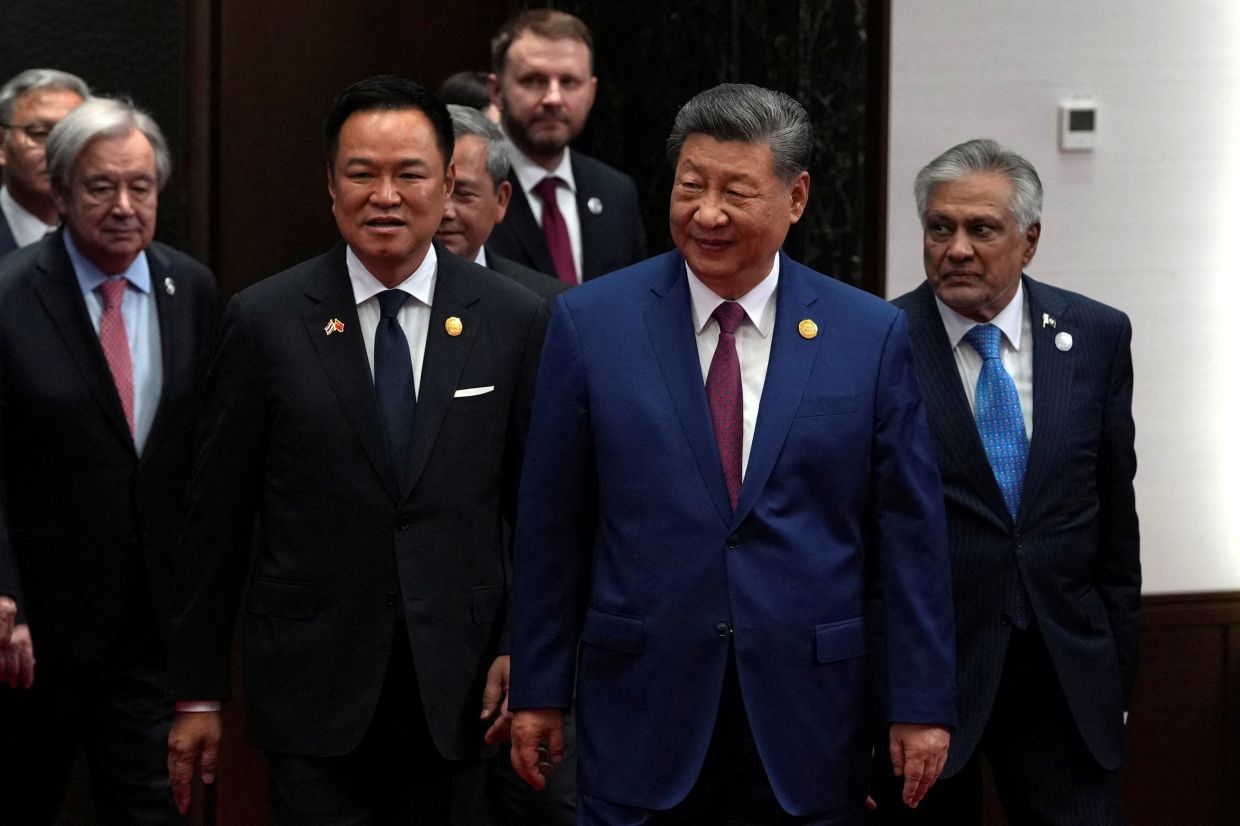
Thai Prime Minister Anutin Charnvirakul has made headlines once again for his unconventional approach to diplomatic engagement, performing a rendition of a classic Taiwanese ballad for Chinese Premier Li Qiang during an official lunch in Beijing on Monday. The performance, captured in footage released by the Thai leader's office, showed Anutin seated beside Li at a formal dining arrangement flanked by Thai and Chinese flags, microphone in hand as a pianist accompanied his singing. The Chinese premier and other dignitaries responded warmly to the performance, joining in with applause as the traditional protocol of high-level state visits took on a distinctly musical character.
The Beijing serenade marks the third major diplomatic performance by Anutin in recent weeks, underscoring what has become his signature approach to international relations. Each performance has been carefully choreographed to reflect the cultural context and sensibilities of the host nation, a strategic choice that signals respect while simultaneously humanising formal state interactions. By selecting a song by Teresa Teng, the beloved Taiwanese singer whose music transcends political boundaries across the Chinese-speaking world, Anutin demonstrated an understanding of shared cultural touchstones that can bridge diplomatic divides. The performance serves as a reminder that diplomacy need not remain confined to boardrooms and bilateral negotiations.
Just days before the Beijing engagement, Anutin had performed "My Way" alongside Malaysian Prime Minister Anwar Ibrahim, with the Thai leader demonstrating his proficiency on the saxophone while his Malaysian counterpart took the vocal lead. This performance, which occurred earlier in July, highlighted the pianist-turned-saxophonist's musical versatility and his willingness to share the spotlight with regional peers. The choice of Frank Sinatra's iconic standard represents a deliberately universal cultural reference point, one that carries associations of individual determination and resilience that resonate across different political systems and national contexts.
Their regional musical tour extended further back to June when Anutin travelled to Hanoi and performed alongside Vietnamese musicians using traditional local instruments during his meeting with Prime Minister Le Minh Hung. That engagement demonstrated his commitment to engaging with the cultural heritage of each nation he visits, moving beyond perfunctory diplomatic formalities to create memorable moments of cultural exchange. The consistent pattern of these performances suggests a calculated effort to distinguish Thailand's diplomatic approach from the conventional bilateral meeting format that characterises most high-level state visits in Southeast Asia.
Anutin's background has shaped this unconventional diplomatic style. Born into Thailand's prominent construction sector, with his family having established considerable wealth through real estate and infrastructure projects, he might have been expected to conduct himself with the formality traditionally associated with industrial magnates and political elites. Instead, the Thai leader actively cultivates an image as a person connected to ordinary citizens, a deliberate contrast to the remote, inaccessible persona that has historically characterised Thailand's power elite. His performances before world leaders serve this dual purpose: they facilitate diplomatic rapport while simultaneously reinforcing his self-fashioned identity as an accessible, culturally engaged leader.
Beyond his political career, Anutin maintains several recreational pursuits that speak to both adventure and artistic sensibility. He is a qualified pilot who flies helicopters for pleasure, an activity that requires technical proficiency and considerable investment. He has demonstrated competence on multiple musical instruments, including the piano and the traditional Thai flute known as the khene, instruments that require years of dedicated practice to master competently. These pursuits collectively construct an image of a leader who moves comfortably across Thailand's traditional cultural domains while simultaneously engaging with modern leisure activities that appeal to aspirational middle-class Thais.
Yet Anutin's musical diplomacy does not operate in isolation from his broader political positioning. He is widely regarded as fundamentally aligned with Thailand's traditional institutional frameworks and hierarchies, a stance that has earned him considerable support within conservative constituencies who view him as a stabilising force in Thai politics. This apparent contradiction—between the progressive cosmopolitanism suggested by his international musical performances and his alignment with traditional structures—reflects the complex nature of contemporary Thai politics, where cultural nationalism and internationalism frequently coexist.
Anutin assumed the prime minister's office in September 2025, following his party's electoral performance in February's general elections. His ascendancy represented a significant political moment in Thailand's recent history, and his tenure has been marked by attempts to consolidate support across diverse constituencies. The musical performances thus serve multiple strategic functions: they generate positive international media coverage, they demonstrate Thailand's openness to cultural exchange and soft power diplomacy, and they reinforce Anutin's personal brand as a leader comfortable in global contexts while remaining rooted in Thai traditions.
Recently, Anutin has expanded his musical collaborations beyond government circles, performing publicly with a Thai teenager who achieved international recognition through a viral performance on the American television programme America's Got Talent. This engagement with popular culture and emerging talent further reinforces his image as a leader who bridges generational and cultural divides, someone willing to celebrate and elevate young Thai performers on the international stage. Such collaborations carry significant symbolic weight in Thailand's media environment, where public figures' cultural choices are frequently scrutinised for what they reveal about political positioning and values.
The broader implications of Anutin's musical diplomacy extend beyond personal branding to encompass Thailand's approach to regional and international relations during a period of significant geopolitical complexity. As Southeast Asian nations navigate relationships with major powers including China and the United States, cultural diplomacy offers a softer, less confrontational avenue for building relationships. Thailand's emphasis on musical and cultural exchange, facilitated through Anutin's high-profile performances, positions the kingdom as a nation invested in constructive engagement rather than zero-sum competition. This approach reflects Southeast Asia's historical emphasis on consensus-building and face-saving mechanisms in diplomatic contexts, principles that have guided regional relations for decades.
For Malaysian observers, Anutin's engagement with Prime Minister Anwar Ibrahim through the "My Way" performance carries particular significance. The performance demonstrated a willingness to collaborate with Malaysian leadership on cultural grounds, reinforcing bilateral ties through informal channels that complement official state mechanisms. Such performances generate positive domestic media coverage in both countries and create opportunities for prime ministers to present themselves as culturally sophisticated figures capable of engaging at multiple levels of diplomacy. They also signal that Thai-Malaysian relations, which occasionally face tensions over various issues, can be advanced through avenues that emphasise shared cultural values and mutual respect.

