Thailand's Prime Minister Anutin Charnvirakul and his wife Thananon have arrived in Malaysia for a two-day official state visit, marking the first time Anutin has visited the country since resuming the premiership in March 2026. The delegation touched down at Kuala Lumpur International Airport, where they were greeted with a full official welcoming ceremony at the Bunga Raya Complex, underscoring the diplomatic significance of their journey to a neighbouring nation with whom Malaysia shares deep historical and economic connections.
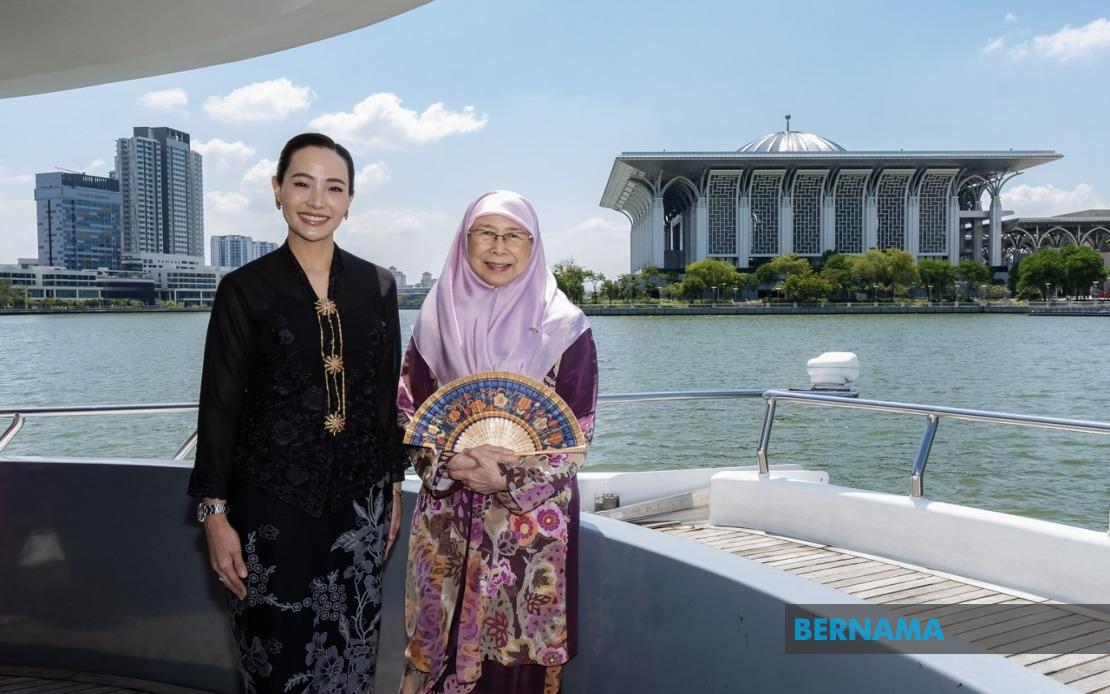
As part of the carefully curated itinerary, Thananon embarked on a leisurely 45-minute lake cruise across Tasik Putrajaya on Thursday afternoon, allowing her to absorb the distinctive architecture and carefully planned urban design of Malaysia's federal territory. The excursion provided an intimate glimpse into one of Southeast Asia's most ambitious administrative capitals, whose distinctive skyline and landscaped environment reflect decades of deliberate nation-building efforts. The panoramic vistas from the water offered perspectives on major government buildings and monuments that define Putrajaya's architectural character.
Thananon's arrival at the lakeside was marked by a formal reception from Datuk Seri Dr Wan Azizah Wan Ismail, wife of Malaysian Prime Minister Datuk Seri Anwar Ibrahim. The timing of the gathering, shortly after midday, allowed for an unhurried engagement between the two women, whose respective positions place them at the heart of their nations' political establishments. Minister in the Prime Minister's Department (Federal Territories) Hannah Yeoh also participated in welcoming the Thai delegation, reflecting the Malaysian government's commitment to ensuring a hospitable visit.
Throughout the cruise, Thananon and Dr Wan Azizah maintained an animated conversation while observing the landscaped waterfront developments that characterise Putrajaya. The relaxed atmosphere of such occasions often facilitates the kind of interpersonal rapport that underpins formal diplomatic relationships, moving beyond ceremonial protocols to build genuine human connections between the families of senior officials. The leisurely pace of a lake cruise, far removed from the formality of government chambers, creates space for substantive dialogue on matters of mutual concern.
Anutin's decision to visit Malaysia at this particular moment carries significance for regional stability and economic cooperation. As the first official journey outside Thailand since his recent reappointment, the choice to prioritise a neighbouring Southeast Asian nation signals the government's foreign policy orientation. Thailand and Malaysia share numerous interconnected interests spanning trade, security, and cultural exchange, with the bilateral relationship serving as a cornerstone of regional integration efforts within ASEAN.
The invitation extended by Anwar to Anutin reflects both leaders' commitment to deepening institutional ties between their administrations. Thailand and Malaysia have cultivated increasingly sophisticated partnerships across multiple sectors, from energy cooperation to infrastructure development. The visit provides an opportunity to review ongoing initiatives and identify fresh avenues for collaboration that might yield mutual benefits for their respective populations.
Malaysia's selection of Putrajaya as the venue for this segment of the visit carries symbolic weight. The federal territory represents Malaysia's aspirations for modern governance and planned development, showcasing investments in infrastructure and administration that have transformed the region. By allowing visiting dignitaries to experience Putrajaya firsthand, Malaysia communicates its progress and invites international peers to appreciate the country's developmental trajectory.
For Thai observers, the visit demonstrates how neighbouring nations within ASEAN can maintain robust diplomatic engagement despite occasional regional tensions or divergent interests on particular issues. Thailand, as both a monarchy and a nation with deep Buddhist traditions, shares cultural commonalities with Malaysia that transcend political differences, providing a foundation for sustained cooperation even when bilateral relations face periodic strains.
The broader context of this visit involves the increasingly complex geopolitical landscape of Southeast Asia, where mid-sized powers like Thailand and Malaysia must navigate relationships with larger regional actors while maintaining their own strategic autonomy. Official visits such as this one serve as mechanisms for reaffirming commitments to regional partnership and demonstrating to international observers that despite occasional friction, ASEAN member states remain committed to dialogue and constructive engagement.
Anutin's visit also occurs at a time when both Thailand and Malaysia are grappling with economic challenges and social pressures that benefit from regional cooperation. Trade relationships, investment flows, and coordinated responses to transnational issues such as climate change and pandemic preparedness all depend on the kind of high-level political engagement that such visits exemplify. The presence of spouses in diplomatic delegations often signals that visits are intended to establish personal relationships that might outlast particular political cycles.
The official nature of the welcoming ceremony at the airport, combined with the subsequent cultural engagement on Tasik Putrajaya, indicates that Malaysia's government viewed this visit as deserving significant protocol attention. For Thai observers, such gestures communicate respect and a desire to maintain warm relations. For Malaysian audiences, hosting high-level visitors and showcasing national achievements through carefully planned itineraries reinforces the country's standing within regional hierarchies and demonstrates active engagement in diplomatic affairs.

