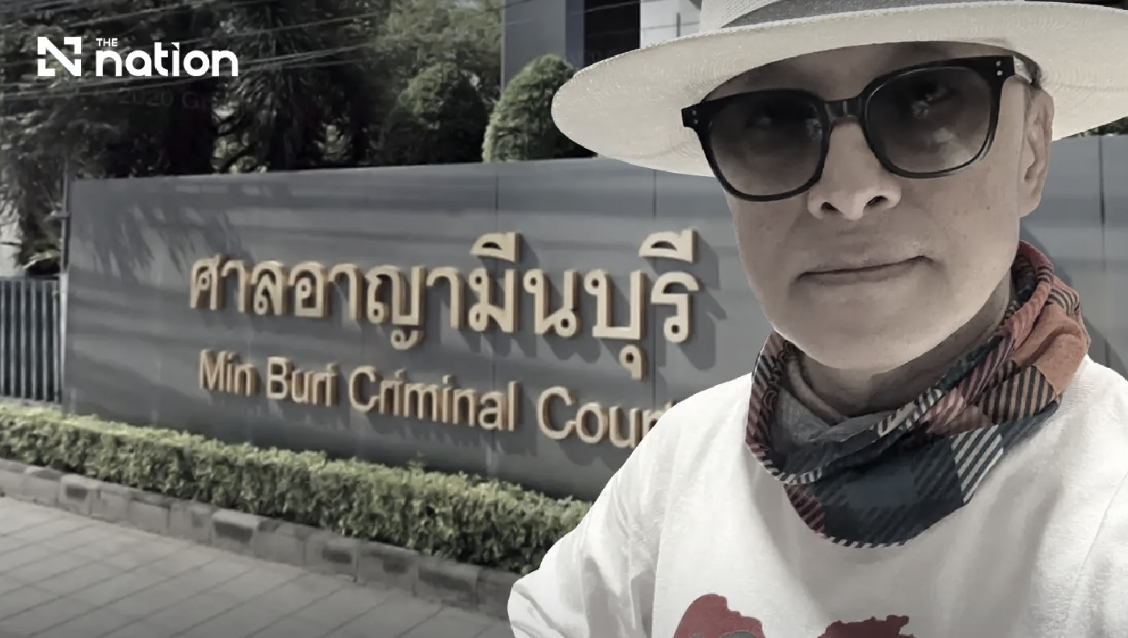
A Bangkok criminal court has sentenced Manasawin Nantasen, a celebrated Thai entertainer known professionally as Tik Shiro, to two years in prison following a fatal drunk-driving incident that claimed two lives in October 2024. The 64-year-old musician struck a stationary motorbike while driving across a Bangkok bridge, precipitating a tragedy that has once again thrust questions of celebrity accountability into Thailand's public discourse.
Manasawin rose to prominence during the late 1980s and 1990s, establishing himself as one of Thailand's most distinctive musical acts through his flamboyant stage persona. His trademark ensemble of fedora hats, leather jackets, and polished dance choreography drew inevitable comparisons to Michael Jackson, the global music phenomenon. This comparison, which would follow him throughout his career, helped cement his status as a major figure in Thai entertainment during that era and contributed to his enduring recognition across the country.
The October 2024 incident unfolded when Manasawin's vehicle collided with a motorbike parked on a bridge crossing. The impact proved catastrophic for two siblings: a 28-year-old woman riding the motorcycle was killed instantly, while her 21-year-old brother was knocked from the bridge by the force of the collision. The younger sibling suffered critical injuries from the fall and was hospitalised, but succumbed to his wounds days later, bringing the death toll to two.
The immediate aftermath of the crash generated substantial media attention across Thailand when a video emerged showing the singer kneeling at the scene in what appeared to be profound distress. The footage circulated widely on Thai social media platforms and news outlets, becoming a focal point for broader discussions about how the country's wealthy and influential figures navigate legal consequences. Many observers noted the contrast between the visible show of remorse and historical patterns where celebrities have escaped accountability in similar circumstances.
When the Bangkok criminal court delivered its verdict on Wednesday, June 24, it convicted Manasawin of drunk driving resulting in loss of life. The court's formal statement acknowledged that the defendant had surrendered voluntarily and cooperated with the judicial process, providing testimony that the judge deemed beneficial to the proceedings. These factors appear to have influenced the sentencing, though the court did not offer leniency in the form of a suspended sentence or reduced prison term.
The ruling also took into account Manasawin's subsequent conduct. He attended the funeral services of both victims and arranged financial compensation for their bereaved families, demonstrations of contrition that featured in the court's deliberations. Nevertheless, the judge imposed an additional penalty by revoking his driving licence, a measure designed to prevent future instances of driving offences. The sentence reflects Thailand's legal system attempting to balance culpability with evidence of remorse and restitution.
The case arrives at a moment when Thailand's entertainment industry and public opinion remain sensitised to questions of equal justice. In a parallel development from the same week, rock musician Sek Loso completed his prison term, having served just over a year for drug possession and illegal firearm charges. His release underscores the varied outcomes that celebrity figures experience within the Thai criminal justice framework, ranging from lengthy incarceration to suspended sentences or outright acquittals.
Thailand's history includes several high-profile cases that have fuelled public scepticism about impartiality in how the legal system treats the privileged. In 2012, Vorayuth Yoovidhya, heir to the Red Bull fortune, was involved in a Ferrari collision that killed a Bangkok police officer in a wealthy neighbourhood. Despite investigation and evidence gathering, the case never progressed to formal charges, a decision that sparked widespread criticism and allegations that wealth had shielded the accused from prosecution. Similarly, a son of former Pheu Thai MP Chalerm Yubamrung faced murder accusations after shooting a man during a nightclub altercation in 2001, yet obtained acquittal when the court found insufficient evidence.
These precedents have created a context in which Manasawin's conviction and imprisonment are being interpreted by many Thais as a sign that accountability may finally be extending to figures of prominence. The fact that a musician of his stature received a prison sentence rather than a suspended or symbolic punishment represents a notable development in the country's approach to celebrity criminal responsibility. Yet the simultaneous existence of cases where justice appeared elusive for other well-connected defendants suggests the system remains inconsistent.
For Malaysian and Southeast Asian observers, the Manasawin case resonates within broader regional conversations about judicial consistency and the rule of law. Many countries across the ASEAN bloc struggle with public perceptions that wealth and connections can circumvent legal consequence, and Thailand's experience provides both cautionary examples and occasional indicators of systemic correction. The entertainment industry across Southeast Asia has watched closely, as the outcome may influence how other governments approach similar cases involving celebrity figures and traffic fatalities.
Manasawin's two-year sentence represents a substantial professional disruption for an ageing entertainer who once dominated Thai popular culture. The revocation of his driving licence adds practical restrictions to his post-release life. Whether his case ultimately signals a meaningful shift toward consistent application of law across Thailand's social strata, or remains an outlier within a pattern of selective justice, will likely become apparent as the country addresses future cases involving similarly positioned defendants.