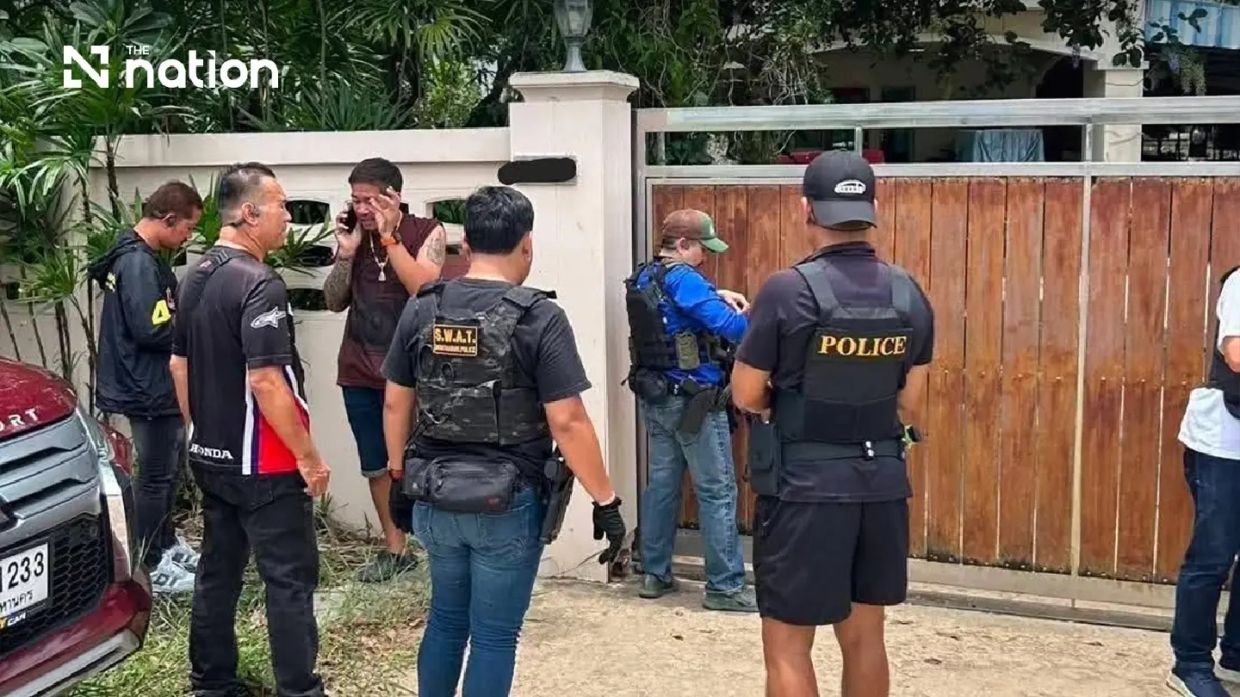
A tragedy unfolded in Thailand's Nonthaburi province when a Mathayom 2 student killed his grandparents before proceeding to attack Debsirin Nonthaburi School on Friday morning, August 7. The cascading violence resulted in seven deaths, including the suspected attacker, and left 15 others wounded. The incident has shocked the region and raised critical questions about firearm security and youth mental health intervention.
The sequence of events began at a residential property in Soi Wat Lat Pla Duk within Bang Khu Rat subdistrict, where the juvenile suspect lived with his paternal grandparents. Police discovered both grandparents dead at their home earlier that morning, with investigators concluding they had been shot with a firearm that would subsequently be used in the school attack. The weapon was identified as a CZ 9mm handgun registered in the grandfather's name, establishing an immediate connection between the domestic tragedy and the subsequent school violence.
Police Chief Pol Lt Gen Trairong Phiwphan confirmed that officers had successfully contained the situation at the school and halted the violence. Emergency responders worked swiftly to remove all injured individuals and deceased persons from the school grounds, with national police chief Pol Gen Kitrat Phanphet ordering a comprehensive examination of the crime scene, systematic evidence collection, and detailed documentation of the incident layout.
Investigators face significant gaps in understanding what motivated the young attacker. While authorities have established that he lived with aging relatives and attended Mathayom 2, determining the psychological or situational triggers behind such extreme violence requires deeper investigation into his behavioural patterns, immediate social environment, and personal circumstances. Police acknowledge that pinpointing a clear motive remains premature until thorough examination of these factors is completed.
A central investigative focus concerns how the suspect obtained access to the grandfather's registered handgun. Although the weapon's ownership has been established, authorities must determine the specific circumstances of its storage, the method by which the juvenile removed it from the residence, and the source of ammunition used in both the domestic killing and subsequent school shooting. This line of inquiry extends beyond simple weapon registration and delves into fundamental questions about firearm security practices within Thai households.
The incident highlights a troubling vulnerability in how legally registered weapons are stored and secured, particularly in homes where minors reside. The grandfather's CZ 9mm handgun, properly registered through official channels, nonetheless became available to a teenager with evidently dire intentions. Police are now examining the complete chain of events through which the suspect gained access, from initial discovery of the weapon through its removal and transportation to the school.
Pol Lt Gen Trairong emphasized that investigators cannot yet provide specifics about how the attacker obtained the firearm, stating that this determination must emerge through the formal investigative process. The distinction between registered ownership and actual custody, particularly regarding ammunition storage and accessibility, represents a critical gap that authorities must address both in this case and in broader firearm regulation discussions.
Beyond the immediate criminal investigation, Thai authorities have recognized the profound psychological trauma inflicted on the school community. National police chief Pol Gen Kitrat ordered the Police General Hospital's chief medical officer to deploy psychologists and mental-health specialists to the affected area. These professionals will provide ongoing support to teachers, students, and others directly exposed to the violence, aiming to help survivors process grief and prevent long-term psychological consequences from compounding the immediate tragedy.
For Southeast Asian readers, this incident resonates within a region grappling with periodic mass violence and questions about mental health support systems, firearm regulation, and intervention mechanisms for troubled youth. Thailand's relatively permissive civilian gun ownership policies, compared with some neighbouring countries, have occasionally intersected with inadequate storage safeguards and limited mental health resources, creating dangerous gaps. The incident underscores how legal weapon registration, while administratively sound, does not guarantee practical safety if accompanied by poor storage practices or absence of threat assessment protocols.
The implications extend to how families, schools, and communities might better identify warning signs in young people before crisis points are reached. The suspect's living situation with elderly relatives, rather than parents, might have involved reduced supervision or awareness of psychological distress. Schools across the region may now reconsider crisis response training and threat assessment frameworks, recognizing that prevention requires multiple intersecting systems rather than single-point interventions.
Authorities face renewed pressure to review regulations governing firearm storage in homes with minors, implement mandatory security standards, and integrate mental health screening into schools more systematically. The tragedy demonstrates that legal frameworks establishing who may own weapons prove insufficient without complementary regulations addressing how those weapons must be stored and secured.
As investigations continue, police will examine whether any institutional warning signals preceded the violence. Colleagues, teachers, or family members may possess information about the suspect's psychological state, social relationships, or expressed grievances that could illuminate causation and inform prevention strategies. The broader Thai society must confront uncomfortable questions about support systems for isolated youth and whether earlier intervention might have prevented this cascade of violence.

