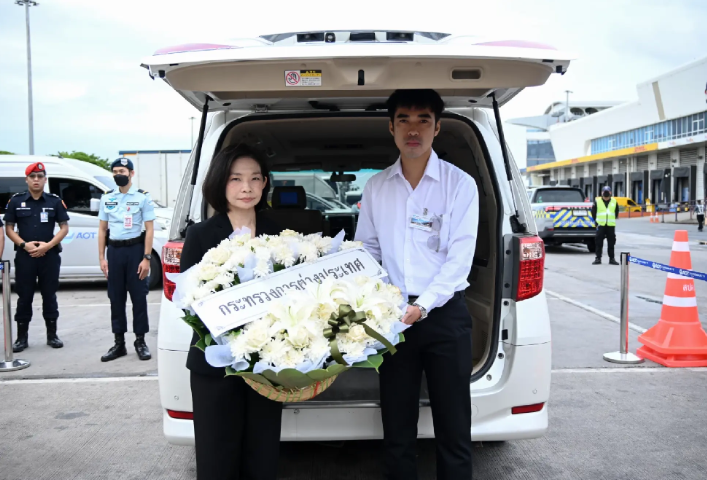
Thailand's Ministry of Foreign Affairs has completed the repatriation of Bavorntat Pengsuk, the 27-year-old travel content creator known internationally as 'Hlun Solo', following his unexpected death in Tbilisi, Georgia last month. The country's diplomatic apparatus mobilised quickly to bring the popular YouTuber's remains home, with senior officials overseeing the process to ensure smooth coordination between Thai authorities and their Georgian counterparts.
Bavorntat, who had built a substantial following through his travel vlogs documenting journeys across Southeast Asia and beyond, died on 14 July in the Georgian capital. The circumstances surrounding his death prompted Thailand's Foreign Ministry to take direct action in managing the repatriation, recognising both the diplomatic sensitivity of the case and the public interest in one of the nation's most recognised digital content creators. Jaithai Upakarnitikaset, the ministry's director-general and official spokesperson, announced the repatriation on Thursday, underscoring the government's commitment to supporting Thai nationals abroad during emergencies.
Deputy Prime Minister and Foreign Minister Sihasak Phuangketkeow appointed Prathuangtip Sirivithes, acting director-general of the Department of Consular Affairs, to personally manage the reception of Bavorntat's remains upon their arrival in Thailand. This high-level designation reflected the significance placed on the case and the need for streamlined administrative handling during a sensitive period for the deceased's family and supporters. The assignment of senior consular officials underscored Thailand's institutional response to managing the return of prominent citizens who pass away abroad.
The Royal Thai Embassy in Ankara maintained continuous contact with Bavorntat's family members, Georgian government agencies, and other relevant parties from the moment the Thai authorities were informed of his death. This sustained diplomatic engagement proved essential in navigating the complexities of international repatriation procedures, which often involve multiple layers of bureaucratic requirements across different jurisdictions. Embassy staff worked methodically to ensure that all Georgian legal and administrative prerequisites were satisfied before the remains could be released for transport.
Recognising the urgency of the situation, personnel from the Thai diplomatic mission were dispatched directly to Tbilisi to accelerate investigations into the cause of death and to oversee the practical arrangements for repatriation. These embassy representatives also pressed Georgian officials to expedite their administrative procedures, as delays in such matters can extend an already difficult period for bereaved families. The on-ground presence of Thai diplomats helped maintain momentum and ensured that Bavorntat's case received appropriate attention within Georgian bureaucratic systems.
Upon reaching Thailand, Bavorntat's remains underwent comprehensive forensic examination as arranged by his family. This medical assessment was necessary to establish definitive causes of death and to provide the family and relevant Thai authorities with conclusive documentation for their records. Such procedures are standard practice in cases involving Thai nationals who die abroad under circumstances requiring clarification, offering transparency and peace of mind to grieving relatives.
Following completion of all official procedures, Bavorntat's body will be transported to his ancestral home in Somdet district within Kalasin province in northeastern Thailand. There, his family will conduct traditional Buddhist funeral rites in accordance with Thai customs and religious practice. These ceremonies represent an important cultural and spiritual component of the death ritual in Thai society, allowing family members, friends, and community members to pay respects and to mark the transition of the deceased in ways consistent with their beliefs.
Bavorntat's case highlights the evolving role of digital content creators within Thai society and their prominence on the international stage. His travel vlogs had garnered significant audiences, making his death a matter of public concern that extended beyond his immediate family circle. The incident also underscores the continued importance of consular services and diplomatic infrastructure in protecting Thai nationals abroad, ensuring that even those who achieve prominence through non-traditional means receive appropriate government support during emergencies.
The repatriation process, while ultimately successful, also exposed the occasional bureaucratic friction that can occur between different national systems when managing cross-border incidents. The need for Thai embassy personnel to press Georgian officials for expedited procedures suggests that administrative coordination between countries, even within a generally cooperative framework, sometimes requires active diplomatic intervention. Such experiences inform how Thailand's Foreign Ministry refines its protocols for handling similar situations in the future, potentially improving response times and efficiency in subsequent cases involving Thai citizens abroad.

