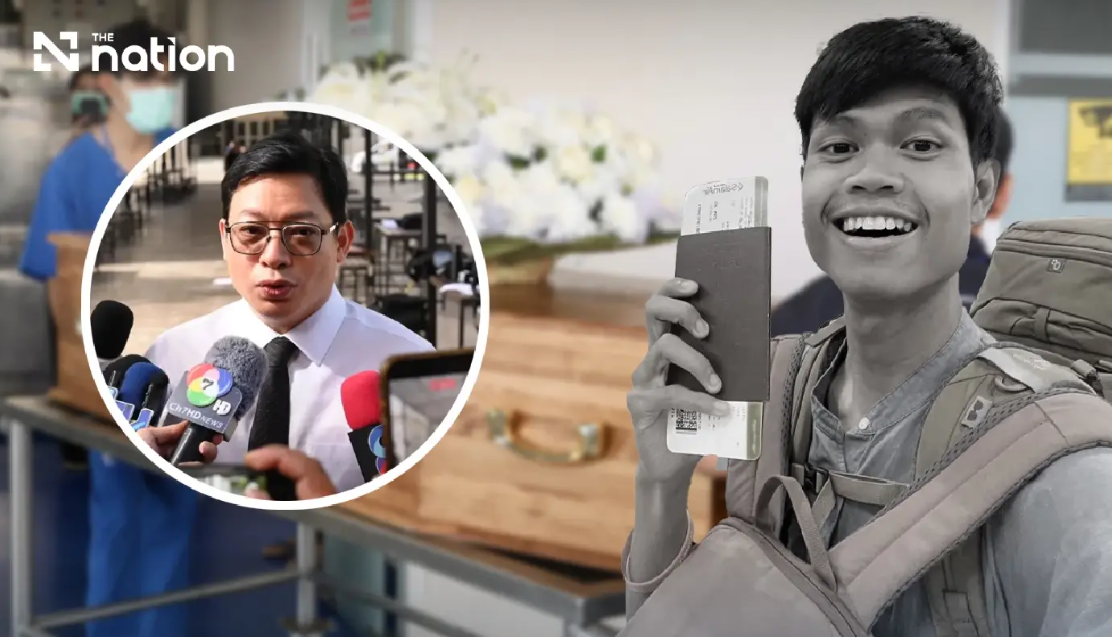
Thai travel vlogger Bawornthat "Hlun Solo" Pengsuk's death in Georgia has been preliminarily attributed to failure of the heart and circulatory system, according to findings released by Thailand's Central Institute of Forensic Science. The initial post-mortem examination, conducted after his body's return from Georgia, revealed no external trauma, broken bones, or signs of physical assault, though toxicology tests remain ongoing. The case has drawn significant public attention in Thailand, where Hlun was a popular content creator documenting his travels across Southeast Asia and beyond.
Associate Professor Dr Worawee Waiyawut, deputy director of the Central Institute of Forensic Science under the Ministry of Justice, presented the preliminary findings on Thursday following the post-mortem examination. The Georgian medical authorities had already completed their own autopsy before Hlun's body was returned to Thailand, and their findings were explained to his family, who subsequently authorised the Thai institute to release the initial conclusions publicly. The examination found no abnormalities in organs other than the heart, suggesting that whatever caused Hlun's death was localised to the cardiovascular system, at least in terms of observable physical damage.
However, Worawee emphasised that the preliminary cardiac diagnosis does not rule out the involvement of toxins or chemical substances, a concern that has weighed heavily on Hlun's family throughout the investigation. Further laboratory testing will be necessary to examine cardiac tissue samples and investigate potential genetic factors that might have contributed to sudden heart failure. The Thai authorities also plan to investigate the possibility of sudden unexplained nocturnal death, a phenomenon documented in certain populations, though such a conclusion would require additional testing before any definitive determination could be made. The process of obtaining complete information from Georgian authorities, including their full post-mortem records and chemical analysis results, is expected to take considerable time.
Somsak "Mos" Butsri, Hlun's elder brother, has emerged as the family's spokesperson throughout this ordeal, coordinating information and addressing public inquiries about the circumstances surrounding his younger brother's death. Somsak explained that the Thai post-mortem examination represented the family's formal request for a comprehensive investigation, as Georgian authorities had provided limited transparency regarding their own findings. The family received only a death certificate from Georgia without details of the post-mortem procedures or explanations of their conclusions, leaving significant gaps in their understanding of what occurred.
The family's concerns extend beyond the cardiac findings to encompass a broader investigation into all possible causes of death. They have specifically requested that Thai forensic specialists conduct detailed testing for toxic substances in Hlun's body, perform a thorough examination of his heart, and investigate other potential contributing factors. Somsak noted with evident frustration that Georgian authorities had retained organ samples and DNA material without clarifying what specific tests would be conducted on these samples or when results might be available. This lack of communication has fuelled the family's determination to pursue an independent investigation through Thai authorities, hoping to obtain clearer answers.
The family harbours particular concerns about the possibility of toxin exposure, though they acknowledge having no concrete evidence to support this suspicion. Somsak indicated that reports circulating in some media outlets suggesting Hlun died from sudden unexplained death during sleep have not been confirmed by any official test results and should not be treated as established fact. The preliminary findings show no signs of physical violence or external injury, which Somsak has emphasised repeatedly as evidence that the death did not result from assault or foul play in the conventional sense. However, this does not eliminate other potential causes that would require sophisticated laboratory analysis to detect.
Uncertainty surrounds Hlun's pre-existing health status, as he apparently did not consistently share medical information with his family members. Somsak could not confirm whether Hlun suffered from any underlying cardiac conditions or genetic predispositions to heart disease, information that would be crucial for understanding why a young, active individual engaged in regular travel would experience sudden cardiac failure. This gap in family knowledge underscores how little his relatives may have known about aspects of his health and lifestyle, particularly given that he spent much of his time documenting adventures in various countries far from home. Should subsequent testing reveal evidence of physical assault that was not apparent on initial examination, the family has stated clearly that it will exercise all available legal remedies to seek justice.
The practical complications of Hlun's death extend beyond medical investigation to include the recovery and return of his belongings. Remarkably, only his passport was returned to Thailand with his body, raising questions about what happened to his other personal possessions, travel documents, and equipment. For a travel vlogger whose entire livelihood depended on documenting his journeys, the absence of cameras, recording devices, and other essential gear adds another layer of mystery to the circumstances surrounding his death in Georgia. Whether these items remain with Georgian authorities pending further investigation or were lost remains unclear.
The family plans to conclude the Thai post-mortem procedures by Friday and subsequently transport Hlun's body to his home province of Kalasin for traditional funeral rites. These arrangements carry emotional weight for his family, particularly his elderly grandmother, who reportedly remained in stable spirits with a single request: that her grandson be brought home. However, Somsak expressed uncertainty about how the grandmother would emotionally respond when she saw Hlun's body, acknowledging the profound difficulty of losing a young family member in such sudden and unexplained circumstances far from home. Specific cremation arrangements will be discussed at a later stage once the family has processed the initial findings from the Thai forensic examination.
Somsak took the opportunity to express public gratitude to Thai citizens and organisations who assisted in repatriating his brother's body from Georgia, acknowledging the collective effort required to bring Hlun home. The case has resonated with Thai society, partly because Hlun's work as a travel vlogger made him a recognisable figure with a substantial online following and partly because the sudden, mysterious nature of his death in a foreign country raises universal anxieties about safety while travelling abroad. As the investigation proceeds and toxicology results become available, the comparison of findings between Thai and Georgian authorities may finally provide the answers that Hlun's family has been seeking since his death.
The international dimensions of this case highlight the complexities that arise when Thai citizens die abroad. Coordinating between Thai and foreign medical authorities, obtaining complete information, and ensuring that investigations meet Thai family expectations requires careful diplomatic and bureaucratic coordination. For Malaysian and other Southeast Asian readers, Hlun's case serves as a reminder of the potential risks associated with long-term international travel, the importance of maintaining regular health check-ups before embarking on extended journeys, and the value of ensuring that family members are informed about one's health status and whereabouts while abroad. The ongoing investigation will likely take weeks or months to reach final conclusions, leaving Hlun's family and the broader Thai public waiting for definitive answers about what caused the death of this young, seemingly healthy content creator.

