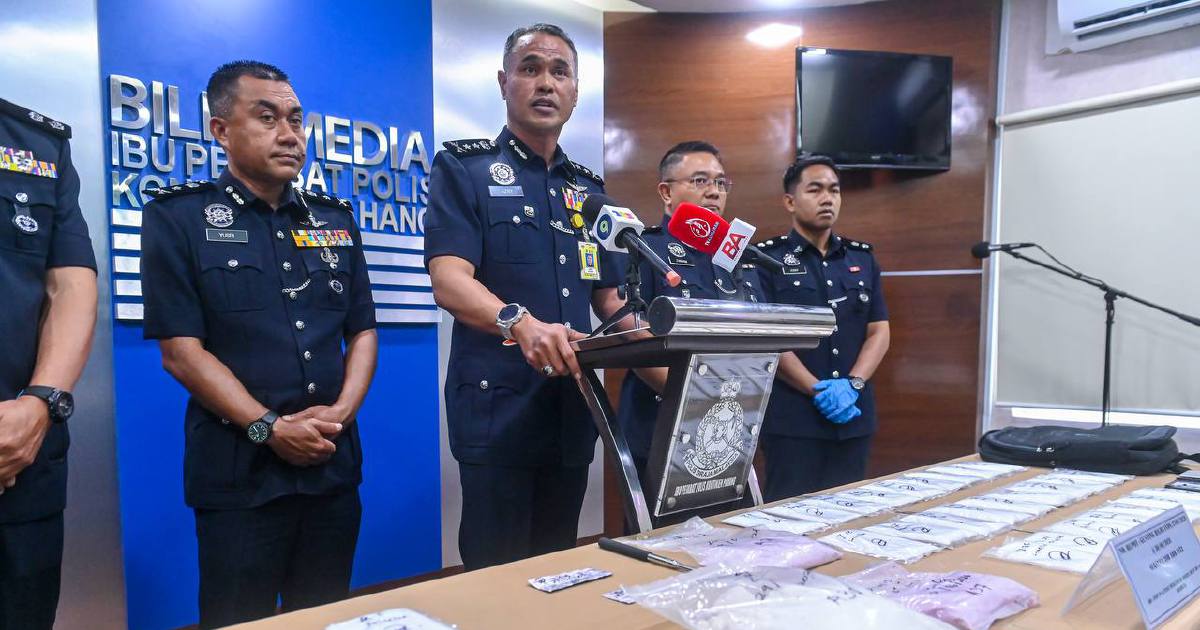
A Thai woman and her local partner have been taken into custody by Kuantan police following a major narcotics haul in Genting Permai, Bentong. The operation, which recovered drugs estimated to be worth around RM728,000, marks another significant interdiction in Pahang's ongoing battle against organised drug trafficking. The arrests come as law enforcement intensifies efforts to dismantle supply chains operating across the state, particularly those utilising cross-border networks.
Investigators believe the couple had been functioning as active drug couriers for a larger criminal syndicate throughout the previous three months. Their alleged role within the distribution network highlights a common operational structure employed by trafficking groups across Southeast Asia, whereby individuals carry out deliveries and transportation duties while remaining insulated from higher-level decision-making. The arrangement allows syndicates to shield their principal organisers from direct law enforcement exposure whilst maintaining a functional supply pipeline.
The seizure at Genting Permai represents a particularly significant interception given the volume and estimated street value of the contraband discovered. In the Malaysian context, quantities at this threshold typically indicate involvement in mid-to-upper tier distribution operations rather than simple street-level dealing. The location in Bentong, a strategic corridor with accessibility to Kuala Lumpur and the central belt, suggests the couple may have been positioned to service demand across multiple market zones. This geographic placement is consistent with how trafficking organisations structure their logistics to maximise coverage whilst maintaining operational efficiency.
The involvement of a Thai national in the operation underscores the persistent challenge posed by international trafficking networks operating throughout the region. Thailand remains a significant source or transit point for various narcotics destined for Malaysian consumption, reflecting broader supply chain dynamics within Southeast Asia. Law enforcement agencies across the region have long identified cross-border courier networks as a critical vulnerability point, yet the continued prevalence of such operations indicates the considerable profit incentives that drive recruitment into these roles.
For Malaysian readers and authorities, the case illustrates how trafficking organisations adapt recruitment strategies to manage risk. By employing non-citizen couriers, syndicates potentially calculate that the detention or prosecution of foreign nationals carries less operational consequence than the arrest of core domestic members. This structural approach creates complexity for law enforcement, as addressing the surface manifestations of trafficking requires simultaneous pursuit of underlying supply and distribution frameworks.
The three-month timeframe attributed to the couple's activities provides insight into the operational window typically required before law enforcement identifies and disrupts such networks. The detection may have resulted from enhanced intelligence gathering, surveillance following a separate investigation, or community reporting. The specificity of the timeline suggests investigators had developed substantive evidence regarding the couple's involvement and the duration of their courier activities.
The Bentong area, situated in Pahang's transitional zone between rural and semi-urbanised zones, has experienced increased narcotics activity consistent with broader Malaysian trafficking trends. Its positioning relative to major transport arteries makes it both accessible for distribution operations and challenging to monitor comprehensively. The successful operation in Genting Permai demonstrates capacity within state-level enforcement to pursue targeted interdictions despite operational resource constraints that characterise policing across Pahang.
The seizure quantity raises important questions regarding the likely destination markets. Narcotics valued at RM728,000 likely represent either a significant single shipment bound for a major metropolitan hub or the accumulated inventory of a regional distribution node. The distinction carries implications for understanding network structure and scale. Either scenario indicates involvement with operations exceeding street-level activity and justifies intensive prosecutorial and investigative resources.
From a broader Southeast Asian perspective, the arrest reaffirms that trafficking organisations continue to view Malaysia as both a destination market and a transit territory. The sophistication evident in employing international courier networks alongside domestic distribution infrastructure reflects the adaptive capacity of criminal enterprises to navigate enforcement pressures. Successive seizures and arrests rarely constitute sufficient disruption to force meaningful operational reorganisation among larger syndicates, though they do incrementally increase operational costs and risks.
The investigation into the couple's connection to the larger syndicate will likely focus on identifying their suppliers, customers, and communication networks. Intelligence gathered may provide law enforcement with leads extending beyond the two individuals currently in custody, potentially exposing additional network participants. Cooperation from either or both defendants could substantially amplify the investigative reach, particularly regarding the identities of supervisory figures within the organisation.
For the broader Malaysian narcotics enforcement framework, the case represents a continuation of operational patterns requiring sustained commitment. The persistent emergence of cross-border trafficking activities, particularly involving organised international networks, demands continued investment in intelligence gathering, inter-agency coordination, and regional cooperation mechanisms. Without addressing supply-side factors alongside demand reduction and treatment initiatives, such seizures will likely remain routine manifestations of a structural problem requiring multi-layered strategic responses.

