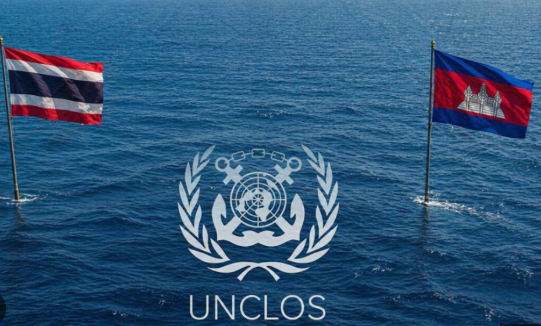
Thailand has formally entered into a compulsory conciliation process with Cambodia to address their long-standing maritime boundary dispute in the Gulf of Thailand, though Bangkok has stressed from the outset that the procedure will produce only non-binding recommendations and does not constitute judicial proceedings. The Thai government submitted its formal response to Cambodia's request on June 19, two weeks after Phnom Penh initiated the process under the 1982 United Nations Convention on the Law of the Sea. This development marks a significant moment in regional maritime diplomacy, yet also reveals the fundamental disagreement between the two neighbours on how far the process should extend and what issues it should resolve.
Thailand's acceptance of the conciliation process demonstrates a commitment to orderly international dispute resolution mechanisms, a posture increasingly important as Southeast Asian nations navigate competing claims and resource pressures in contested waters. By formalizing its participation, Bangkok has signalled willingness to engage constructively while simultaneously establishing clear parameters for what the Thai side considers acceptable. The Foreign Ministry has emphasised repeatedly that conciliation is fundamentally different from litigation, with conciliators acting as neutral facilitators rather than judicial arbiters. This framing appears designed to manage domestic expectations and reassure stakeholders that Thailand retains ultimate decision-making authority over any maritime settlement.
The composition of the conciliation commission reflects careful diplomacy on both sides. Thailand appointed Deputy Prime Minister and Foreign Minister Sihasak Phuangketkeow as its primary representative, signalling the issue's importance at the highest levels of government. The appointment of Songchai Chaipatiyut, Thailand's ambassador to Kuwait and a former senior official in treaty and legal affairs, as deputy agent demonstrates Bangkok's intention to maintain strong technical expertise throughout the proceedings. For its conciliators, Thailand selected Judge Albert J Hoffmann of South Africa and Judge Rudiger Wolfrum of Germany, both internationally recognised authorities on maritime law under UNCLOS. These selections suggest Thailand is approaching the process seriously while selecting figures with strong credentials who can command respect in international legal circles.
The procedural timeline established under UNCLOS gives the four conciliators appointed by both Thailand and Cambodia thirty days to select a fifth conciliator who will chair the commission. Once fully constituted, the commission has approximately twelve months to prepare its report and recommendations, though this period can be extended if both parties consent. This structured timeframe provides a clear endpoint for the deliberative process, reducing the risk of indefinite negotiations that have characterised Thailand-Cambodia maritime discussions for decades. The anticipated twelve-month duration offers sufficient time for thorough examination of technical, legal, and historical arguments without creating a process so protracted that it becomes mired in political complexities.
A central tension in the conciliation process concerns the scope of issues to be addressed. Thailand has insisted that the proceedings focus exclusively on maritime boundary delimitation—the core question of where the maritime frontier between the two countries should be drawn. Cambodia's initial notification, however, appeared to encompass not only boundary delimitation but also provisional arrangements for joint development of resources and equitable sharing of hydrocarbon revenues. This disagreement on scope reflects deeper divergences about how the two nations should manage their overlapping claims to the resource-rich Gulf of Thailand. The dispute concerns an area believed to contain substantial natural gas deposits and other hydrocarbons, making the economic stakes considerable for both parties. Bangkok's insistence on limiting the conciliation to boundary issues may reflect concern that broader discussions about resource-sharing could complicate negotiations by introducing additional variables and competing interests.
The backdrop to this conciliation process includes Thailand's controversial decision in May to terminate the 2001 memorandum of understanding with Cambodia, sometimes referred to as MoU 44 in Thai discourse. Prime Minister Anutin Charnvirakul justified the termination by pointing to the lack of meaningful progress over twenty-five years, rather than attributing the move to any acute conflict between the nations. The Thai government characterised the cancellation not as an end to negotiations but as a recalibration of the cooperation framework, positioning the shift toward UNCLOS-based discussions as a positive development that provided a clearer international legal foundation for future talks. This reframing was important for domestic political consumption and for reassuring Cambodia that Thailand remained committed to resolving the dispute through peaceful means.
The significance of Thailand's acceptance of conciliation lies partly in its implicit recognition that bilateral negotiations, despite more than two decades of discussion, have not yielded a settlement. By agreeing to engage a neutral third party, Bangkok acknowledges that direct talks alone may be insufficient to bridge fundamental disagreements about boundary demarcation. Conciliation offers a middle path between protracted bilateral stalemate and binding arbitration, allowing both sides to present their positions to impartial experts while retaining flexibility regarding the ultimate outcome. For Malaysia and other Southeast Asian nations watching this process, the Thailand-Cambodia conciliation provides a potential model for managing maritime disputes that acknowledges the limitations of purely bilateral approaches while stopping short of accepting binding international judgement.
Thailand's repeated emphasis that conciliation recommendations are non-binding reflects Bangkok's preference for maintaining negotiating leverage. By declining to accept whatever the conciliators propose as final and determinative, Thailand preserves its ability to reject unfavourable recommendations and return to bilateral talks. This position, while consistent with UNCLOS Annex V, which explicitly states that conciliation reports are not binding, also suggests Thai officials harbour concerns about potential outcomes and wish to avoid being locked into agreements they find disadvantageous. The insistence that direct negotiations remain essential underscores Thailand's view that ultimate resolution must emerge from bilateral agreement rather than external adjudication, however distinguished the adjudicators may be.
The Malaysian context for this dispute merits consideration, as ASEAN nations have long grappled with overlapping maritime claims and the challenge of balancing UNCLOS compliance with bilateral diplomacy. Malaysia's own experiences with maritime boundary disputes, including those with Thailand, Brunei, and Vietnam, have demonstrated both the value and limitations of international legal mechanisms. Thailand's approach to the Cambodia conciliation—accepting the process while demarcating its authority and reaffirming the primacy of bilateral negotiation—reflects pragmatic recognition that UNCLOS provides useful frameworks and legitimacy while not surrendering national control over outcomes. For Southeast Asian policymakers more broadly, the Thailand-Cambodia process illustrates how nations can accommodate pressure for international legal mechanisms while maintaining strategic flexibility and domestic political prerogatives.
Looking ahead, the conciliation process will depend heavily on the quality of legal arguments, technical evidence regarding maritime geography and continental shelves, and the diplomatic skill with which both sides present their positions. The conciliators will need to navigate not only technical questions about boundary delimitation but also broader questions about equitable principles in maritime law, historical claims and usage patterns, and the strategic interests of both nations. The process will likely take on added significance as regional energy demand continues rising and as competition for hydrocarbon resources intensifies across Southeast Asia. Whether the conciliation produces recommendations that both Thailand and Cambodia find sufficiently attractive to form the basis for a negotiated settlement remains uncertain, but the process itself represents important movement in a dispute that has resisted resolution for decades and continues to complicate broader ASEAN cooperation on maritime issues.