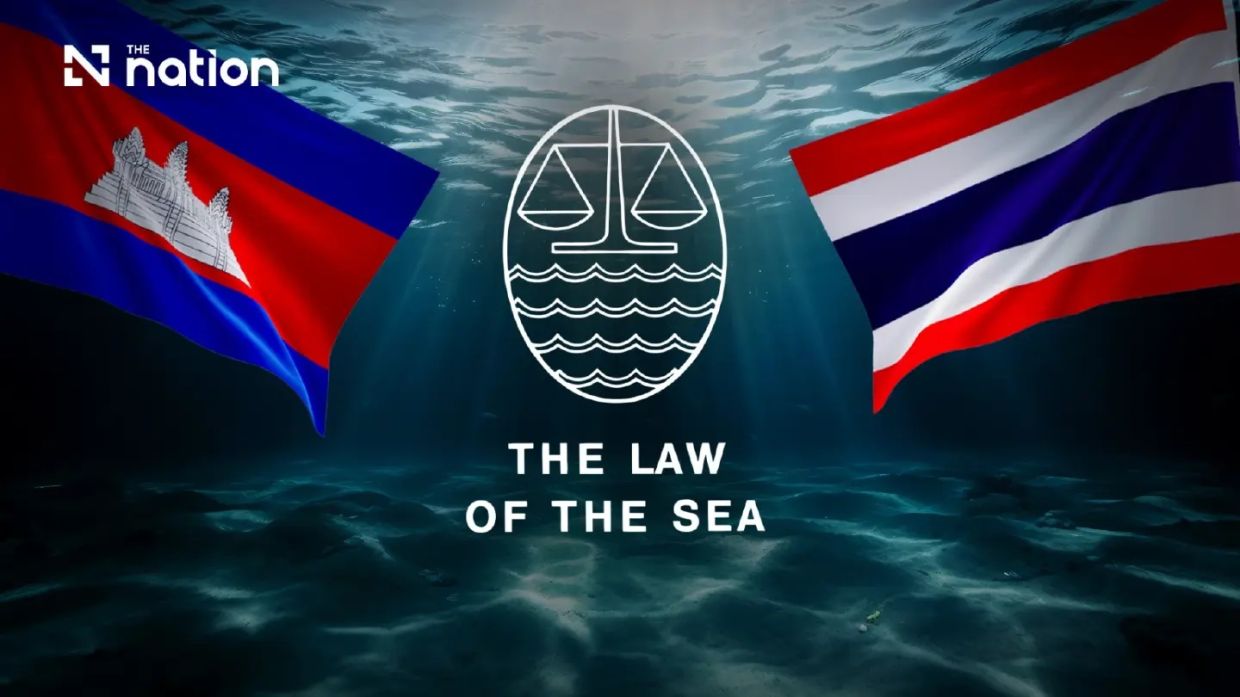
Thailand and Cambodia have taken a significant step towards resolving a long-running maritime dispute by establishing a conciliation commission under the United Nations Convention on the Law of the Sea, though fundamental disagreements over the scope of negotiations threaten to complicate the process. The two Southeast Asian neighbours have each appointed two independent conciliators who must jointly select a fifth member to chair the commission, which will examine competing claims to a contested area of the gulf. This mechanism offers an alternative to costly and divisive litigation, yet the parties remain deeply divided over whether the talks should address only boundary delimitation or extend to the joint development and resource-sharing arrangements that Cambodia desperately wants.
The conciliation process has already weathered its first scheduling challenge. Thailand and Cambodia originally targeted July 19 to appoint the chairperson but have now agreed to push the deadline to August 14, allowing the four appointed conciliators additional time to identify a candidate acceptable to both governments. This extension reflects the delicate diplomatic balance required to move forward—both countries need confidence that the chair will provide truly neutral stewardship of what promises to be a technically complex and politically sensitive process. Thailand has specified that the ideal candidate should possess demonstrated expertise in international law, maritime law and diplomacy, combined with genuine impartiality and substantive knowledge of bilateral Thai-Cambodian relations.
The conciliators appointed by each side carry considerable pedigree. Thailand selected Rüdiger Wolfrum, a German jurist who presided over the International Tribunal for the Law of the Sea from 2005 to 2008, and Albert J. Hoffmann, a South African legal expert who held the same tribunal presidency more recently from 2020 to 2023. Cambodia countered with Peter Taksøe-Jensen, a Danish diplomat who chaired the Unclos conciliation between Timor-Leste and Australia—a process widely regarded as the most relevant precedent for the current mechanism—alongside Jean-Marc Thouvenin, a French academic specialising in international law. The calibre of these appointees underscores the importance both nations place on the outcome, even as they maintain fundamentally different visions of what the commission should accomplish.
The conciliation mechanism itself is not a judicial process that produces binding judgments. Instead, the commission will examine the dispute, consult with both countries and ultimately submit non-binding recommendations designed to facilitate negotiation towards a mutually satisfactory settlement. This approach proved successful when Timor-Leste and Australia employed it to establish permanent maritime boundaries in the Timor Sea, leading eventually to a formal treaty. The process is typically expected to span approximately twelve months, though the two countries retain the option to extend the timeline if deeper discussions become necessary. Whatever recommendations emerge, any final agreement must still be endorsed by both Bangkok and Phnom Penh through their own political processes.
Cambodia's urgency in pursuing this conciliation stems largely from global energy dynamics and growing concerns about long-term energy security. Cambodian Minister of Mines and Energy Keo Rottanak has emphasised that recent disruptions to energy supplies—including regional tensions affecting the Strait of Hormuz—have concentrated political attention on the need to secure additional fuel resources. Cambodia currently depends substantially on hydroelectric power supplemented by expanding solar capacity, but the government views access to fossil fuels as essential for supporting industrial development and meeting rising domestic demand over the coming decades. The minister has warned that the window for attracting major international investment in offshore exploration is rapidly narrowing, and that delays of several more years could prove fatal to viable commercial projects.
The disputed waters in the Gulf of Thailand encompass between 26,000 and 27,000 square kilometres and are thought to contain significant proven and potential reserves of natural gas—estimates range from 11 trillion to 12 trillion cubic feet—along with substantial oil deposits. Some assessments have valued the total resource potential at approximately US$300 billion, though this figure depends heavily on commodity prices, extraction technology and the final boundaries established. International energy corporations including TotalEnergies have expressed interest in the region, though none has committed to specific investment plans pending resolution of the territorial claims. For Cambodia, unlocking these resources represents not merely an economic opportunity but a strategic necessity to power its ambitions for industrial expansion and prosperity.
Thailand, however, has taken a markedly different stance on what the conciliation should prioritise. The Thai government insists that the immediate and perhaps exclusive focus must be delimiting the maritime boundary and continental shelf claims, leaving questions of joint resource development for much later consideration. Foreign Minister Sihasak Phuangketkeow has stressed that the commission should initially concentrate on establishing the legal maritime boundary, with joint development frameworks considered only after the geographical and legal position has been clarified. Thailand's position reflects a classical approach to maritime disputes—resolve boundaries first, then separately negotiate resource-sharing arrangements if overlapping claims are definitively established. This sequencing allows Thailand to protect its sovereignty and territorial integrity while avoiding premature commitments regarding resource division.
The philosophical gulf between the two countries' approaches reflects differing strategic calculations and political circumstances. Cambodia views the conciliation as a pathway to simultaneously achieve boundary settlement and create a framework for cooperative resource exploitation, which would accelerate development timelines and allow earlier revenue generation. Thailand appears to regard separating boundary issues from resource questions as essential to protecting its negotiating position and ensuring that maritime delimitation follows established international law principles rather than being influenced by economic considerations. These positions are not necessarily incompatible in the long term—many maritime agreements do address both boundaries and resource regimes—but they suggest that the conciliation phase may yield recommendations on boundary delimitation while leaving resource-sharing negotiations for subsequent bilateral talks.
The appointment of Deputy Prime Minister and Foreign Minister Sihasak Phuangketkeow as Thailand's agent in the proceedings, with support from Ambassador Songchai Chaipatiyut, signals Bangkok's commitment to engaging seriously with the process while maintaining high-level political oversight. This positioning allows Thailand to ensure consistency between the conciliation strategy and broader foreign policy objectives. Both countries formally entered the conciliation after Cambodia submitted its notification on June 2, followed by Thailand's acceptance on June 19, setting in motion the machinery of what may be one of the most significant maritime negotiations in Southeast Asia this decade.
For the broader region, this process carries implications extending beyond bilateral Thai-Cambodian relations. The success or failure of Unclos conciliation will influence how other Southeast Asian neighbours approach their own unresolved maritime boundaries, which remain a persistent source of tension in the South China Sea and adjacent waters. If Thailand and Cambodia can model a cooperative approach to maritime delimitation, even one marked by disagreement over resource development, they demonstrate that regional disputes need not devolve into confrontation. Conversely, should the process stall or collapse, it would reinforce perceptions that maritime disputes in Southeast Asia are intractable and that states must rely on military deterrence rather than institutional mechanisms.
The coming months will test whether the four conciliators can identify a mutually acceptable chairperson and whether, once constituted, the full commission can navigate the fundamental disagreement between Bangkok and Phnom Penh over its mandate. The August 14 deadline for appointing the chair represents the first critical juncture. Success at that stage would signal that both countries genuinely intend to work through the Unclos mechanism, while failure would suggest that political will remains insufficient to overcome longstanding disputes. As the conciliation unfolds, observers across Southeast Asia will watch closely to see whether mature diplomacy and international law can resolve what decades of bilateral negotiation have failed to settle.

