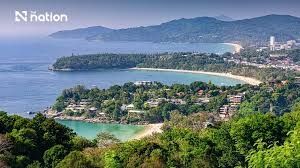
Thailand has launched a significant crackdown on networks of foreign nationals who have been circumventing strict property ownership restrictions by employing local Thai citizens as nominees and proxies. The enforcement operation, which swept through the popular beach destinations of Phuket, Phang Nga, Surat Thani and Krabi, resulted in the detention of 96 individuals—67 foreign nationals and 29 locals—and uncovered 89 plots of land with a combined value exceeding one billion baht.
The coordinated police operation, executed across three separate phases, represents one of Thailand's most aggressive recent moves to combat a long-standing problem that has undermined both the Land Code and Thailand's foreign ownership restrictions. Authorities investigated a total of 172 land plots spanning 51.38 hectares and valued at approximately 1.671 billion baht. These figures underscore the scale of what Thai officials regard as a systematic circumvention of property laws in regions where tourism generates substantial economic activity and has attracted considerable foreign investment.
Among those detained, Israeli nationals comprised the largest contingent with 15 individuals arrested or facing warrants. The remaining foreign nationals came from diverse backgrounds: six French citizens, four Russians, two each from Poland, Switzerland, South Africa, Britain, the Netherlands and Ukraine, plus one national each from Slovakia, Australia, the Philippines and Turkey. This geographic spread illustrates how foreign proxy schemes have attracted participants from developed nations and regional neighbours alike, suggesting these operations have become established, sophisticated networks rather than isolated incidents.
The operation targeted a specific legal vulnerability that has long plagued Thailand's property market. Thai law explicitly prohibits foreign nationals from owning land, yet a substantial grey market has developed wherein foreigners purchase properties through Thai nominees—often individuals with no genuine connection to the transactions who serve purely administrative functions. By placing legal title in a Thai national's name while maintaining de facto control and financial interest, foreign buyers have circumvented restrictions intended to preserve Thai sovereignty over land resources and prevent speculative foreign capital from distorting property markets.
Beyond nominal ownership schemes, authorities also investigated individuals operating businesses without valid work permits, a related violation that frequently accompanies land proxy operations. Many of those detained were simultaneously engaged in commercial activities—particularly in hospitality, real estate services and related tourism-dependent sectors—without proper documentation. This dual approach to enforcement demonstrates Thai authorities' recognition that foreign control of land often intertwines with unauthorised employment and business operations in tourist zones.
The focus on four provinces—Phuket, Phang Nga, Surat Thani and Krabi—reflects a deliberate strategy to protect Thailand's most commercially valuable and strategically important tourism regions. These southern provinces generate enormous revenue for the national economy and have experienced intense foreign investment pressure over decades. By concentrating enforcement efforts here, Thai officials are signalling determination to reassert state control over land markets in areas where foreign influence has become particularly pronounced.
Thailand's Land Code explicitly designates land as a national resource that must remain under Thai control. Yet despite these protections, foreigners have persistently found workarounds, particularly in high-value tourism areas where property appreciation attracts international capital. The current operation suggests that either law enforcement intensity has previously been insufficient or that the scale of these networks has recently expanded, prompting a coordinated response from Thai police.
This enforcement wave carries implications extending beyond property law into Thailand's broader relationship with foreign investors and residents. While Thailand actively courts international tourism and foreign investment in many sectors, it maintains protective restrictions around land ownership that reflect historical concerns about foreign economic domination and territorial integrity. The proxy scheme crackdown reaffirms this policy stance, though it also raises questions about enforcement consistency and whether similar operations will be replicated in other provinces or become a sustained initiative.
For Malaysia and other Southeast Asian nations, Thailand's action offers a cautionary lesson about the difficulties of maintaining land ownership restrictions in an era of globalised real estate markets and sophisticated financial engineering. Malaysian policies similarly restrict foreign land ownership, yet circumvention mechanisms exist here too. Thailand's experience demonstrates that even explicit legal prohibitions require robust, well-resourced enforcement to remain effective against determined and financially capable foreign actors willing to navigate regulatory grey zones.
The involvement of authorities in investigating not merely individual purchasers but also companies functioning as nominees indicates recognition that these networks often operate through corporate structures designed to obscure actual ownership. By targeting both individual violators and enabling corporate entities, Thai police are attempting to dismantle infrastructure supporting proxy schemes rather than merely punishing individual transactions.
Thai authorities indicated they are continuing to track additional companies suspected of facilitating nominee transactions and land purchase operations. This suggests the current operation represents an initial phase rather than a conclusive resolution, with investigators likely possessing intelligence about additional networks requiring investigation. The multi-phase approach already implemented may therefore expand further.
The enforcement action underscores tensions between Thailand's desire to welcome foreign wealth and its determination to preserve sovereignty over natural resources. While tourism and foreign investment remain crucial to Thai economic development, property ownership represents a particularly sensitive area where cultural, political and nationalist concerns outweigh liberalisation impulses. This crackdown signals that Thai policymakers remain unwilling to compromise on land ownership restrictions despite economic pressures and the financial attractions of a fully liberalised property market.

