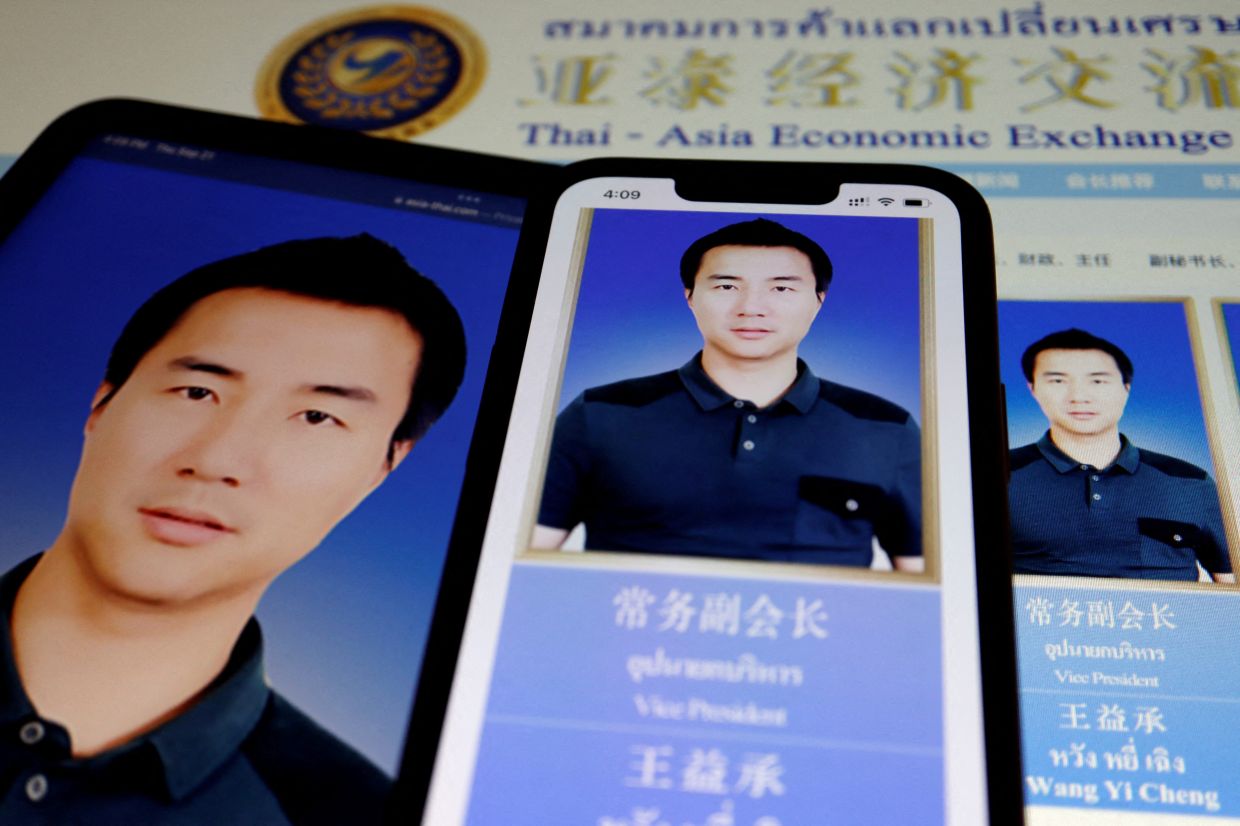
Thailand's Department of Special Investigation has moved to apprehend Wang Yicheng, a Chinese businessman suspected of leading a transnational money-laundering network that funnelled illicit proceeds through illegal cryptocurrency mining operations. The fugitive, who is believed to have left Thailand, was formally charged in November with theft and violations of the Computer Crimes Act, according to Major Woranan Srilam, spokesman for the DSI. The development marks a significant escalation in Bangkok's efforts to dismantle sophisticated cross-border financial crime schemes that have become increasingly entrenched throughout the Southeast Asian region.
Wang emerged into public view following a detailed 2023 Reuters investigation that traced substantial cryptocurrency flows through accounts bearing his name. Those digital wallets received at least US$9.1 million between 2021 and 2022 from sources that blockchain analysis firms, including TRM Labs, directly associated with "pig-butchering" scams—a particularly insidious fraud variant in which victims are manipulated into fake cryptocurrency investment schemes by imposters posing as romantic interests or trusted contacts. The investigation revealed that one California victim, a 71-year-old retiree, lost his entire life savings of US$2.7 million after being deceived by someone pretending to be a young woman in online communications.
The scope of illicit activity uncovered in the DSI's investigation extends far beyond Wang's individual involvement. Thai authorities identified a broader criminal network comprising multiple Chinese and Myanmar nationals engaged in systematic electricity theft to power illegal mining operations. The DSI disclosed that this single network diverted approximately US$28 million worth of electricity for cryptocurrency generation—a sum placing the case among the largest such operations documented in recent years. This discovery prompted the issuance of arrest warrants for a total of eight individuals: four Chinese nationals and four Myanmar nationals, though only Wang has been publicly identified.
The connection between illegal crypto mining and transnational fraud reflects a troubling convergence of criminal methodologies across Southeast Asia. International organised crime groups have adapted their operations to exploit the region's porous borders, weak digital infrastructure oversight, and the anonymity afforded by cryptocurrency transactions. By converting stolen proceeds from scams into digital assets and then generating fresh cryptocurrency through electricity theft, perpetrators effectively launder criminal funds while simultaneously obscuring their origins. Law enforcement agencies throughout Southeast Asia have recognised this pattern as a defining characteristic of modern transnational organised crime.
Wang's alleged role in this network appears particularly sophisticated. Before his apparent flight from Thailand, he served as vice president of the Thai-Asia Economic Exchange Trade Association, an organisation ostensibly dedicated to promoting bilateral business ties between Thailand and China. According to the DSI's characterisation, Wang leveraged this legitimate business position to cultivate relationships with senior officials in both Thai and Chinese government structures, including high-ranking members of Thailand's police establishment. These connections may have provided cover for his illicit activities while simultaneously creating a veneer of legitimacy that could deflect casual scrutiny from authorities.
International law enforcement scrutiny of Wang intensified when the United States Department of Justice identified him as a suspect in digital-asset fraud cases. In June 2023, American authorities seized approximately US$500,000 in cryptocurrency from an account in Wang's name, after tracing funds stolen from a Massachusetts victim directly to that account. This action demonstrated that Wang's alleged criminal enterprise had targeted American victims, thereby triggering the involvement of US federal law enforcement agencies with considerably greater resources and international reach than regional authorities alone could muster.
The broader context of this case reflects an intensifying regional problem that demands coordinated Southeast Asian responses. Thailand, Cambodia, and Myanmar have become focal points for Chinese-run scam operations that generate billions of dollars annually, according to assessments by the United Nations. These operations frequently maintain headquarters in industrial compounds staffed partly by human trafficking victims who are coerced into participating in fraud schemes. The concentration of such activity in specific geographic zones—most notably KK Park, an industrial complex straddling the Myanmar-Thailand border—indicates the existence of sophisticated supply chains for criminal talent and infrastructure. Recent months have witnessed accelerated crackdowns by Thai and other regional governments, suggesting growing political will to address these networks, though enforcement capabilities remain strained.
Major equipment providers have become inadvertent facilitators in this ecosystem. Bitmain, one of the world's largest bitcoin mining hardware manufacturers, acknowledged in 2023 that Wang was a close partner and customer, while maintaining that equipment was supplied through lawful commercial channels. The assertion highlights the challenge facing legitimate technology companies: distinguishing between lawful commercial clients and those engaged in criminal enterprises, particularly when transactions span international boundaries and involve opaque corporate structures. Bitmain and the Thai-Asia Economic Exchange Trade Association both declined to respond to requests for comment regarding the warrant against Wang.
The investigation into Wang's activities could not definitively establish whether he personally controlled the accounts and operations bearing his name or whether his identity had been appropriated by other fraudsters. This ambiguity reflects a persistent challenge in cryptocurrency-based crime investigation: the difficulty of establishing conclusive links between digital wallets and specific individuals. However, the convergence of circumstantial evidence—the receipt of scam-linked funds, his business connections to Thai officials, his customer relationship with major mining equipment providers, and his ties to industrial zones known for criminal operations—creates a compelling circumstantial narrative of involvement.
The DSI's investigation demonstrates Thailand's evolving capacity to detect and prosecute complex transnational financial crimes. By identifying the illicit electricity diversion underlying the cryptocurrency mining operation, authorities employed a novel investigative angle that complemented traditional financial analysis. This approach may serve as a template for other regional law enforcement agencies seeking to penetrate cryptocurrency-based criminal networks. Thai officials continue to cooperate with international counterparts in attempting to locate Wang, suggesting that while he may have physically departed Thailand, the investigation remains active and ongoing.
China's Foreign Ministry stated it was unaware of the situation regarding Wang, a response that may reflect either genuine lack of knowledge or diplomatic caution regarding a sensitive case involving bilateral relations. The absence of a substantive Chinese government response contrasts with the assertive international cooperation demonstrated by Thai and American authorities, potentially reflecting differing priorities regarding transnational financial crime investigation. As this case develops, it will likely influence how Southeast Asian nations calibrate their enforcement approaches toward Chinese-connected criminal enterprises.

