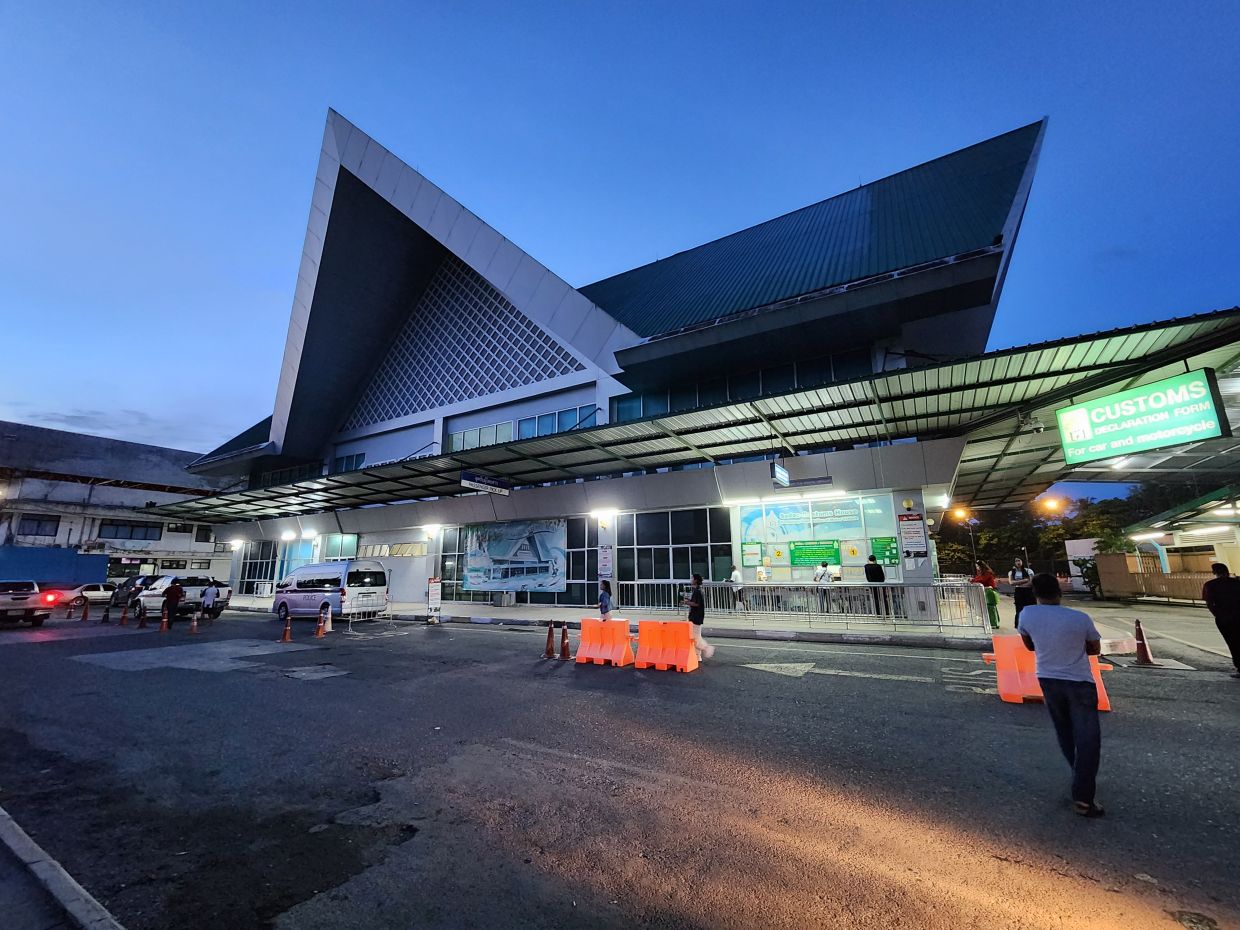
Thailand has taken a significant step to deepen economic integration with Malaysia by approving a new permanent border checkpoint that will reshape cross-border commerce in Southeast Asia. The Thai cabinet's decision on Tuesday to establish the fresh Sadao crossing, operational from July 11, signals renewed commitment to strengthening bilateral ties through enhanced logistics infrastructure and streamlined trade pathways. This development assumes particular importance for Malaysia and Thailand, which share one of the region's most active land borders and serve as crucial nodes in the wider ASEAN economic network.
The new checkpoint will supersede the existing crossing point, relocating between boundary markers 23/9 and 23/10 rather than the previous markers 22-23. Operating hours have been standardised at 05:00 to 23:00 daily, extending accessibility beyond traditional peak commerce windows and providing predictable scheduling for cross-border traders and logistics firms. This adjustment reflects careful planning to balance commercial convenience with administrative oversight, ensuring the checkpoint can handle anticipated traffic volumes while maintaining regulatory standards. For businesses dependent on just-in-time supply chains across the border, the extended operational window offers measurable efficiency gains.
Thailand's government spokesperson, Ratchada Thanadirek, outlined a comprehensive preparatory agenda designed to maximise the checkpoint's effectiveness. Authorities have mandated accelerated construction of connecting road networks on the Thai side to eliminate congestion points that have historically plagued border crossings in the region. Complementary shuttle services will be introduced to facilitate smoother vehicle flow, while Songkhla province will oversee implementation progress. These logistical refinements address long-standing frustrations among transporters and traders who have contended with bottlenecks that inflate delivery times and operational costs across the Thailand-Malaysia border.
Recognising that infrastructure improvements alone cannot guarantee success, Thai agencies have been instructed to conduct extensive information campaigns targeting multiple stakeholder groups. The private sector, including exporters, importers, and transport operators, requires detailed briefings on revised traffic routing, updated customs procedures, and modified immigration protocols. Local communities adjacent to the checkpoint also need transparent communication about anticipated traffic patterns and economic implications. Government facilitation measures designed to streamline trade procedures must be clearly articulated to potential users, ensuring that theoretical benefits translate into tangible adoption by businesses and travellers.
The timing of this border initiative aligns strategically with Thai Prime Minister Anutin Charnvirakul's scheduled official visit to Malaysia on July 9-10. Invited by Malaysian Prime Minister Anwar Ibrahim, this high-level engagement will culminate in a joint statement outlining bilateral priorities. The proximity between the checkpoint approval and the prime ministerial visit underscores deliberate choreography in bilateral diplomacy, allowing the new crossing to feature prominently in discussions about future cooperation frameworks. Such coordinated messaging reinforces political commitment to the infrastructure investment and signals to regional investors that Thailand-Malaysia connectivity enjoys top-level government backing.
The draft joint statement emerging from Anutin's Malaysia visit will establish cooperation objectives spanning multiple domains critical to Southeast Asian development. Border development initiatives form the framework's foundation, recognising that seamless crossings facilitate not only commerce but also people-to-people mobility essential for tourism and cultural exchange. Connectivity improvements extend beyond this single checkpoint to encompass broader infrastructure ambitions linking the two economies into functional trading blocs. These commitments reflect evolving ASEAN integration strategies that prioritise physical and regulatory integration alongside traditional diplomatic engagement.
Security cooperation occupies a prominent position in the bilateral agenda, particularly regarding transnational crime prevention. The Thailand-Malaysia border region has historically confronted trafficking challenges involving narcotics, wildlife contraband, and human smuggling. Enhanced checkpoint infrastructure, combined with improved intelligence sharing and joint operational protocols, strengthens both nations' capacity to interdict criminal networks exploiting border porosity. For Malaysia, which faces particular concerns about drug trafficking originating from the Golden Triangle region, Thai cooperation represents a critical component of national security strategy. Conversely, Thailand benefits from Malaysia's sophisticated enforcement capabilities and port monitoring systems.
Economic partnership provisions within the proposed statement target strategic sectors, particularly food and energy security. Thailand ranks among the world's largest agricultural exporters, while Malaysia dominates regional energy markets and downstream petrochemical production. Reduced border friction directly benefits both industries by shortening supply chain transit times and lowering logistics costs. For Malaysian consumers and manufacturers, improved Thai agricultural imports enhance food security and moderate price volatility. Simultaneously, Malaysian energy products reach Thai consumers and businesses more efficiently, supporting energy affordability across Thailand's industrial base.
The broader implications extend beyond bilateral commerce to encompass regional positioning within ASEAN's economic integration architecture. Enhanced Thailand-Malaysia connectivity strengthens the economic corridor spanning this critical border zone, potentially catalysing investment in adjacent regions. Developers and manufacturers increasingly view borderland areas as strategic locations for export-oriented facilities, leveraging dual-market access and regional supply chain networks. The checkpoint approval removes regulatory barriers that previously constrained such location decisions, potentially triggering industrial development clustering effects across southern Thailand and northern Peninsular Malaysia.
Tourism represents an often-underestimated beneficiary of border infrastructure improvements. Malaysian tourists accessing Thailand's southern provinces face fewer delays, encouraging overnight visitation and regional tourism spending. Thai tourists visiting Malaysia's northern states similarly benefit from streamlined border passage. These traveller flows generate multiplier effects throughout peripheral economies dependent on cross-border tourism revenue. Enhanced accessibility particularly benefits culturally significant destinations in both countries, broadening tourism's geographic distribution and supporting communities beyond major metropolitan centres.
The checkpoint's establishment reflects pragmatic recognition that ASEAN economic integration requires subnational government commitment alongside national-level diplomacy. Songkhla province's designated monitoring role acknowledges that local authorities possess operational knowledge and community relationships essential for implementation success. This devolved governance approach distributes responsibility while ensuring regional stakeholders remain invested in border management outcomes. For Malaysian states adjacent to the crossing, the checkpoint's opening creates opportunities for parallel infrastructure investment and economic development planning.
Looking forward, this checkpoint approval demonstrates Thailand's confidence in regional economic cooperation despite periodic geopolitical tensions within ASEAN. The investment in border infrastructure signals sustained commitment to deepening integration with Malaysia specifically and Southeast Asia broadly. For Malaysian policymakers, the checkpoint's successful operation will provide templates for border cooperation initiatives with other ASEAN neighbours, contributing to the Association's overarching integration agenda. As supply chains increasingly require rapid border crossing capabilities to remain competitive globally, infrastructure like the Sadao checkpoint becomes essential to preserving Southeast Asia's role as a critical manufacturing and logistics hub.
The July 11 operational commencement establishes a concrete timeline that enhances investor confidence in bilateral cooperation. Businesses can now schedule operations around the checkpoint's opening, positioning themselves to capitalise on improved connectivity. This certainty distinguishes the initiative from previous border cooperation discussions that remained conceptual or experienced implementation delays. Early performance data from the checkpoint will likely inform future bilateral infrastructure decisions, creating incentives for both governments to ensure initial operations proceed smoothly and build momentum for expanded cooperation across additional border crossing points.

