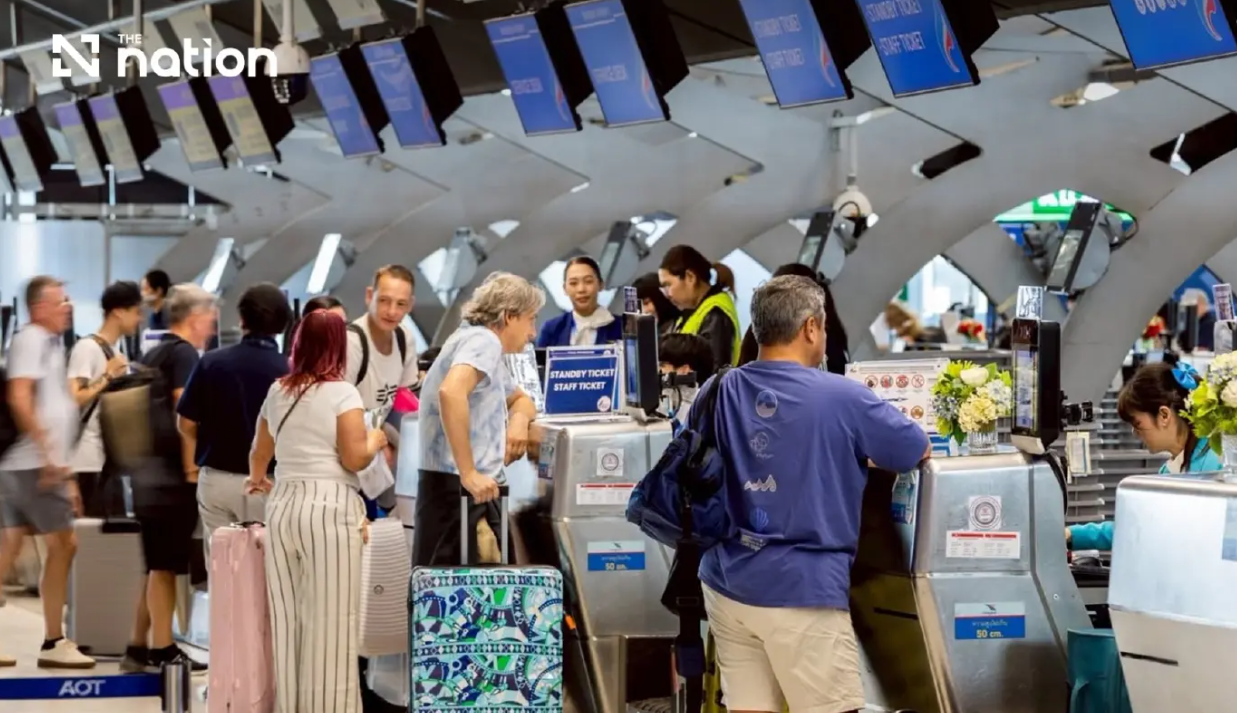
Thailand's government is preparing to roll out two interconnected tourism initiatives aimed at revitalising domestic spending while generating dedicated revenue for sector-wide improvements. The Thai Travel Thai Plus programme, set to commence in September, represents a direct intervention in consumer behaviour, while a proposed levy on international arrivals would create a sustainable funding mechanism for long-term destination enhancement and environmental remediation.
The domestic subsidy programme reflects a deliberate policy choice to broaden economic benefits across the tourism ecosystem rather than concentrating support narrowly on food and hospitality sectors. With a preliminary budget of 1.75 billion baht allocated for four months, the initiative targets 500,000 Thai citizens through an application-based system administered via Krungthai Bank's Pao Tang platform. The government will cover half of qualifying expenditures up to a 3,000-baht ceiling per entitlement, with participants eligible to access up to five separate vouchers during the programme's duration. This structure allows a single beneficiary to potentially receive up to 15,000 baht in government support, provided spending thresholds are met.
Tourism and Sports Minister Surasak Phancharoenworakul emphasised that the revised programme framework deliberately expands eligible spending beyond traditional restaurant meals and accommodation charges. Vouchers previously earmarked primarily for dining will now cover admission fees to attractions, guided tours, vehicle rentals, artisanal goods, and community-based tourism products. This deliberate diversification represents a recognition that traditional distribution models concentrated wealth in large hospitality corporations while marginalising smaller regional operators and local communities dependent on visitor expenditure. By enabling voucher use across a broader merchant base, policymakers hope to achieve more equitable wealth distribution within the tourism value chain.
The economic modeling underpinning the initiative projects over 26 billion baht in broader economic circulation from the initial 1.75-billion-baht government injection, suggesting multiplier effects that Thai planners believe will ripple through regional economies. The ministry has also signalled intentions to increase individual voucher values from 500 to 1,000 baht, though this enhancement remains subject to final coordination between the Tourism and Sports Ministry and the Finance Ministry, where funding mechanisms and detailed operational conditions are still under negotiation. The preliminary budget is expected to derive from government borrowing rather than existing allocations, indicating a commitment to counter-cyclical fiscal policy during the tourism recovery period.
Paralleling the domestic stimulus, Thailand's government is advancing a proposal for a mandatory fee imposed on foreign arrivals, though crucial details remain unspecified. Neither the proposed levy amount, collection methodology, nor the intended implementation date have been publicly announced, suggesting the policy remains in early formulation stages requiring further inter-agency coordination. Revenue generated through this mechanism would flow into the Thailand Tourism Promotion Fund, a dedicated account segregating international visitor contributions from general government revenue. This separation enables ringfenced allocation toward specific tourism-related priorities rather than dispersal across competing budget demands.
The foreign visitor fee is framed around three primary utilisation categories that address recognised weaknesses in Thailand's tourism infrastructure and environmental sustainability. Development of existing attractions and construction of purpose-built destinations—particularly in secondary cities marketed as "Must-Visit Cities"—represents an explicit strategy to distribute international visitor flows beyond Bangkok and traditional coastal resort areas. This geographic rebalancing aims to relieve congestion pressures on over-visited locations while stimulating economic development in underutilised regions, a consideration increasingly important as Southeast Asian destinations grapple with overtourism impacts on infrastructure and cultural preservation.
The fund's second designated purpose involves financing visitor insurance and safety infrastructure, reflecting heightened government attention to travel security perceptions. Thailand has historically positioned itself as a safe regional destination, but periodic incidents and security concerns create market sensitivity. Dedicated funding for safety measures—whether enhanced medical facilities, emergency response systems, or traveller insurance programmes—signals governmental commitment to maintaining competitive positioning against rival Southeast Asian destinations. The third fund allocation targets environmental restoration, acknowledging that intensified tourism generates ecological degradation through waste generation, water consumption, coral reef damage, and forest pressure requiring dedicated remediation investment.
The policy initiatives emerged from a government subcommittee meeting chaired by Deputy Prime Minister and Commerce Minister Suphajee Suthumpun, with participation from Culture Minister Sabeeda Thaised and senior tourism bureaucrats. This elevated oversight indicates that tourism recovery constitutes a priority within broader economic policy frameworks. The subcommittee is simultaneously developing a comprehensive strategy linking tourism growth to trade facilitation and community economic development, suggesting integrated policy thinking rather than siloed sectoral approaches. The government's stated objective involves strengthening visitor confidence through multifaceted safety enhancements while simultaneously extending tourism benefits to local communities rather than concentrating gains among international operators and large Thai corporations.
Thailand's approach reflects regional competitive dynamics with neighbouring destinations. Vietnam, Indonesia, and the Philippines have each pursued varying tourism development strategies, from capacity expansion to quality-focused positioning. Thailand's dual strategy—stimulating domestic demand through direct subsidies while capturing foreign visitor spending through levies—represents a middle path attempting to balance growth maximisation with sustainable development principles. The domestic subsidy particularly addresses the structural challenge of seasonal tourism patterns, where rainy-season periods (the Green Season) traditionally witness reduced international arrivals but present opportunities for domestic tourism activation when prices and crowds diminish.
Implementation challenges remain substantial despite policy momentum. The ministry acknowledged ongoing discussions regarding which operators across different tourism sectors would participate in the subsidy programme, suggesting potential resistance from certain segments or complications in establishing transparent participation criteria. The Finance Ministry's involvement in funding discussions indicates budgetary scrutiny beyond tourism-specific concerns, reflecting broader fiscal constraints facing Thailand's government. Government agencies and tourism industry representatives are scheduled for additional discussions to finalise operational details, with conclusions expected within weeks and September programme launch targeted to coincide with the Green Season tourism opportunity.
Minister Surasak indicated the four-month initial phase represents a pilot approach, with potential extension through subsequent phases contingent upon demonstrated positive response. This phased implementation strategy acknowledges policy uncertainty while building flexibility for programme adjustment based on real-world performance data. The emphasis on generating positive outcomes within the pilot period creates incentive structures for aggressive marketing and implementation, potentially explaining the ambitious timeline despite outstanding administrative details. The government's interest in benefits accruing broadly to smaller operators represents a political commitment to inclusive growth, though execution effectiveness will depend on whether voucher distribution and merchant participation reach intended beneficiaries or concentrate among larger operators with superior marketing capacity.
For Malaysian observers, Thailand's policy moves carry instructive implications regarding tourism development strategies during recovery periods. The integration of domestic stimulus with foreign visitor monetisation reflects sophisticated understanding that sustainable tourism economics require multiple revenue streams and stakeholder benefit distribution. Malaysia's own tourism sector faces comparable challenges regarding seasonal demand management, geographic concentration of benefits, and environmental sustainability, making Thailand's experimental approach a potential reference point for domestic policy discussions. The foreign visitor fee concept particularly merits Malaysian consideration, as dedicated infrastructure funding derived from international arrivals could address chronic underinvestment in secondary destination development and environmental management that currently constrains regional tourism diversification.
The initiatives also signal broader Thai government confidence in tourism sector recovery prospects sufficient to justify new revenue generation mechanisms and subsidy commitments. This optimism contrasts with periods of tourism uncertainty and reflects assessment that structural demand recovery has reached stages warranting institutional enhancement rather than pure stabilisation support. Whether the Thai policies ultimately achieve stated economic circulation targets and equitable benefit distribution will provide important data points for other regional economies evaluating tourism development strategy during post-recovery consolidation periods.

