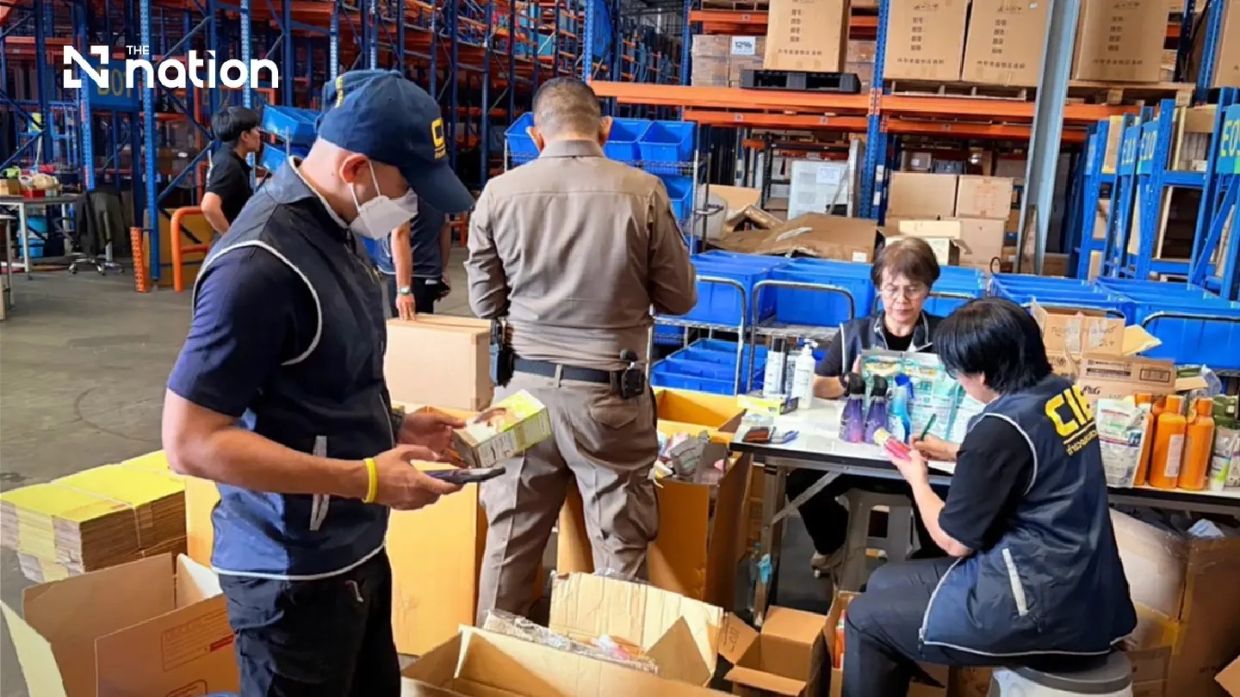
Thai law enforcement has shut down a significant supply chain trafficking unapproved Japanese cosmetics, dietary supplements and medicinal products, confiscating nearly 84,000 items valued at more than 8.34 million baht from a warehouse in Bang Phli district, Samut Prakan. The operation, conducted by the Consumer Protection Police Division (CPPD) under the command of Pol Maj Gen Kongkrit Lertsittikul on August 13, represents a major crackdown on the growing problem of counterfeit and uncertified health products infiltrating Southeast Asian e-commerce platforms through sophisticated distribution networks.
The warehouse, strategically located in Samut Prakan's industrial zone, housed 116 different types of unapproved merchandise sourced directly from Japanese suppliers. Officers recovered a diverse range of goods spanning cosmetics lines, nutritional supplements, and pharmaceutical products—all lacking the mandatory Thai-language labeling, import certifications, and safety approvals required by Thai regulatory authorities. The sheer volume of the seizure underscores the scale at which unauthorized products were being channeled into Thailand's booming online retail sector, where oversight remains challenging and consumer vulnerability runs high.
Investigators discovered that the warehouse had evolved into a sophisticated logistics hub serving hundreds of online merchants operating across multiple e-commerce platforms. Beginning operations more than four years ago, the facility processed between 200 and 300 items daily for shipment to various digital sellers, charging a modest packing fee of 10 to 12 baht per box. This business model allowed numerous small online retailers to maintain inventory without directly handling imports, effectively insulating them from direct legal culpability while concentrating risk at the warehouse level. The operation's longevity suggests that regulatory gaps and inadequate cross-border enforcement mechanisms enabled this illegal trade to flourish throughout much of the past four years.
The seizure followed mounting consumer complaints regarding Japanese cosmetics, dietary supplements, and household hazardous substances appearing for sale online without proper Thai-language labeling or certification documentation. Concerned consumers and regulatory monitors flagged these products as potentially dangerous, prompting the CPPD to initiate a comprehensive investigation. Tracing supply chains through online sales records and merchant networks, police determined that the vast majority of unapproved merchandise originated from Japanese imports that had bypassed mandatory safety checks and certification procedures established by Thai health and safety authorities.
These regulatory requirements exist precisely because imported health and beauty products pose significant consumer risks when they lack proper vetting. Unapproved cosmetics may contain harmful chemicals banned in Thailand, dietary supplements might contain undisclosed active ingredients or contaminants, and medicines without certification could be counterfeit or ineffective. The absence of Thai-language labeling compounds these dangers, as consumers cannot understand ingredient lists, contraindications, or proper usage instructions. For Malaysian readers, this scenario mirrors vulnerabilities in Southeast Asia's e-commerce ecosystem, where porous borders and reliance on platform-based sales enable similar smuggling operations throughout the region.
Court-authorized inspections of the Bang Phli facility revealed the warehouse's systematic operation as a clearinghouse for contraband goods destined for retail distribution. Evidence gathered during the investigation demonstrated clear knowledge among warehouse operators regarding the products' unapproved status and their intended distribution through online channels. This knowledge component strengthens prosecutorial cases significantly, transforming what might otherwise appear as simple import violations into deliberate trafficking in hazardous goods.
Authorities have referred the case to Sub-Division 4 of the CPPD for prosecution under multiple statutes designed to protect Thai consumers. The primary charges involve violations of Thailand's Cosmetics Act, which strictly regulates imported beauty and personal care products; the Food Act, governing dietary supplements and nutritional products; the Drug Act, covering pharmaceutical items; and the Hazardous Substances Act, addressing potentially dangerous materials. This multi-statute approach recognizes that the smuggled goods span multiple regulatory categories, each requiring specialized enforcement mechanisms.
For Southeast Asian importers, manufacturers, and e-commerce operators, this enforcement action sends a clear message regarding regulatory compliance expectations. While online retail's distributed nature creates detection challenges, Thai authorities have demonstrated capacity to trace supply chains, identify consolidation points, and execute coordinated enforcement operations. The warehouse's four-year operational history suggests that initial regulatory blind spots have now been addressed through improved coordination between customs agencies, e-commerce platforms, and police divisions.
Malaysian stakeholders should note that similar vulnerabilities likely exist within Malaysia's borders and throughout the region's e-commerce infrastructure. Cross-border enforcement cooperation remains limited, allowing operators to exploit regulatory arbitrage between jurisdictions. Japanese-sourced products, whether legitimate or counterfeit, transit frequently through Southeast Asian supply chains serving both regional and global markets. The Bang Phli operation exemplifies how centralized warehouse facilities enable efficient distribution of illegal goods across multiple retail channels, a model applicable to smuggling operations throughout Malaysia, Singapore, and other regional e-commerce hubs.
The seizure also highlights persistent challenges in policing digital marketplaces where platform operators bear limited liability for merchant activities. E-commerce platforms facilitate millions of daily transactions while employing minimal product verification mechanisms, creating environments where unapproved goods flourish. Enforcement agencies must invest in platform monitoring, seller verification systems, and cross-border intelligence sharing to address this structural vulnerability effectively. Thailand's action represents progress, but sustained regional cooperation will prove essential for addressing organized smuggling networks operating across multiple jurisdictions and leveraging digital infrastructure for rapid distribution.
Going forward, the case demonstrates that determination of supply chain vulnerabilities, patient investigation, and coordinated enforcement can dismantle even well-established smuggling operations. However, the warehouse's four-year operational history and the volume of goods seized suggest that Thai authorities had previously lacked either resources or information to identify this distribution hub earlier. Regulatory agencies across Southeast Asia must strengthen pre-import screening, enhance platform cooperation, and develop intelligence-sharing mechanisms to intercept similar contraband before it reaches consumer markets and potentially causes harm.

