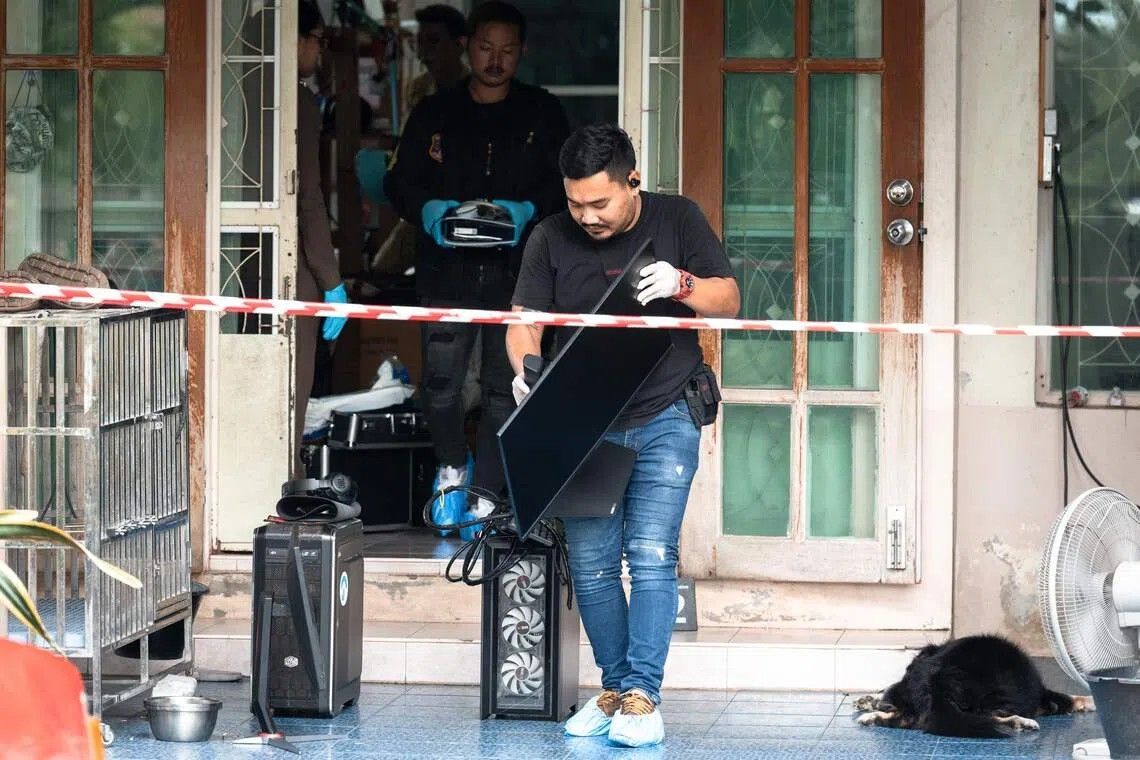
Thai authorities investigating the shooting incident at Debsirin Nonthaburi School are focusing intensively on the digital footprint of the 14-year-old accused gunman, having discovered that he conducted internet searches relating to school shootings in the United States during late July. Police officials have not yet drawn conclusions linking these online activities directly to the violence that unfolded, but the searches form part of a broader examination into the psychological and environmental factors that may have contributed to the tragic events of August 7.
Investigators have established that the teenager is also suspected of killing his grandparents at their family residence in Bang Khu Rat subdistrict, Bang Bua Thong district, before proceeding to the school where the shooting subsequently occurred. The discovery of the grandparents' bodies came after officers and forensic specialists accessed the property, which had been secured from the outside. Provincial Police Region 1 Commissioner Wattana Yichin personally oversaw the inspection of the premises as part of the systematic investigation.
The sequence of events reconstructed by police suggests that the suspect departed the family home following the deaths of his grandparents and travelled to Debsirin Nonthaburi School, where he carried out the shooting attack. The timeline and circumstances of his movements between these locations remain central to understanding how the violence escalated throughout that morning.
Forensic examination of the teenager's computer has revealed a pattern of engagement with video games featuring violent content, concurrent with his documented searches for information about school shootings occurring in the United States. These searches appear to have been conducted over a period beginning around July 30, suggesting a sustained period of online research rather than isolated incidents. Nevertheless, police have been cautious in their statements, emphasizing that establishing a causal relationship between digital media consumption and the actual attacks remains an investigative priority requiring further evidence.
Family members have provided crucial context to investigators attempting to build a comprehensive picture of the suspect's background and circumstances. According to testimony from the teenager's uncle, the boy had resided with his grandparents since early childhood, dedicating substantial amounts of time to playing computer games and maintaining a generally withdrawn lifestyle. No significant conflicts, serious disputes, or visible indicators of psychological distress were reported by relatives prior to the incident, complicating efforts to identify clear warning signs that might have preceded the violence.
The suspect's aunt, Thananyaporn, 60, who is the sister of the deceased grandfather, has provided detailed recollections of the boy's daily routines and family relationships. She emphasized that the teenager lived a sheltered existence centered around his grandparents' care and affection, particularly given that his parents had separated and the older generation had assumed primary responsibility for his upbringing. His grandfather, a retired bank manager known for his gentle demeanor, would transport him to and from school each day, while his grandmother worked as a teacher, representing a stable if somewhat isolated household environment.
Thananyaporn described the boy as characteristically quiet and polite, a young person who did not establish peer friendships or participate in typical childhood social activities outside the home. Instead, his life revolved around the domestic sphere and his engagement with video games during leisure hours. She stated that she harbored no suspicions that family dysfunction or unresolved tensions contributed to the tragedy, noting that the three household members were exceptionally close and that the grandparents clearly prioritized the boy's wellbeing despite his reclusiveness.
A significant detail in the investigation concerns the firearm used in the attack. Police records confirm that the weapon was legally registered to the teenager's grandfather, raising questions about how the young suspect gained access to the lethal instrument and whether security measures were in place to restrict its use. The legitimate status of the firearm ownership underscores the complex intersection of legal gun possession and youth access in Thai households, a consideration that may inform future policy discussions regarding responsible firearms storage.
Police have deliberately refrained from drawing premature conclusions about causation, recognizing that the presence of violent gaming habits and internet research does not necessarily establish motivation. Instead, investigators are pursuing a methodical examination of multiple potential contributing factors, including whether the teenager experienced difficulties within his school environment, social conflicts with peers, or underlying psychological conditions that may have been undetected by family members. This cautious investigative approach reflects international best practices in complex crime analysis, avoiding oversimplification while pursuing comprehensive understanding.
The investigation maintains its focus on reconstructing the precise sequence of events and identifying which, if any, specific factors ultimately catalyzed the attacks. Authorities recognize that understanding motivation in cases involving young perpetrators requires examination of family dynamics, peer relationships, mental health status, online influences, and access to weapons, rather than attributing violence to any single source. For Malaysia and other Southeast Asian nations, this incident serves as a sobering reminder of the need for comprehensive approaches to school safety, mental health support for isolated youth, and responsible firearms regulation that considers household access by minors.

