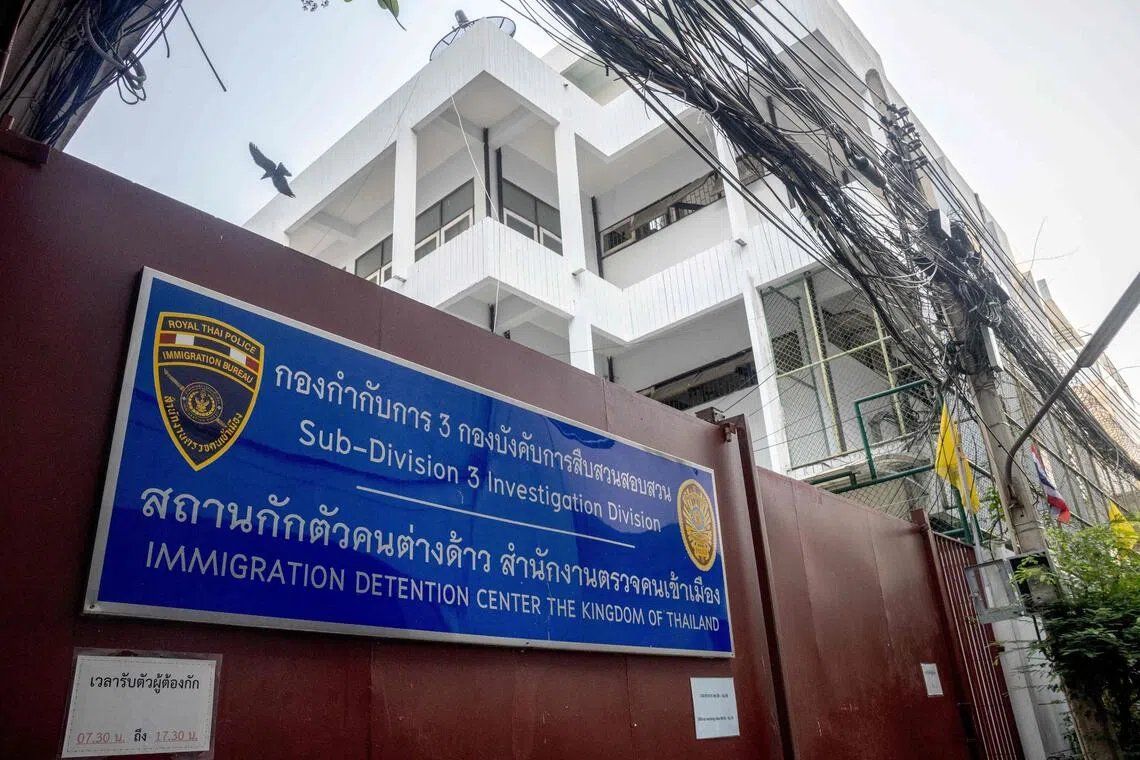
Thailand's Prime Minister Anutin Charnvirakul has formalized the country's approach to removing foreign nationals who breach its laws or threaten public security through a comprehensive regulatory framework signed on August 26 and published in the Royal Gazette on August 27. The Prime Minister's Office Regulation on Deportation B.E. 2569 enters into force on August 28, establishing the first systematic procedures designed to accelerate deportation decisions while ensuring coordination between government agencies tasked with enforcement.
The regulation reflects Thailand's underlying position that while the kingdom welcomes legitimate visitors and residents, it will not tolerate foreigners who exploit Thai hospitality through criminal activity, illegal employment, unauthorized business operations, or clandestine entry. By formalizing this stance through regulatory channels rather than ad-hoc administrative action, Bangkok aims to project legal consistency to both its domestic population and international observers. The framework addresses a persistent challenge in Southeast Asia, where porous borders and diverse migration patterns create ongoing management complexities that strain public resources and occasionally generate social tensions.
At its core, the regulation empowers the Interior Ministry to initiate deportation proceedings against six distinct categories of foreign offenders. These include individuals who have entered or remained in the country unlawfully under immigration statutes, those caught working without proper authorization, foreigners operating businesses in violation of the Foreign Business Act, persons convicted of document forgery involving official records, anyone sentenced to at least five years imprisonment regardless of offense type, and individuals who acted as principals, instigators, or active supporters in any of these five categories. This taxonomy reflects concerns about labor trafficking, underground economies, fraud schemes, and serious criminality that disproportionately affect Thailand's law enforcement priorities.
The regulatory framework introduces administrative efficiency mechanisms that were previously absent or inconsistent. The Department of Corrections must notify the Interior Ministry's permanent secretary at least fifteen days before a foreign prisoner's release, providing comprehensive case records that enable ministers to evaluate deportation orders proactively. Similarly, when courts suspend sentences or impose fines rather than custodial terms, the Judiciary's office must immediately alert the permanent secretary, ensuring that no foreign offenders slip through bureaucratic gaps. These coordination requirements compress decision timelines and reduce opportunities for administrative foot-dragging that historically complicated removals across Southeast Asia.
Importantly, the regulation acknowledges Thailand's international legal commitments, particularly non-refoulement obligations under refugee conventions and torture prevention protocols. Rather than automatically deporting individuals to their nationality countries, the framework permits other nations or international organizations to request custody within seven days of any deportation order, provided they cite legitimate safety concerns including risks of torture, cruel treatment, or enforced disappearance. This provision demonstrates that Thailand recognizes it cannot simply export its security problems without regard for human rights implications, a consideration increasingly important as regional governments face international scrutiny regarding migration enforcement practices.
The logistics of deportation under the new regulation reflect practical realities of international cooperation. A deportee will ordinarily return to their country of nationality; if nationality remains unestablished, authorities may send the person to their last country of residence before entering Thailand. When third countries or international organizations request transfer, they must assume all associated costs and secure the deportee's written consent. The regulation permits the Interior Minister to grant up to two thirty-day extensions for completion of such transfers, but if arrangements cannot be finalized within permitted timeframes, Thailand will proceed with standard repatriation. This safeguard prevents indefinite detention while recognizing that coordinating international transfers often requires sustained diplomatic negotiation.
For Malaysian readers, this Thai development carries several implications worth considering. Malaysia itself manages complex migration issues involving Bangladeshi workers, Indonesian nationals, and regional populations, facing similar pressures to balance economic benefits of migration against public order concerns. Thailand's regulatory approach—establishing formal procedures, inter-agency coordination mechanisms, and human rights safeguards—offers a model that emphasizes legal clarity over arbitrary enforcement. The framework suggests that Southeast Asian governments increasingly recognize that sustainable migration management requires institutional consistency rather than reactive administrative decisions that may generate diplomatic friction or humanitarian criticism.
The regulation also signals Thailand's determination to address unauthorized employment, an issue directly relevant to the region. By explicitly authorizing deportation for foreign workers lacking proper permits, Thailand acknowledges that undocumented labor undermines domestic workers, distorts wages, and facilitates exploitation. Malaysia similarly confronts unauthorized employment by foreign nationals, particularly in construction, agriculture, and domestic service sectors. Thailand's regulatory approach emphasizes prevention through coordinated monitoring rather than purely responsive enforcement, suggesting policy lessons about integrating immigration agencies, labor departments, and corrections systems to identify violations before they become entrenched.
The diplomatic and humanitarian protections embedded in the regulation reflect evolving regional standards regarding migration enforcement. By providing explicit mechanisms for third-country requests and safeguarding against refoulement, Thailand acknowledges that developing nations increasingly cannot ignore international human rights frameworks, particularly as civil society organizations and United Nations bodies scrutinize deportation practices. This evolution mirrors global trends where migration enforcement increasingly incorporates human rights impact assessments, recognizing that reputational costs of visible abuses may outweigh short-term security gains from aggressive removals.
Financial responsibility provisions also merit attention. The regulation stipulates that deportation expenses follow Interior Ministry rules approved by the Finance Ministry, presumably ensuring that costs do not become unpredictable budgetary burdens. By requiring third countries requesting transfers to cover associated expenses, the framework prevents wealthy nations from externally off-loading security problems to less developed countries. This principle increasingly shapes regional discussions about burden-sharing in migration management, where developing nations argue that migration's costs should not fall disproportionately on transit and destination countries lacking capacity to absorb expenses.
Dispute resolution provisions grant the Interior Minister final authority over implementation questions, concentrating discretionary power while theoretically enabling consistent decision-making. However, this concentration also creates potential accountability gaps, as there exists no explicit appeals mechanism for individuals disputing deportation orders or requesting ministerial reconsideration. This structural choice reflects Thailand's administrative traditions but may generate future friction with international organizations advocating for due process protections and independent review mechanisms.
The timing of this regulation's enactment reflects Thailand's broader agenda under Prime Minister Anutin's leadership, which has emphasized law-and-order governance and bureaucratic efficiency. By establishing formal procedures and publishing them in the Royal Gazette, Bangkok signals that deportation decisions will henceforth follow predictable rules rather than political discretion. For foreign investors, expatriate employees, and legitimate visitors, this clarity may actually reduce uncertainty, as legal compliance offers explicit protection against arbitrary removal.
As Thailand implements these procedures over coming months, the test will involve whether the regulation's ambitious coordination mechanisms actually function as designed or whether agencies continue operating in traditional silos. Regional observers will also monitor how the framework addresses edge cases—stateless persons, individuals from uncooperative nations, and asylum seekers whose status remains undetermined. The regulation's success ultimately depends not on its formal comprehensiveness but on administrative capacity and political will to apply rules consistently while respecting human rights commitments that increasingly define Southeast Asia's migration governance standards.

