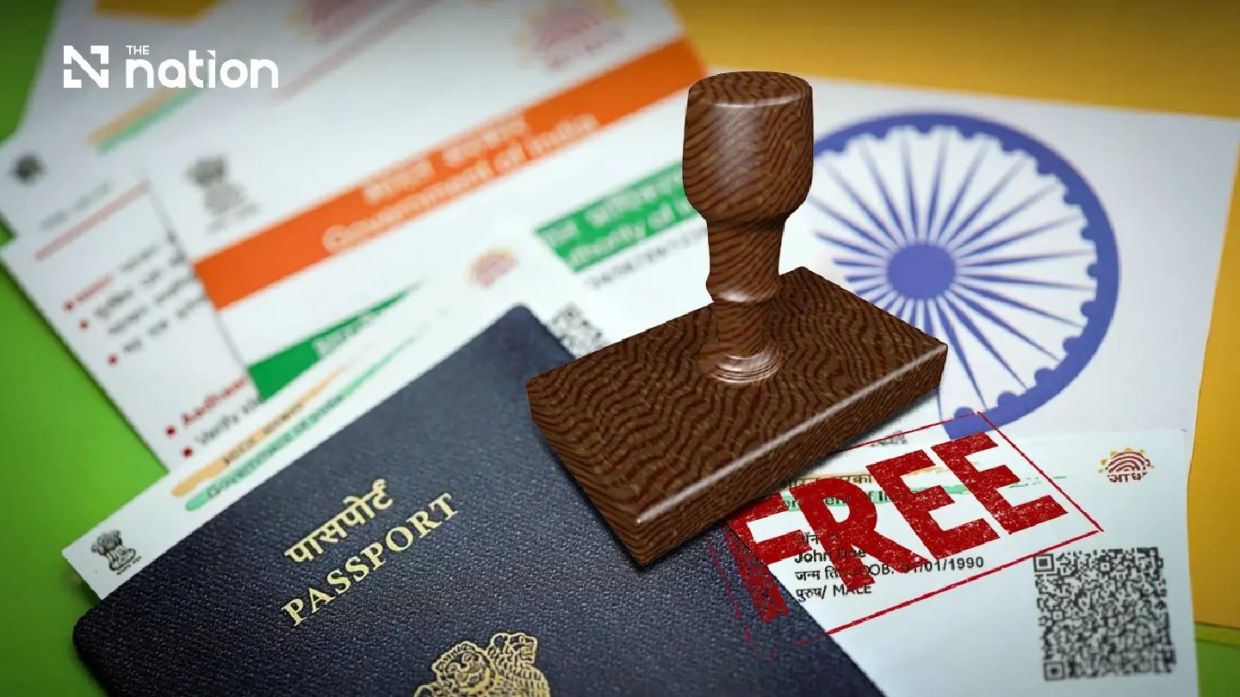
Thailand has cemented India's position as a pillar of its tourism recovery by enshrining a 30-day visa-free entry for Indian nationals, a strategic choice that reflects the country's determination to compete aggressively for one of Asia's fastest-growing source markets. Tourism and Sports Minister Surasak Phancharoenworakul has justified the extended visa window as essential for India's distinctive travel patterns, particularly the growing trend of destination weddings and multi-week celebration events that have become increasingly popular among affluent Indian families and friendship groups. The government projects Indian arrivals will surge to 2.7 million by 2027, building on already robust momentum that saw roughly 1.3 million Indians visit Thailand in just the first seven months of 2026.
The push for a full 30-day exemption, rather than the initially proposed 15-day window, reveals the nuance of Thailand's tourism calculus. Wedding tourism from India represents a uniquely lucrative segment, as celebration events typically span weeks and involve substantial per-person spending on accommodation, dining, entertainment and shopping. A fortnight would have been insufficient for the extended ceremonies, pre-wedding festivities and post-wedding leisure components that characterise Indian celebration tourism. By granting Indian visitors the same visa entitlement enjoyed by tourists from other major markets, Thailand signals confidence in the market's reliability while removing a competitive disadvantage that could have pushed wedding groups toward rival destinations.
Recent performance underscores India's climbing importance to Thailand's tourism ecosystem. In 2025, Thailand welcomed 2.48 million Indian tourists, representing growth of nearly 17 percent on the prior year, while these visitors generated tourism revenue exceeding 90 billion baht. This trajectory reflects not merely higher visitor numbers but also elevated spending patterns. Through the first half of 2026, Indian arrivals continued expanding by more than 3 percent, positioning India as Thailand's third-largest source market by mid-year. The Tourism Authority of Thailand forecasts continued momentum, with arrivals expected to rise to 2.55 million in 2026 before accelerating by 5.8 percent to the record 2.7 million target in 2027.
The visa-exemption decision comes amid broader government restructuring of Thailand's entry category system, reflecting the delicate balance between tourism promotion and immigration control. Thailand previously operated a temporary 60-day visa exemption covering 93 countries and territories, but the Cabinet opted instead for a more streamlined architecture consolidating entries into distinct categories. Rather than returning India to the Visa on Arrival mechanism—a prospect that alarmed tourism operators who feared a cumbersome reversion would reduce Thailand's competitive standing—the government assigned India to the standard 30-day visa-exemption tier alongside 58 other countries and territories. This classification better serves transparency and immigration screening while preserving the frictionless access that makes Thailand an attractive choice for spontaneous and planned travel alike.
Understanding Indian visitor behaviour provides crucial context for this policy calibration. Average stays stretch to approximately 7.17 days, comfortably accommodating most leisure itineraries within the 30-day envelope. However, the distribution is far more complex than this mean suggests. First-time visitors comprise nearly 60 percent of the Indian market, many embarking on two-week cultural and coastal explorations, while returning visitors—accounting for roughly 40 percent—tend toward longer stays and repeat experiences. Crucially, the wedding and celebration segment operates entirely differently, with groups requiring multi-week coordination periods. The 30-day threshold therefore serves dual purposes: providing runway for organised celebration tourism while remaining ample for conventional leisure travellers.
Indian visitors' expenditure profile elevates their strategic value far beyond raw arrival numbers. The average Indian tourist spends approximately 6,200 baht daily, translating to around 36,350 baht across a typical trip. This spending intensity positions Indian travellers among Thailand's most valuable source markets and aligns perfectly with the government's stated shift toward higher-yield rather than mass tourism. Food experiences top the attraction hierarchy, followed by beaches and wellness offerings—categories where Thailand possesses established competitive advantages. The prevalence of family groups and larger friendship circles means spending concentrates across multiple accommodation units and service providers, amplifying economic distribution throughout the tourism ecosystem.
Aircraft connectivity forms the practical foundation underpinning Thailand's capacity to realise its Indian tourism ambitions. Direct routes from Indian cities now connect nine metropolitan areas with Bangkok, Krabi and Phuket, supported by approximately 144 weekly flights offering over 32,000 seats from cities monitored by the TAT's New Delhi office. The territory covered by the Mumbai office commands roughly 160 weekly flights with 33,000 seats. Combined capacity approaches 66,000 weekly seats, a substantial infrastructure anchoring the feasibility of multi-million-visitor targets. Though some airline capacity temporarily contracted during periods of regional instability and elevated fuel costs, carriers are progressively restoring suspended routes as market conditions stabilise heading into peak seasons.
Thailand's geographical expansion beyond metropolitan hubs demonstrates sophisticated market segmentation targeting higher-spending demographics in secondary cities. While traditional promotion focused on New Delhi, Kolkata and Mumbai, the TAT is now systematically activating Tier 2 and Tier 3 cities including Lucknow, Chandigarh, Guwahati, Ahmedabad, Surat and Pune. Surat's globally significant diamond industry ensures concentrations of affluent travellers with disposable income for premium experiences, while Pune's automotive and industrial sectors provide access to professional-class consumers. This geographic dispersal strategy multiplies addressable market segments and reduces dependency on saturated urban centres, ultimately driving visitor growth at higher conversion rates.
Competitive pressures underscore the urgency of Thailand's visa policy recalibration. Vietnam aggressively markets competitive pricing and promotional incentives, while Malaysia actively promotes visa-free access equivalent to Thailand's 30-day framework. Singapore has strategically positioned itself as the family destination of choice, capturing an important demographic segment through premium positioning and child-oriented infrastructure. Thailand's extended visa exemption partially counteracts these dynamics by removing friction from the travel decision process and signalling sustained policy commitment to Indian visitors. However, victory requires sustained execution across multiple dimensions: maintaining air connectivity, delivering consistent visitor experiences, and continuously refining promotional messaging.
The evolution of Indian travel preferences reveals a sophisticated market increasingly seeking authentic engagement rather than conventional tourism consumption. Experience-led travel centred on local cuisines, cultural immersion, community interaction and everyday lifestyles now supersedes traditional sightseeing and photography-focused itineraries. This shift creates space for Thailand to differentiate itself through positioning villages, wellness centres, regional food scenes and cultural experiences rather than competing primarily on monuments and beaches. The TAT's targeting of wellness, community tourism and local lifestyle experiences directly addresses these preferences, suggesting strategy development informed by genuine understanding of market dynamics.
Neighbouring countries beyond India present additional runway for capacity utilisation. Thailand's expansion into Bhutanese, Bangladeshi and Nepalese markets through visa-exemption frameworks and cross-border tourism promotion spreads the benefit of enhanced air connectivity and tourism infrastructure investments. These adjacent markets share cultural and demographic characteristics with Indian travellers, suggesting comparable product preferences and spending patterns. Strategic promotion in these territories effectively expands the addressable market beyond India's borders while leveraging existing aviation and hospitality infrastructure investments.
The 30-day visa exemption ultimately represents a calibrated policy decision reflecting Thailand's broader evolution from volume-obsessed mass tourism toward sustainable, higher-value visitor engagement. India's combination of rising incomes, cultural affinity for destination weddings, strong air connectivity and proven spending intensity makes it the ideal anchor for this transition. Success requires not merely policy generosity but consistent delivery across air access, tourism products, service quality and promotional reach. As Thailand competes with regional rivals for share of India's expanding outbound tourism, the visa framework serves as initial gateway. What follows—the totality of visitor experience, value proposition clarity and repeated market cultivation—will determine whether 2.7 million becomes reality or aspiration.

