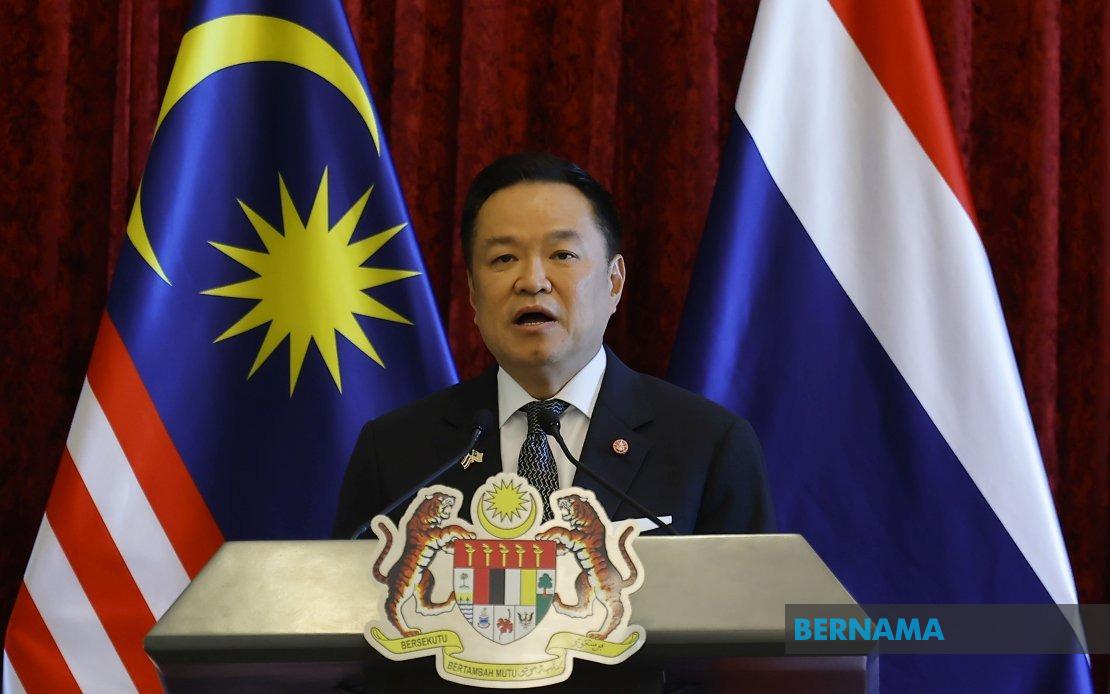
Thai Prime Minister Anutin Charnvirakul has publicly extended his best wishes to Malaysian Prime Minister Datuk Seri Anwar Ibrahim as the country prepares for a crucial state election in Johor this weekend. The gesture, made during a joint press conference in Putrajaya, signals the growing warmth between two Southeast Asian nations at a time when regional cooperation remains increasingly important for stability and economic prosperity across the borders.
The Johor state election represents a significant political test for Anwar's coalition government. With polling scheduled for Saturday, the contest will determine control of the state assembly through competition across all 56 seats, with 172 candidates in total seeking office. The scale of the contest reflects the importance both Kuala Lumpur and regional observers place on the outcome, as Johor remains Malaysia's second-largest economy and a strategically significant state in the federation.
Anwar's Pakatan Harapan coalition has mounted a comprehensive campaign effort, fielding candidates in every single constituency across the state. The alliance brings together representatives from three component parties—PKR, DAP, and Amanah—combining experienced politicians with fresh faces to appeal to voters across different demographics and geographical areas. This balanced approach suggests the coalition aims to consolidate its support base while reaching out to new constituencies.
Anutin's official visit to Malaysia marks his first journey to the country since his reappointment to the Thai premiership in March 2026. The timing demonstrates the importance Bangkok places on maintaining robust relations with Kuala Lumpur, particularly during a period when Malaysian domestic politics is undergoing significant transitions. Thailand and Malaysia share extensive historical, economic, and cultural connections, and leadership visits at critical junctures underscore the commitment both governments maintain toward strengthening these bonds.
Beyond the ceremonial aspects of Anutin's visit, the discussions between the two leaders encompassed a broader agenda focused on bilateral cooperation and mutual interests. The Thai premier's two-day visit was undertaken at Anwar's personal invitation, reflecting the direct relationship these leaders have cultivated. Such visits typically cover trade matters, security cooperation, and regional affairs, though the precise details of substantive discussions remain calibrated through diplomatic channels.
Anwar characterised his exchange with Anutin in notably warm terms, describing the interaction as reminiscent of a long-standing friendship rather than a formal state meeting. His comments about comfort, relaxation, and camaraderie suggest a level of personal rapport that transcends formal protocol. This tone matters significantly in regional diplomacy, where personal relationships between leaders often facilitate deeper institutional cooperation and smoother resolution of bilateral issues.
The Malaysian premier's remarks also carried subtle political messaging. By highlighting the ease and comfort of diplomatic engagement with Thailand's leadership, Anwar may be implicitly contrasting his government's approach to bilateral relations with previous administrations. For Malaysian audiences, such signals reinforce the narrative that his government maintains stable, productive relationships with regional partners—an important consideration for voters concerned with external stability and economic engagement.
The optics of Anutin's well-wishes for the Johor election deserve careful analysis. While ostensibly a friendly gesture, such public statements from a foreign leader during active electoral campaigns carry diplomatic weight in Southeast Asia. The endorsement, however indirect, validates Anwar's government and the broader Pakatan Harapan project to regional audiences. For observers in Thailand and elsewhere monitoring Malaysian political developments, it signals continuity and stability under current leadership.
Johor itself occupies particular significance in Malaysian federalism and regional commerce. As home to major port facilities, manufacturing zones, and agricultural interests, the state's political complexion affects investment confidence and economic planning across the southern corridor. A successful Pakatan Harapan performance in the election would consolidate the coalition's control of several key states and reinforce its mandate at the national level, while any setback would generate questions about internal party dynamics and coalition cohesion.
The convergence of Anutin's visit with the Johor polling period is unlikely to be coincidental. Diplomatic schedules are typically planned with domestic political calendars in mind, and the timing allows both governments to demonstrate the health of bilateral relations during a moment when Malaysian political attention is focused inward. For Thai audiences, the visit reinforces Bangkok's engagement with Malaysia's democratic processes and confirms Thailand's role as a constructive partner in regional affairs.
Looking forward, the relationship between Malaysia and Thailand continues to operate within a framework of traditional ASEAN cooperation augmented by increasingly sophisticated economic integration. Both nations benefit from robust trade relations, tourism flows, and people-to-people connections. Leadership visits like Anutin's serve to maintain the institutional foundations that support these multifaceted relationships, ensuring that periodic political transitions in either country do not disrupt deeper structural cooperation.
The Johor election result will offer insights into several dimensions of Malaysian political life, including the strength of coalition unity, the effectiveness of opposition campaigns, and evolving voter preferences. Anutin's public support for Anwar positions Thailand's government as aligned with Malaysia's incumbent leadership, a positioning that will likely persist regardless of electoral outcomes, given the broader importance both governments assign to bilateral engagement and regional stability.

