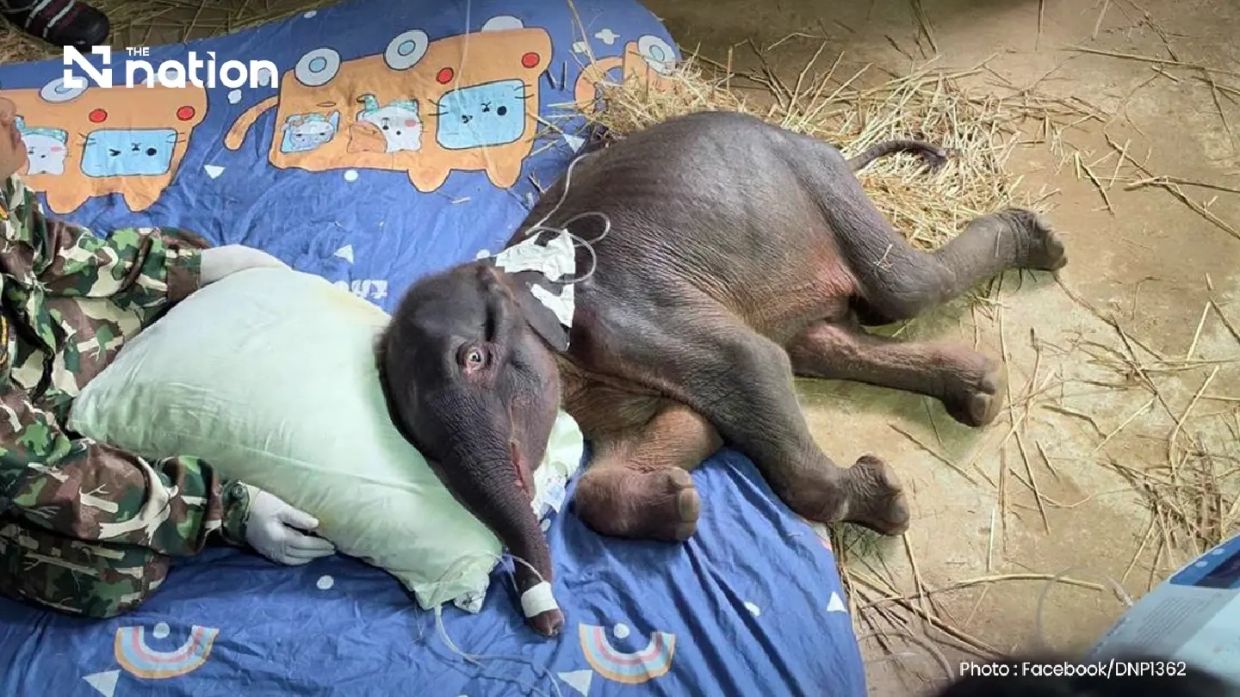
The death of Jiew Sai Yok, a wild elephant calf discovered separated from its herd in Kanchanaburi province, has underscored the vulnerability of juvenile wildlife in Southeast Asia's protected forest zones. The young animal passed away peacefully at approximately 2am on Tuesday, August 4, at Sai Yok National Park, where it had been receiving intensive veterinary care since its discovery on July 30. According to the Department of National Parks, Wildlife and Plant Conservation (DNP), preliminary medical findings pointed to acute kidney failure as the likely cause, though authorities have indicated that the calf may also have suffered from congenital abnormalities affecting internal organs.
The circumstances surrounding Jiew Sai Yok's separation from its mother illuminate the challenges faced by wild elephant populations in fragmented habitats. Village residents first spotted the distressed calf near the banks of Huai Mae Nam Noi, prompting immediate intervention from local officials and community members. The rescue operation itself proved logistically complex; teams required a boat to navigate to the animal's location due to the terrain's inaccessibility. Upon initial assessment, specialists determined that the calf had likely been abandoned or lost for approximately two days before discovery. During the first night of observation, despite the persistent calls of the distressed young elephant seeking its mother, no response came from the wider herd, suggesting either complete separation or the possible death of the parent animals.
The medical evaluation conducted on July 31 revealed extensive physiological deterioration consistent with prolonged suffering in the wild. Veterinarians documented multiple injuries and infections, including mouth ulcers measuring approximately the size of a 10-baht coin, severe dehydration, abdominal wounds, and characteristic blistering on the trunk with necrotic tissue. The presence of conjunctivitis caused by insects congregating around the eyes, combined with gastrointestinal disturbances indicated by malodorous loose stools, painted a picture of an animal in acute distress. Laboratory indicators were equally concerning; the calf's urine displayed an abnormally dark yellow-red coloration suggesting either systemic infection or severe dehydration. The presence of mouth ulcers resembling canker sores, together with the animal's general weakness and poor feeding response, indicated that the young elephant's condition had deteriorated substantially prior to rescue.
Following the initial veterinary assessment, park authorities transported Jiew Sai Yok to Sai Yok National Park's main headquarters for intensive care management. The decision to move the animal reflected the severity of its condition and the determination of conservation staff to provide optimal treatment. Round-the-clock monitoring by veterinarians and trained park personnel commenced immediately, with medical interventions including intravenous fluid administration and continuous oxygen support designed to stabilize the calf's deteriorating physiological state. Despite these aggressive therapeutic measures, the underlying pathology proved insurmountable, with the young elephant continuing to exhibit signs of systemic compromise throughout its hospitalization.
During its final days under human care, Jiew Sai Yok demonstrated remarkable resilience and the will to survive. The calf continued to consume milk at regular two to three-hour intervals, typically ingesting between 350 and 500 millilitres per feeding, suggesting some capacity for normal nutritional intake. However, persistent diarrhoea and discolored urine continued throughout the treatment period, indicating that the underlying medical condition remained largely unresponsive to symptomatic management. The veterinary team documented periods where the animal attempted to stand and showed moments of relative alertness, alternating with phases of weakness and debilitation that characterized its final days.
The circumstances of Jiew Sai Yok's death reflect broader ecological pressures affecting elephant populations throughout the region. Habitat fragmentation, climate variability including the heavy rainfall that complicated initial rescue efforts, and other anthropogenic stressors contribute to increasing instances of elephant-human conflicts and wildlife mortality. For Malaysia and other Southeast Asian nations managing elephant conservation, the case of this young animal underscores the importance of rapid-response protocols for wildlife in distress, as well as the critical need for landscape-level habitat connectivity that would allow separated animals to reunite with family groups. The rescue of Jiew Sai Yok represents the kind of intensive intervention that conservation efforts increasingly require across the region.
The veterinary team's decision to conduct a comprehensive necropsy and obtain laboratory samples for further analysis demonstrates professional commitment to understanding the precise etiology of the calf's death. While acute kidney failure emerged as the primary suspected cause based on blood chemistry results, the possibility of congenital organ abnormalities cannot be excluded without post-mortem examination. This investigative approach will contribute valuable clinical data to the broader understanding of elephant pathology and may inform future rescue and treatment protocols for similar cases. The systematic documentation of medical findings represents an investment in institutional knowledge that benefits future conservation efforts across national boundaries.
The death of Jiew Sai Yok has prompted expressions of institutional support from the DNP for the veterinarians, rescue teams, and park staff who committed themselves to the animal's care. This public recognition reflects an understanding within Thailand's conservation establishment that wildlife rescue operations, despite occasionally ending in loss, represent essential conservation work. The emotional toll on personnel who dedicate themselves to animal welfare, only to witness the death of their charge, forms an often-overlooked aspect of conservation practice. For regional wildlife management agencies across Southeast Asia, including those operating in Malaysia and neighboring countries, such cases highlight the human dimension of wildlife conservation and the psychological resilience required of those working in the field.
The broader implications of Jiew Sai Yok's death extend beyond the immediate tragedy of a young animal's loss. The incident reflects ongoing pressures on wild elephant populations that have seen their ranges compressed and fragmented throughout mainland Southeast Asia. For countries like Malaysia, where elephant conservation has become an increasingly complex matter involving conflicting land-use demands and human-wildlife coexistence challenges, the Thai case provides empirical evidence of the stakes involved in habitat management decisions. The resources invested in the rescue and care of a single animal may seem significant, yet pale in comparison to the long-term investments necessary to prevent the ecological conditions that lead to such separations in the first place.

