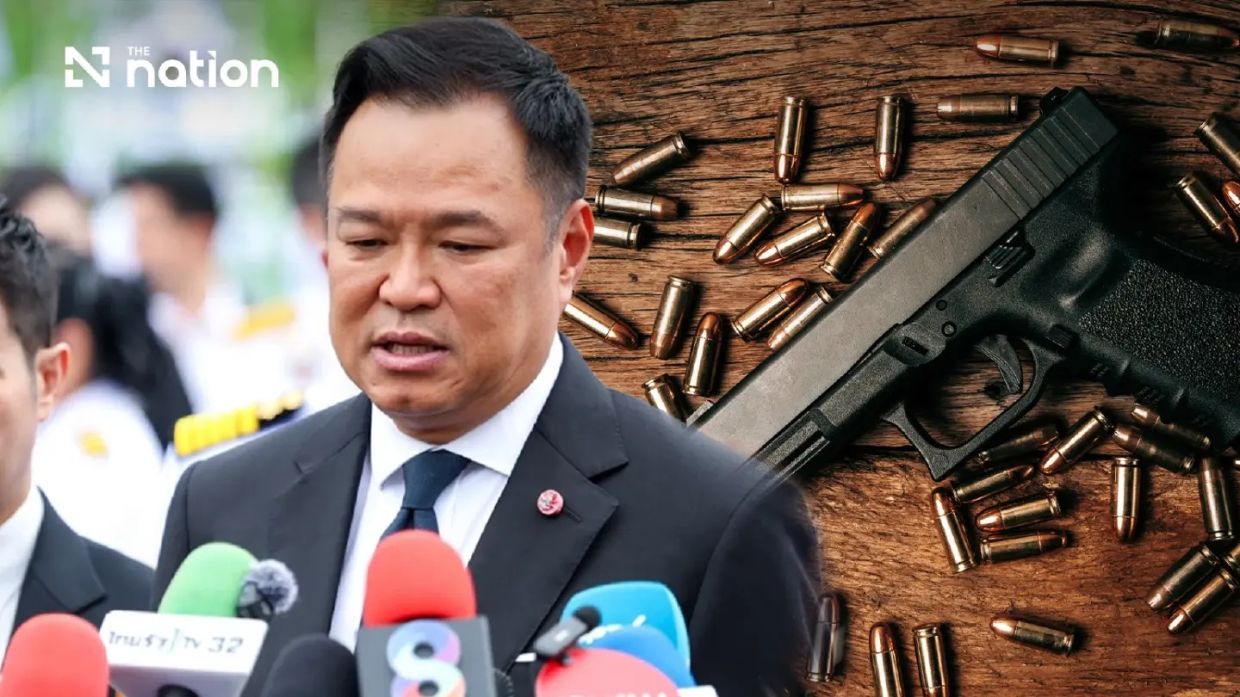
Prime Minister Anutin Charnvirakul has pledged a hardline approach to curbing illegal firearms ownership following a devastating mass shooting at Debsirin Nonthaburi School, vowing to implement stronger gun control measures and stricter penalties for unauthorized weapons possession. After visiting the shooting scene and consulting with national police chief Pol Gen Kittharath Punpetch at Government House, Anutin outlined a comprehensive strategy that combines legislative amendments with enhanced enforcement mechanisms to prevent future incidents.
The government plans to pursue amendments to existing firearms legislation, working alongside Deputy Prime Minister Pakorn Nilprapunt to introduce more stringent controls on gun ownership and carrying. Anutin emphasized that individuals found transporting firearms in public spaces, vehicles, or outside their residences without legitimate official duties would face serious criminal charges. This enforcement stance signals a departure from any permissive approaches that might proliferate civilian gun ownership in response to security threats.
Among the most contentious proposals addressed during the review was a suggestion to permit teachers to carry firearms for personal protection. Anutin firmly rejected this option, asserting that educators lack the legal authority and specialized training required to bear weapons. This position reflects a broader philosophy that civilian gun-carrying, regardless of profession or perceived need, undermines public safety rather than enhancing it. The rejection underscores Thailand's traditional stance favoring firearm restrictions over armed civilian defenders in sensitive environments.
A potentially significant policy initiative involves reviving a voluntary surrender program that would allow citizens holding illegal or unregistered firearms to hand them over to authorities without facing prosecution. Such amnesty periods have proven effective in other jurisdictions for removing weapons from circulation without deterring compliance through fear of retroactive punishment. By making legal pathways to disarmament more attractive, the government aims to reduce the pool of unauthorized firearms in civilian hands.
Anutin stressed that illegal weapons cannot be legitimized regardless of circumstances, emphasizing that possessing such firearms constitutes a criminal offense with compounding penalties if discovered during investigations into other crimes. He cautioned that individuals caught with unauthorized guns face substantial legal jeopardy, making retention of such weapons economically and legally irrational. This messaging attempts to shift risk calculations among those currently holding illegal firearms.
The Prime Minister outlined specific procedures for lawful firearms disposal, instructing citizens to surrender weapons to the Department of Provincial Administration, district offices, or police stations to create official records and ensure proper accountability. These institutional channels provide both security and documentation, preventing informal transactions that might transfer weapons between unauthorized parties. Establishing clear surrender procedures removes practical barriers to compliance and demonstrates government commitment to facilitating lawful behavior.
Regarding home storage of legally registered firearms, Anutin instituted mandatory requirements for secure storage away from children's reach, establishing that both registered owners and individuals who use weapons in crimes bear criminal responsibility. This dual-accountability framework incentivizes vigilant security practices among legitimate gun owners while creating consequences for negligent storage that enables unauthorized access. The approach recognizes that even legally-held weapons pose risks if improperly managed.
On the broader context of bullying as a potential trigger for the shooting incident, Anutin urged restraint in public speculation pending completion of police investigations, cautioning that premature conclusions could amplify anxiety and potentially inspire copycat incidents. This measured stance balances legitimate public concern about school safety with recognition that inflammatory commentary during active investigations risks destabilizing the information environment. He emphasized that investigative authorities should be permitted to work methodically without interference from uninformed public commentary.
The government's strategy extends beyond isolated legislative or enforcement initiatives, encompassing coordination across the Department of Provincial Administration, police, and other authorized agencies to conduct systematic inspections and enforcement operations. This multi-agency approach acknowledges that gun violence prevention requires sustained institutional effort rather than reactive responses to individual incidents. Anutin's framing positions firearms control as an ongoing governance priority receiving continuous resource allocation and policy attention.
For Malaysia and other Southeast Asian nations, Thailand's response offers instructive lessons about the relationship between firearms regulation and public safety. While Thailand faces particular challenges given its historical context and regional factors, the emphasis on closing legal loopholes, establishing clear enforcement mechanisms, and maintaining public-safety-focused policy despite politically convenient alternatives provides a framework worth monitoring. The integration of amnesty mechanisms with strict penalties for non-compliance represents a sophisticated policy approach recognizing both carrots and sticks in behavioral modification.
Anutin's statements signal that even facing pressure to militarize responses to violence—such as arming civilians or school personnel—principled governance involves resisting populist shortcuts that may provide superficial reassurance while ultimately increasing dangers. The accountability framework extending to weapon owners and users reflects sophisticated understanding that firearms regulation requires systemic responsibility rather than individual choice alone. As regional governments grapple with balancing security concerns against public safety risks, Thailand's approach demonstrates that evidence-based restriction policies remain viable politically and practically.

