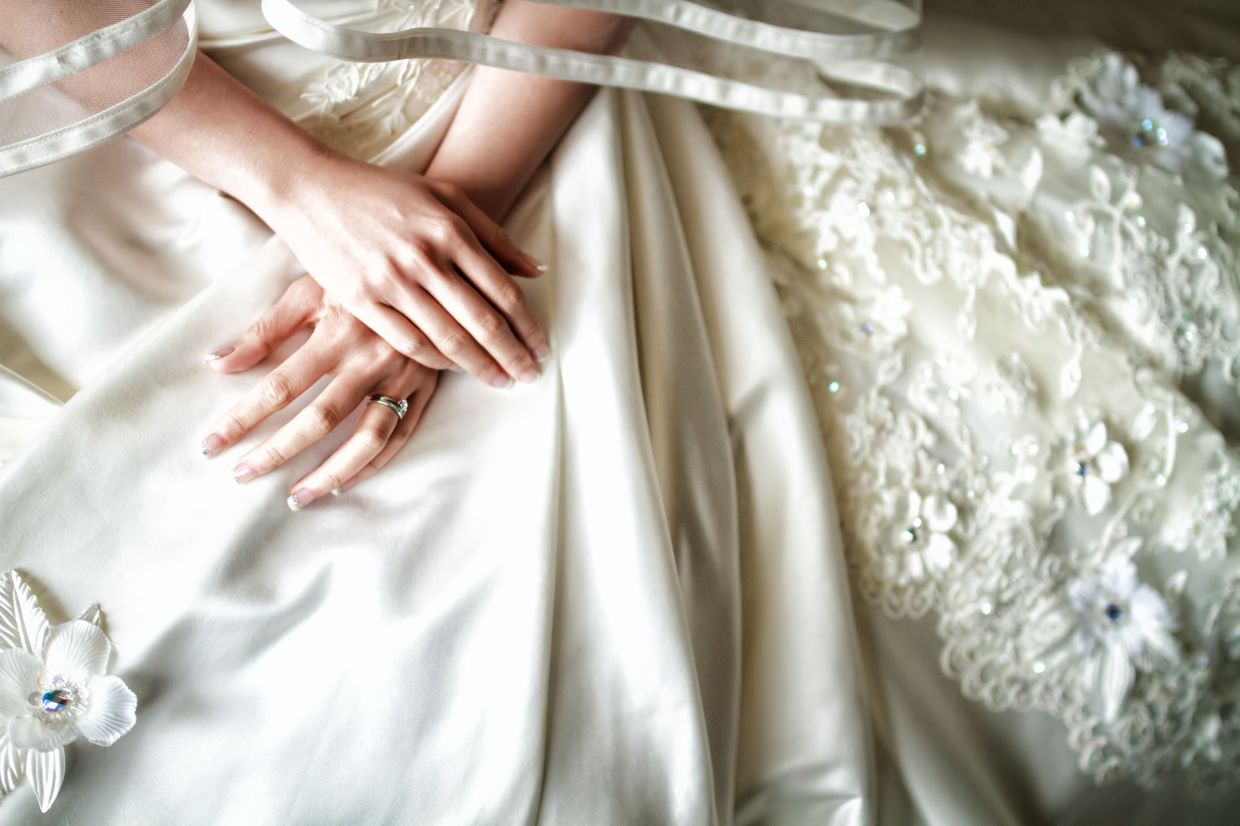
The dilemma facing many families today transcends simple wardrobe management: what becomes of a wedding dress once its primary purpose has been fulfilled? This question becomes even more charged when the gown represents multiple generations—a mother's dress worn by a daughter with no grandchildren waiting in the wings. Yet beneath this seemingly practical question lies a deeper truth about how we anchor ourselves to our personal histories through fabric and thread, and why abandoning such items can feel like erasing precious chapters of our lives.
Clothing occupies a unique psychological space in our homes and hearts. These are not mere material objects, but rather vessels that hold our memories, marking transformative moments and embodying the people we once were. A wedding dress, in particular, carries extraordinary weight—it represents not only a specific date and moment but also the dreams, hopes, and identities of the woman who wore it. This explains why keeping grandmother's gown or mother's dress feels less like storage and more like stewardship, a sacred responsibility to preserve a family narrative that might otherwise vanish.
The phenomenon of struggling to discard meaningful clothing has attracted serious scholarly and professional attention. Fashion historians and consultants have documented extensively how garments function as emotional anchors, particularly when they are linked to significant life events or have been passed through family lines. What complicates matters further is that sentiment inevitably becomes entwined with practical considerations. A closet has finite space, and the line between preserving heritage and accumulating clutter can blur uncomfortably.
Cameron Silver, a luxury brand consultant and founder of the renowned vintage retailer Decades, approaches this challenge from a therapist's perspective rather than a purely commercial one. His philosophy centres on understanding why individuals maintain attachment to specific pieces rather than pressuring them toward disposal. He advocates for reflection through three fundamental questions: Does the garment currently fit one's body and lifestyle? Will it realistically be worn again? And perhaps most tellingly, how would losing it permanently affect you emotionally? These questions serve as diagnostic tools, helping people distinguish between genuine connection and mere habit.
For those ready to explore alternatives, several creative pathways exist. The most direct transformation involves reimagining the dress entirely—perhaps converting it into a christening gown for future children, a decorative wall hanging, or formal wear for other occasions. This approach preserves the physical fabric while liberating it from its original constraint. However, such transformation carries risk; the essence of what made the dress meaningful may become obscured in its new form, creating a sense of loss even as the material survives.
Donation represents another compelling option that extends a dress's story in unexpected directions. Organizations like Brides Across America specifically connect wedding gowns with military personnel and emergency medical workers who might otherwise lack access to formal bridal wear. Beyond the practical gift, experts recommend accompanying the donated dress with documentation—a written account of its provenance and significance—so the next wearer inherits not just the garment but its narrative arc.
A middle path gaining traction involves systematic documentation and memorialization. Emily Spivack facilitates workshops where participants bring garments of family significance to photograph, catalogue, and narrate. This process of preservation through storytelling often provides psychological closure, allowing people to release physical items knowing their stories have been captured and can be shared with family members. The garment itself becomes secondary to the narrative it represents—the memory has been extracted and preserved in more portable form.
Academic institutions have begun recognizing the scholarly value embedded in ordinary garments, particularly wedding dresses. Universities including Smith College, Drexel University, Ohio State University, and Cornell University now actively collect these items not as museum pieces or artistic artifacts but as primary sources for understanding social history. Cornell's Fashion + Textile Collection houses nearly 350 wedding gowns, each offering insights into different eras, economic circumstances, and cultural practices.
One particularly striking example from Cornell's collection illuminates this educational potential: a 1942 wedding gown crafted by British dressmaker Cylka Berke for her own wartime London wedding. The dress exemplifies resourcefulness during rationing—every yard of fabric and every cutting decision reflected the scarcity of materials. Berke chose rayon rather than silk, preserving that precious commodity for military use in parachutes and communication devices. The resulting gown has retained its brilliant white colour precisely because synthetic fibres proved more durable and less vulnerable to yellowing than period alternatives would have been. For scholars, this single dress becomes a classroom text teaching wartime history, design innovation, and the persistence of ritual and beauty amid global upheaval.
For Malaysian and Southeast Asian families navigating similar questions, these approaches offer meaningful frameworks. The region's strong emphasis on family continuity and ancestral respect makes these decisions particularly emotionally laden. Yet practical constraints—housing costs, storage limitations, and the realities of modern living—increasingly force difficult choices. Understanding that alternatives exist beyond simple binary choices of keeping or discarding empowers families to honour their heritage while adapting to contemporary circumstances.
The psychological liberation that accompanies thoughtful release cannot be overstated. Holding onto items primarily from guilt or obligation creates emotional weight far exceeding their physical presence. Conversely, systematically engaging with meaningful objects—whether through transformation, donation, documentation, or institutional preservation—transforms potential loss into intentional transition. In letting go of a wedding dress, one need not be releasing the memories, identities, and love it represents. Instead, the act becomes a conscious choice about how those precious elements continue forward, whether transformed, shared, recorded, or studied.
Ultimately, the question of what to do with a cherished wedding dress reflects broader anxieties about discontinuity and change in an increasingly mobile world. These garments represent stability and rootedness at a time when family structures, living arrangements, and even gender expectations around marriage itself are evolving. There is wisdom in recognizing that honouring our past does not require preserving every physical remnant. Rather, it demands intentionality about which memories we carry forward and in what form, ensuring that in releasing the garment, we have truly preserved what matters most.

